




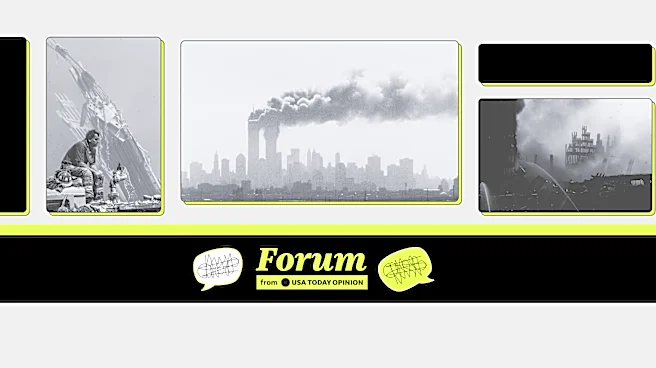
A generation later data now show that three times as many people have died with a confirmed 9/11-related illness than perished during the Sept. 11, 2001 terrorist attacks.
Some 9,677 people have died since their exposure to the toxic mix of chemicals and irritants at Ground Zero, according to July 2026 data, the latest available from the U.S. Centers for Disease Control and Prevention. Advocates and medical providers emphasize that the numbers only track deceased program participants with confirmed 9/11 illnesses — as opposed to those who die of the ever-evolving list of 9/11-related diseases.
It's a stark death toll 25 years later to add to the 2,977 killed by terrorists on Sept. 11, 2001 at the World Trade Center, the Pentagon, in Pennsylvania
and on the four hijacked jets.
The loss of life from 9/11 also likely won't be curbed anytime soon.
Today, scientific clashes continue to unfold over which diseases should be officially linked to the exposures. Meanwhile, 9/11 health advocates, politicians and first responders have expressed alarm over rounds of cuts, threatened cuts, and restorations at the federal program caring for the ill and federal agencies that support it.
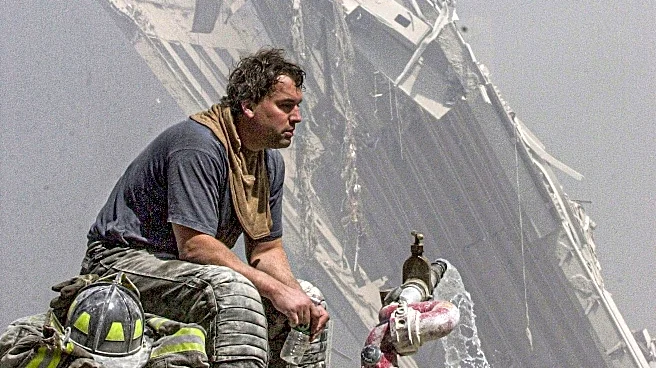
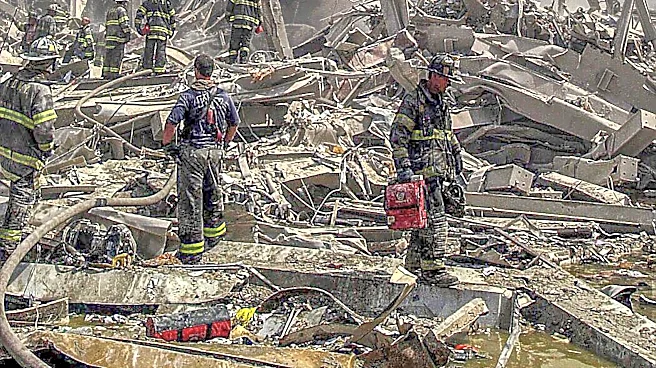
The clock is ticking for many responders who saved others in the rubble and ash, and for survivors exposed to toxins that rained down that day and lingered in the air for weeks after.

"It's still relevant because there are still thousands of people impacted by this and dying," said Benjamin Chevat, executive director of 9/11 Health Watch, a nonprofit that monitors whether and how the government program continues to fulfill its mission.
New political battles over 9/11 health care programs
9/11 responder advocates, families and elected officials say rounds of staffing cuts and restorations at the World Trade Center Health Program and other government agencies during the tenure of U.S. Department of Health and Human Services Secretary Robert F. Kennedy Jr. have destabilized the program that supports health care for 9/11 responders and survivors.
While Kennedy has pledged to get the program to full staffing, Chevat said the impact is already being felt.

Fewer workers at the CDC and National Institute of Occupational Safety and Health, which support the WTC Health Program, mean delayed enrollment and certifications for people waiting on treatment, Chevat said. Staffing upheaval has also slowed down the complicated decision-making process for designating new medical conditions as eligible for coverage by the program, he added.
Can a seemingly stripped-down WTC Health Program keep up with a growing cohort of 9/11 responders and survivors?
That key question is being raised as 9/11 responders are getting older; the average age is now 63.
In response to questions about the issue, HHS told USA TODAY Network in a statement: "The Program continues its critical work, including certification reviews, research activities, and the delivery and coordination of health care for eligible members."
A quarter-century later, toxic exposures continue to take a toll. About 10,000 responders and survivors have joined the WTC Health Program each year over the last three years. Higher cancer rates are being seen, and other ailments are coming to the fore, including cognitive impairments, autoimmune disorders and heart conditions.
The WTC Health Program, by its statute, is mandated to evolve to meet the needs of the 9/11 community. But these other illnesses with suspected links have yet to make it through the process of being added to the list of covered conditions, even as more suffer from such ailments.
The WTC Health Program was created by the James Zadroga 9/11 Health and Compensation Act of 2010 to ensure health checks and treatment for those sickened by exposures during and after the Sept. 11, 2001 terrorist attacks. The program supports those exposed to the toxic swirl at Ground Zero and, as of 2024, any responders who were at the Pentagon and near the Shanksville, Pennsylvania crash site.

Most enrollees are in New York, but there are 9/11 health care program members in all 50 states.
As health care needs change, said Dr. David Prezant, chief medical officer for the New York City Fire Department, the WTC Health Program needs to be ready. That means full staffing in every aspect, from research to administration, so health care providers can pivot quickly to meet the 9/11 community's needs.
Prezant, who is co-director of the FDNY WTC Medical Program and the department's WTC Clinical Center of Excellence, was among the doctors who pushed back recently when heart conditions were rejected for WTC Health Program coverage.
"Our petitions are not about compassion, although as physicians we are compassionate," he said. "We are basing it on scientific evidence."
That approach is what physicians, the federal program and the nation owe responders "who ran into the towers even though they knew they were falling," Prezant said.
Program struggles as 9/11 responders get sicker
Amid cycles of cuts, threats of cuts and restorations, advocates have said not all workers have wanted to return to the CDC, NIOSH, and the WTC Health Program, which all work in concert on 9/11 illness research and health care administration.
In August 2026, the WTC Health Center Program was down to 98 employees, when it's designed to operate with a staff of 120.
HHS told USA TODAY Network that the World Trade Center Health Program "has the staff and resources needed to fulfill its mission and meet its responsibilities to the responders and survivors it serves."

Prezant said he's seen the impact of staffing shortages at the federal agencies that help support 9/11 health care. The fix, he said, won't likely be quick.
Restoring and hiring for jobs like this can be "a very, very, very slow process," Prezant said. "It's not their fault, that's just how the federal government works."
Prezant is hopeful but also pragmatic. "I don't expect them to get up to manpower for at least a year," he said of the programs that support 9/11 responders' and survivors' health care.
There are signs the program is building back. Last month, the first World Trade Center Health Program research webinar was held after the monthly event was canceled in 2025.
"We’ve really been looking forward to re-engaging with you," Capt. Mateusz Karwowski of the CDC told medical providers and 9/11 families on an Aug. 13 ZOOM call.
But 9/11 advocates and medical providers still have concerns. One potential hit to the program, several mentioned, is the possibility that Dr. John Howard, the NIOSH chief and WTC Health Program's administrator, won't be reappointed when his six-year term is up in November.
More than two dozen members of Congress signed a bipartisan letter to Kennedy seeking Howard's reappointment.
A request for comment to HHS and Kennedy about Howard's reappointment was not immediately returned.
Prezant is among those who support Howard's renomination.
"One of the only reasons we have been able to keep running is Dr. Howard," Prezant said. "It's critical in this moment in time that he stays. Consistency, experience, sound judgment ... he's really been the bedrock of consistency."
Honors at Ground Zero, but threatened program cuts
The 9/11 community, especially this time of year, hears from a grateful public that their sacrifices and losses are not forgotten.
At this year's World Trade Center Memorial site ceremony, for the first time, a seventh bell will be tolled for those who have died from the health effects of 9/11 in the years since, and into the future, rung after the six bells that mark the four plane crashes that day and Twin Tower collapses.

And now, after years of instability, both Zadroga's Victims Compensation Fund and the WTC Health Program have more secure funding that ensures the programs run through 2090.
But Chevat of 9/11 Health Watch said advocates remain vigilant.
The program, he said, is still wading through "chaos," which he lays at the feet of Kennedy, whose pick to lead the government's massive health agency by President Donald Trump had been and remains controversial.
"With the 25th anniversary of 9/11 approaching, Secretary Kennedy should do one less cooking show and spend that time fixing the problems he has caused," Chevat said.
Upheavals in the program under Trump and Kennedy include a plan announced in February 2025 by Elon Musk's Department of Government Efficiency, or DOGE, to slash staff at the CDC. Bipartisan calls to reverse the cuts stemmed the threat.
Two months later, in April 2025, Kennedy instituted cuts to the National Institutes of Occupational Health, or NIOSH. The WTC Health Program is administered by NIOSH, which is part of the CDC.
In that round, Kennedy fired Howard, the NIOSH director and WTC Health Program administrator.
Amid more public and politically bipartisan outcry, those cuts, and Howard's job, were ultimately restored.
Then in March 2026, elected officials in New York and Congress again pushed back amid reports that WTC Health Program employees were reassigned to help other agencies, including the U.S. Immigration and Customs Enforcement, or ICE.
Republican members of Congress wrote to Kennedy demanding answers.
"Reports indicate that the program is operating with staffing levels well below authorized capacity, even as enrollment continues to grow," the letter states. "These staffing shortfalls have coincided with widespread delays in treatment authorizations, backlogs in claims processing, disruptions in continuity of care, and reduced oversight of contractors."
Kennedy in May 2026, during a U.S. Senate committee meeting, said the agency had made "a couple of mistakes" and promised to fix staffing shortages at the WTC Health Program and lift a hiring freeze.
HHS responded to questions about the WTC Health Program by stating its ongoing commitment "to supporting the long-term health and well-being of the 9/11 community and to carrying out the responsibilities of the World Trade Center Health Program."
New concerns for 9/11 community's health
At the same time, the scientific community continues to focus on 9/11 illnesses.
Dr. Michael Crane, medical director of the World Trade Center Health Program Clinical Center of Excellence at Mount Sinai, remains concerned about what comes next.
Crane, a specialist in occupational health, has explained that 9/11's exposures were in many ways opposite of on-the-job exposures.
"Look at the people who walked through it, literally caked in dust," Crane said, recalling the images from Ground Zero after the twin towers fell. "Each of these people were wearing a building. They're wearing the cement, they're wearing the asbestos materials."

Filters in facemasks were blocked so quickly with dust, he said, many responders couldn't keep up with replacing them.
Many illnesses linked to these exposures have a long latency.
The medical providers say they are concerned that now the time's up.
FDNY's Prezant, a pulmonologist, or a specialist of the lungs and respiratory system, pointed to an increase in pulmonary fibrosis, which usually occurs 20-30 years after particulate exposure.
"Right on time, unfortunately, we're seeing that," said Prezant, who is also a professor at Albert Einstein School of Medicine and a Montefiore Medical Center physician. "In four years, we've had eight lung transplants" just among 9/11 responders enrolled at the FDNY Clinical Center of Excellence.
WTC health studies have also shown the incidence of prostate cancer is up to 40% greater for 9/11 rescue and recovery workers than for the general population. 9/11 responders also have an up to 43% increased risk for melanoma.

Prezant also worries about ischemic heart disease and autoimmune diseases, which aren't covered for treatment by the WTC Health Program.
In July, a petition to include ischemic heart disease for WTC Health Program coverage was rejected.
Richard Palmer, a former New York City Corrections Department employee who responded to Ground Zero on Sept. 11, 2001, expressed disappointment about the decision.
Palmer receives WTC-related health care for asthma and other respiratory conditions, but not for the heart disease he continues to manage after a 2006 quadruple bypass and follow-up treatments.
"I'll never talk bad about the health program," said Palmer, who joined 9/11 responders to lobby for the Zadroga Act and WTC Health Program funding in Congress year after year. "But I don't really understand the reason why cardiac isn't added. Money was put away to research all these illnesses. Why is it not going anywhere?"

Crane, at Mount Sinai, said his future health concerns for the 9/11 cohort include dementia disorders.
Depression, anxiety and the kind of "mind in overdrive" that post-traumatic stress disorder can bring are also associated with cognitive impairment later in life, Crane said. It's an issue, he noted, that 9/11 providers are keyed into and watching closely.
The process of seeking coverage for additional conditions can be frustrating, Crane said, because it is intense and time consuming. But it's important to be patient and continue researching and studying, he added.
Crane called the inclusion of coverage for mental health issues in the Zadroga Act " a lifesaver."
"If you were down there and you saw what you saw, it was shocking," Crane said. "Many responders describe symptoms consistent with PTSD. Many other responders develop depression to require treatment from the program."
Chevat, who was chief of staff for former U.S. Rep. Carolyn Maloney, D-N.Y., amid the battles to create Zadroga, said the doctors he's talked with explain the fallout from 9/11 exposures this way: "Most exposures to cancer are small amounts over a long period of time. This is a large amount over a short period of time. You're basically bathing in toxins."
To prove causal connections can take decades.
"The epidemiologist who is going to prove this isn't born yet," Chevat said of the links to myriad disorders 9/11 exposures could cause.
Providing participants a literal lifeline
The quality of health care provided by the WTC Health Program, advocates and medical experts say, saves lives and preserves quality of life.
Prezant said in his FDNY center, 86% who developed cancer are alive five years later, compared to 63% of people with a cancer diagnosis in New York state. That measure takes into account the type of cancer and the age of diagnosis.

Crane, at Mount Sinai, noted, and data back him up, that the 9/11 cohort with specific conditions often have better outcomes than the general public because of the care given through the various WTC Centers of Excellence around the New York City metro area and at a national network across the country.
Responders who were part of the WTC Health Program had a 13% lower risk of death from any cause, compared to 9/11 responders who were not part of the program that offers health screenings and treatment for 9/11-related illnesses, a recent study shows. The findings suggest the program’s regular health monitoring, access to treatment, and preventive care help enrolled responders stay healthier and live longer.
"Some of our researchers have compared our mortality compared statewide," Crane said. "We tend to find that our patients are actually doing fairly well."
Because the program offers key supportive health initiatives, like smoke cessation, Crane said, people get care, support and advice. He pointed to a cigarette smoking rate of just 4% among program participants; New York state's adult smoking rate, itself at a historic low, is 9.3%.
"It's all about where you are, who's caring for you, your support network," Crane said. "World Trade I think gives responders and survivors a place to get support and advice."
Crane says these great outcomes make it more important to keep tabs on emerging 9/11-related illnesses.
"We're not done here. We are definitely not done here," Crane said.
When those new health threats for the 9/11 community are discovered, Crane said, "We have to be here too with the tools to help them."
Or, as the 9/11 health advocates have adopted as their slogan: Never forget means never forget.
Nancy Cutler covers People & Policy. Reach her at ncutler@lohud.com; follow her on X, Bluesky and Instagram at @nancyrockland.
This article originally appeared on Rockland/Westchester Journal News: 9/11 illness fight expands as responders get older, sicker | Exclusive