





As I make my way to work at Manhattanville University as Dean of the School of Education, I can’t help but notice the excitement among new teachers, students and parents as they enter their school buildings ready to start a new school year.
But my excitement is tempered by what awaits 200-plus new teachers our School of Education recommends for certification each year. They are entering classrooms that present challenges for which their university preparation may not have fully prepared them.
We have to do more to help new teachers in New York
These challenges are not unique to Westchester County or the Lower Hudson Valley. But with more than 100 school districts serving roughly 300,000 school-age children, they are especially relevant here. They require us to rethink how we prepare, develop and
retain teachers so they can continue to improve the lives of the children, families and communities they serve.
The first challenge is student readiness. When I visit the schools where Manhattanville’s pre-service and in-service teachers work, it is obvious that students across grade levels are experiencing challenges that can significantly affect their ability to learn and get along with others.
New teachers will encounter students with greater social-emotional needs, weaker attention and self-regulation, and significant gaps in academic readiness. This is not simply a mental-health issue.
For a first-year teacher, the challenge is particularly acute. A new teacher is simultaneously learning to plan lessons, assess learning, manage a classroom, communicate with families and establish a professional identity. Asking teachers to do all of this while responding to increasingly complex student needs is a very different proposition from the job many of us entered decades ago.
A second challenge is technology. Many students do not know life without a screen and the apps they use to remain “connected.” The issue is not simply how much time children spend on devices, but how technology has changed the way they consume information, communicate, entertain themselves and learn.

Artificial intelligence adds another layer of complexity. The question is no longer simply whether students are using AI. It is how schools can teach students to use it responsibly while preserving the habits of thinking, questioning, creating and communicating that education is supposed to develop.
And there is an important connection among these challenges: the demands of teaching are expanding faster than the capacity of schools to support teachers.
We can strengthen ties between our universities and our schools
That is why it is time to rethink the university-school partnership.
Too often, the relationship between schools and universities is transactional. Schools provide student-teaching placements; universities provide candidates; supervisors visit periodically; and when the new teacher receives a diploma, the partnership largely ends.
It shouldn’t.
Teacher preparation should not end at graduation, and professional development should not begin from scratch on the first day of employment.
Op-ed continues below gallery.
Schools of education and P–12 schools should create a genuine continuum from preparation to practice. Five steps can help:
- Create shared induction programs. Universities and school districts should jointly design first-year experiences focused on the practical challenges new teachers face.
- Strengthen mentoring. Every new teacher should have an experienced mentor. New teachers should be able to observe experienced colleagues, discuss difficult situations and receive feedback without feeling that every conversation is evaluative.
- Practicing teachers and school leaders should help shape university courses and clinical experiences. University faculty should remain connected to the classrooms for which they are preparing teachers.
- Expand real-world clinical experiences. Teacher candidates should encounter classroom management challenges, academic gaps, technology distractions and diverse student needs before they have a classroom of their own.
- Develop shared approaches to AI and digital citizenship. Schools and universities should establish common expectations for responsible AI use and prepare teachers to help students distinguish between technology that enhances learning and technology that undermines it.
If we want to attract and retain talented people, we need to demonstrate that teaching is a profession in which people are supported as they develop their craft.
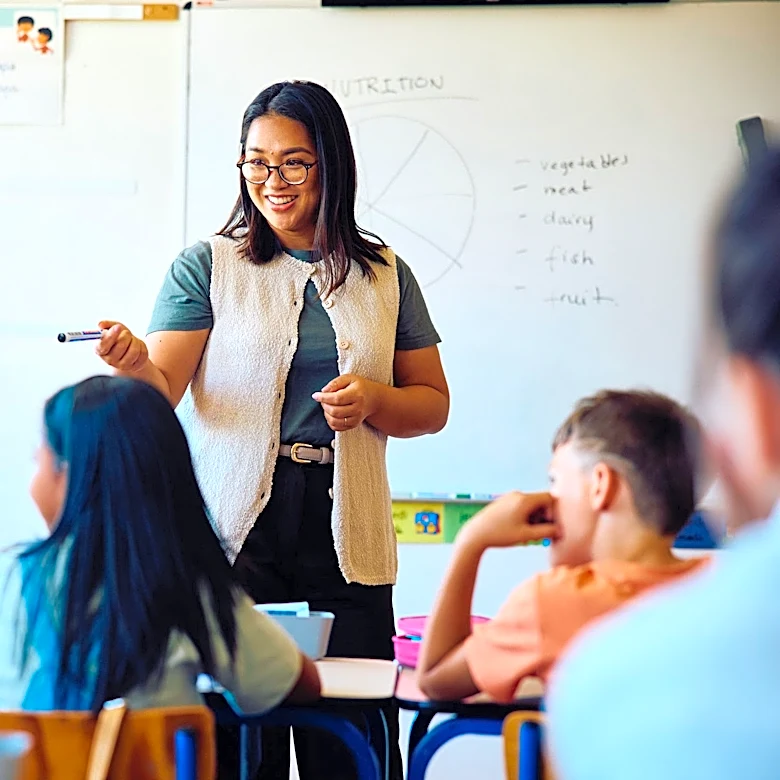
Because on the first day of school, somewhere in the Lower Hudson Valley, a new teacher will stand in front of a classroom for the first time. Behind the excitement and anticipation will be a person trying to make dozens of decisions, build relationships and create a place where children can learn — while still learning how to be a teacher.
That moment should not mark the end of our responsibility to prepare them.
It should mark the beginning of our responsibility to stand beside them.
Brian V. Carolan, PhD, is dean of the School of Education at Manhattanville University.
This article originally appeared on Rockland/Westchester Journal News: NY's new teachers face challenging classrooms. We can help | Opinion