







Europe is heading into winter with less natural gas in storage than last year and almost no margin for error. By Sept. 30, European Union storage was approximately 72% full, compared with roughly 83% at the same point last year. A cold snap or a windless week could send gas and electricity prices soaring and force factories to curtail output. Moscow no longer needs to control Europe’s gas taps to profit from that weakness.
The lesson is not that Europe should abandon its climate goals. It is that Europe can no longer afford energy policy by aspiration. The EU needs a coherent, cohesive strategy that treats every reliable source — pipeline gas and LNG, nuclear, hydropower, wind and solar — as one system, judged by three tests: Is the power there
when it is needed? Is it affordable? Does it reduce the leverage of hostile suppliers?
Europe’s energy problems trace two failures: utopian thinking and poor coordination. Germany provides the clearest example of the first. Under pressure from the Greens, Berlin shut down clean nuclear reactors and kept closing them even after Russian gas disappeared, triggering a spike in polluting coal consumption. Meanwhile, member states set their own energy mixes, underbuild cross-border interconnectors and compete for the same LNG cargoes in a crisis.
None of this is an argument against green energy. Economically competitive renewable power, as Texas has shown, can strengthen security. But turbines, transmission lines, storage, and nuclear plants take years to build. Electricity must still be delivered when the wind stops blowing. Factories still need affordable power. Families still need heat during a cold winter.
Why has Europe found it so hard to make these choices? Part of the answer is trust. Expensive, long-term energy bets require institutions that citizens believe are acting in the public interest — and societal trust is at its lowest in decades. In May 2026, Italian Prime Minister Giorgia Meloni described the EU as a “bureaucratic giant” that had sacrificed competitiveness and strategic growth to “ideological and technocratic approaches.”
Her criticism raises a difficult question: has EU bureaucracy become not only ineffective, but also vulnerable to allegations of corruption, cronyism and conflicts of interest?

Several controversies have fueled that concern: “Pfizergate,” over President of the European Commission Ursula von der Leyen’s text messages with Pfizer’s chief executive; “Qatargate,” in which MEPs are suspected of taking bribes from the gas-rich emirate; and investigations into alleged Huawei-linked lobbying in the Parliament. In 2025, a Paris court found nine current or former Members of the European Parliament, together with parliamentary assistants, guilty in a case involving misuse of EU funds through fictitious parliamentary-assistant employment linked to France’s Rassemblement National/Front National. The European Anti-Fraud Office (OLAF) provided evidence to the proceedings.
Belgian authorities are investigating another case: former European Commissioner for Justice Didier Reynders is suspected of money laundering linked to lotteries he supervised. The investigation began in 2023 and is not yet closed.
Energy, where vast sums and strategic interests meet, is particularly exposed. Former German Chancellor Gerhard Schröder approved the Nord Stream pipeline in office, then chaired its shareholder committee and, later, the board of Russia’s Rosneft. In 2021, the German state of Mecklenburg-Western Pomerania created a “climate foundation,” funded largely by Nord Stream 2 AG, to help complete the pipeline despite U.S. sanctions, prompting a parliamentary inquiry. In 2023, Patrick Graichen, a state secretary in Germany’s Green-led economy ministry, was removed after helping select his best man to head the German Energy Agency. Croatia’s former Prime Minister Ivo Sanader was convicted of taking a €10 million bribe from Hungary’s MOL in exchange for control of the national oil company INA. In November 2025, Ukraine’s National Anti-Corruption Bureau exposed an alleged $100 million kickback scheme at the state nuclear operator Energoatom, forcing out two cabinet ministers—a warning to an EU financing Ukraine’s energy reconstruction.
These cases are distinct, and allegations alone do not establish wrongdoing. But together they deepen public distrust and make it harder for EU institutions to command confidence.
Credibility problems also reached Berlin during Annalena Baerbock’s time as foreign minister, when she represented the Green Party. During the 2021 election campaign, Baerbock faced criticism over inaccuracies in her CV and later corrected it.
These episodes feed public distrust of politicians at a time when Europe faces immense challenges. Restoring confidence will require more than promises—and nowhere more urgently than in energy policy.
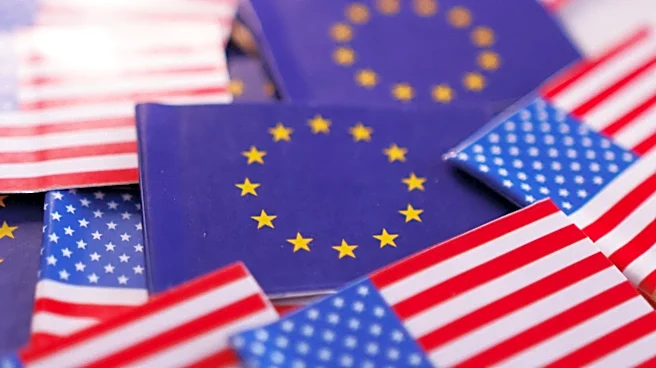
A coherent European energy policy would also increase purchases of reliable American LNG and boost trans-Atlantic trade. An economically confident Europe could expand defense production, push back against Russian pressure, and stop turning to cheap Chinese tech every time it disputes tariffs with Washington.
For this winter, the immediate task is straightforward. Brussels should remove unnecessary obstacles to the Southern Gas Corridor, which brings Caspian natural gas to Europe via Turkey and Greece, and Washington should be ready to supply more LNG. Europe needs gas, delivered reliably, from suppliers willing and able to sell it—and an energy policy that rules no reliable source out.
Wesley Alexander Hill is associate director at the Energy, Growth, and Security Program at the International Tax and Investment Center, or ITIC, in Washington, D.C. He is an expert in geoeconomics and international relations, with a regional specialization in China, Eurasia and Sub-Saharan Africa.
This article originally appeared on Rockland/Westchester Journal News: Will Europe's energy crisis ripple across the Atlantic? | Opinion