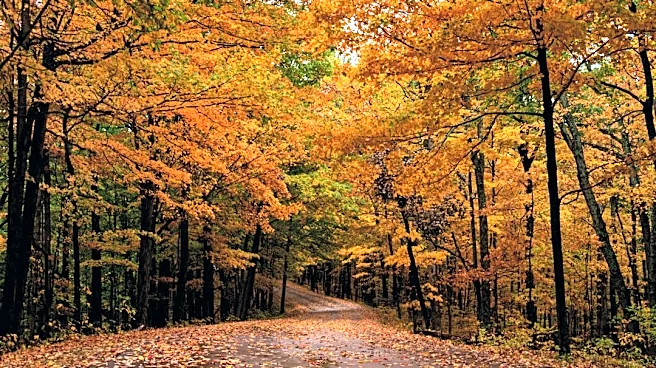






Fall officially begins in New York and across the Northern Hemisphere with the autumnal equinox on Tuesday, Sept. 22.
The autumnal equinox is the precise moment when the sun crosses directly above Earth’s equator, marking the start of astronomical fall. This year, the equinox occurs at 8:04 p.m. ET.
Meteorologists define the start of fall differently. Meteorological fall began Sept. 1 and runs through Nov. 30, aligning with the calendar months used to track seasonal weather patterns, according to the National Weather Service. Astronomical fall begins with the autumnal equinox.
When is the first day of winter 2026?
The first day of winter is Monday, Dec. 21. The winter solstice occurs at 3:50 p.m. ET.
Are days currently getting shorter?
Yes. Days begin getting shorter after the summer solstice, which occurred Sunday, June
21. Daylight will begin increasing again after the winter solstice on Monday, Dec. 21.
How much daylight will New York get?
There is slight variation depending on where you are in the state, but the Farmer’s Almanac estimates the following amounts of daylight for several New York cities on the autumnal equinox:
- Watertown: 12 hours, 10 minutes
- Buffalo: 12 hours, 10 minutes
- Rochester: 12 hours, 10 minutes
- Syracuse: 12 hours, 10 minutes
- Albany: 12 hours, 10 minutes
- Utica: 12 hours, 10 minutes
- Binghamton: 12 hours, 9 minutes
- Poughkeepsie: 12 hours, 9 minutes
- White Plains: 12 hours, 9 minutes
- New York City: 12 hours, 9 minutes
By comparison, New York cities had more than 15 hours of daylight around the summer solstice in June and will have roughly nine hours of daylight around the winter solstice, depending on location.
This article originally appeared on Rockland/Westchester Journal News: When does fall officially begin in 2026? First day of autumn date and time