









The Business Council of Westchester, or BCW, has been pro-AI from the start, seeing clearly its astonishing capabilities and nearly limitless potential. More than two years ago, we took the regional lead in launching our AI Alliance, with programming, podcasts and work sessions focused on sector impacts, technical guidance and cybersecurity, while our own team became early adopters, utilizing AI routinely for projects large and small. Since then, our commitment to the promise of AI has only grown. We are not on the front line of AI design, of course, but we are pushing the envelope of AI adoption: partnering with Google to deliver intensive AI upskilling to scores of small businesses and offering enhanced AI guidance for c-suite leaders.
The
business partners enrolled in our AI programming report uniformly positive outcomes — higher productivity, enhanced employee satisfaction and greater confidence in the use of AI-powered applications. In short, the BCW is bullish on AI, and we intend to build on our record of enthusiastic AI utilization and support.
AI needs our support — and we need to regulate it
Yet, at the same time — and, in our view, without contradiction — we also support federal oversight to establish effective industry safeguards, balancing safety, progress, and transparency. Given the high stakes and evident risks, it is insufficient to rely on self-policing, voluntary agreements, or state-level requirements. Only swift and rigorous federal action can meet the moment.
It is not often that a business advocacy organization calls for enhanced government regulation — in cutting edge spaces, we believe that government typically knows too little and moves too slowly, and is, therefore, more prone to stifle innovation than to nourish it. But, in the case of AI, we are convinced that a sober analysis of business interests, and the broader public interest, leads to no other conclusion.
Why?
AI is unique in fusing hyper-speed evolution with profound and unpredictable economic and social impact. The extraordinary technological progress of the frontier labs is outpacing their ability to control — or even fully understand — their creations. This is not our judgment; it is the judgment of industry leaders themselves, who speak in anxious terms about AI slipping its leash.
The potential downside consequences, whether resulting from misuse by bad actors or misalignment of the AIs themselves, are vast — bioweapon production, disruption of vital infrastructure, interference in markets, economic dislocation. It is not that such outcomes are necessarily probable, but rather that they are plausible, and that we lack the tools right now to accurately assess and mitigate risks.
In this unprecedented situation, an unfettered free market imposes no real boundaries. Instead, it piles every incentive toward a frenzied race to recursive self-improvement, a race in which, to quote President John F. Kennedy in reference to another generational challenge “even the fruits of victory would be ashes in our mouth.” While good intentions and liability laws matter, they are unlikely to be adequate when economic pressures and competitive instincts are pushing in the opposite direction.
Furthermore, we do not view the break-neck pace of AI development as necessary or even beneficial to the great majority of businesses. It’s just too fast. Few businesses, even the most nimble, are capable of reinventing their work culture, updating professional development guidelines, or swapping out IT systems at anything close to the rate of AI evolution, which is churning out new models every few weeks. As a practical matter, the benefits of evolving AI are arriving too quickly to be enjoyed, while the risks are arriving too quickly to be managed, especially when malicious actors have financial and technical advantages over the typical business.

Similar observations could be made for other sectors. Everyone, not just the business community, needs time to adjust. States and municipalities need time to figure out how to construct data centers the right way. Diplomats need time to hammer out a verifiable international framework with China and others. Frontier labs themselves need time to understand and align their own miraculous creations.
AI may be fast approaching (or may have already attained) superhuman abilities, but it is colliding with institutions and polities that operate on a human time scale and human capacities. The rhythms of development and adoption need to be better synchronized.
We must continue to use AI to learn an innovate
Our call to action is hardly radical. We do not advocate for a shut down or freeze. We are continuing our AI use and support. And while we appreciate the motivations impelling state leaders to take action, we do think an unwieldy local patchwork can be effective. We seek instead a nation- and industry-scale tap on the brakes — set federally and emulated globally — to moderate what threatens to become runaway acceleration, and keep AI development at a speed that permits human beings to see potential hazards through the fog ahead and then avoid those hazards without a head-on crash.
Despite — and maybe because — it is counterintuitive for business advocates to make this argument, it is important for us to do so. Not tomorrow. Today. Now. When such arguments might still matter. This is our effort to honor that responsibility. We invite our friends and partners in the business community to join us in speaking out. And we urge our national leaders to exercise the wisdom and foresight that this moment demands.
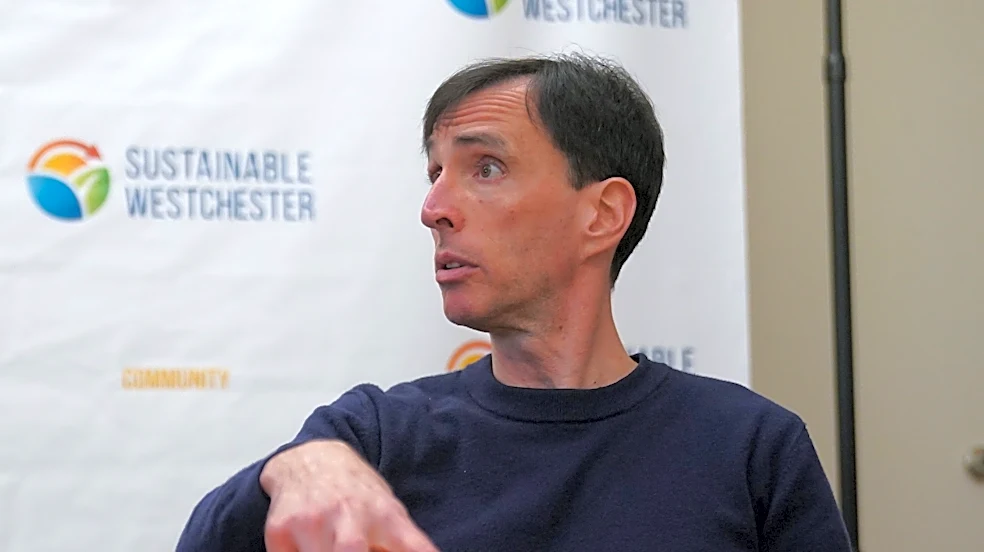
Noam Bramson, a former mayor of New Rochelle, is the Business Council of Westchester's executive vice president for government affairs and economic development. With more than 1,100 members, ranging from multi-national corporations to solo entrepreneurships, the BCW is Westchester’s largest business membership and advocacy organization.
This article originally appeared on Rockland/Westchester Journal News: Why Westchester businesses require federal regulation for AI | Opinion