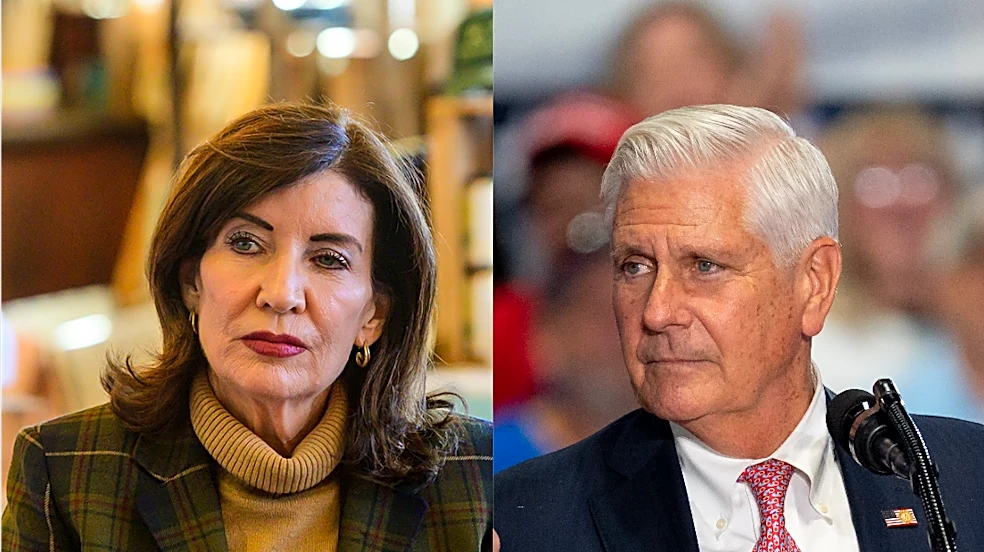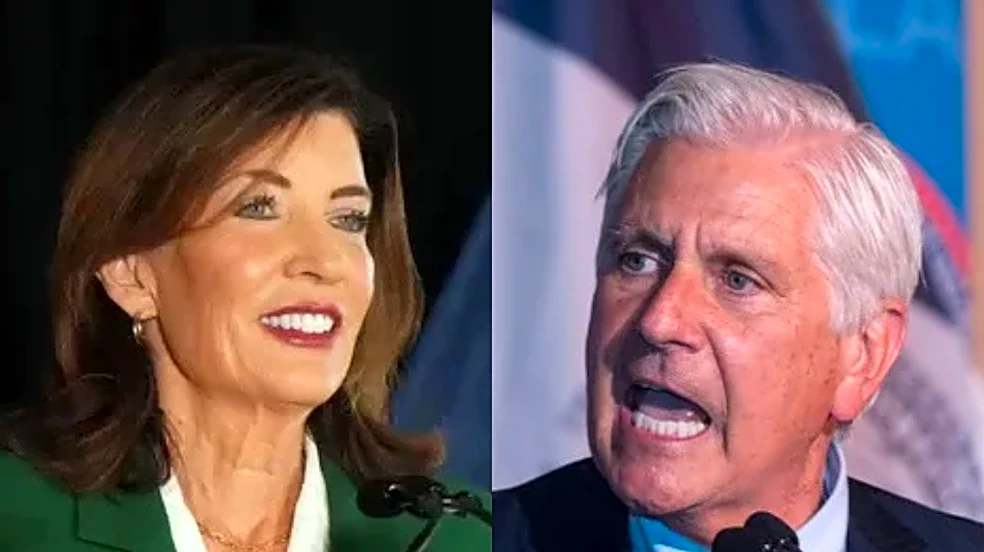


The gubernatorial faceoff between Gov. Kathy Hochul and challenger Bruce Blakeman is front and center as New Yorkers head to the polls to vote in state and federal races and an expanded litany of local elections as well.
In every corner of the state from Long Island to Buffalo, all voters are casting ballots for New York's four statewide officials, their representative in Congress, their state senator and Assembly member. All of the state's 26 U.S. House seats and 213 seats in the state Legislature are up for election on Nov. 3, with nine days of early voting set to begin on Oct. 24.
Hochul, a Democrat who took office in 2021 and is seeking a second full term, faces Blakeman, a Republican county executive from Long Island who has led populous
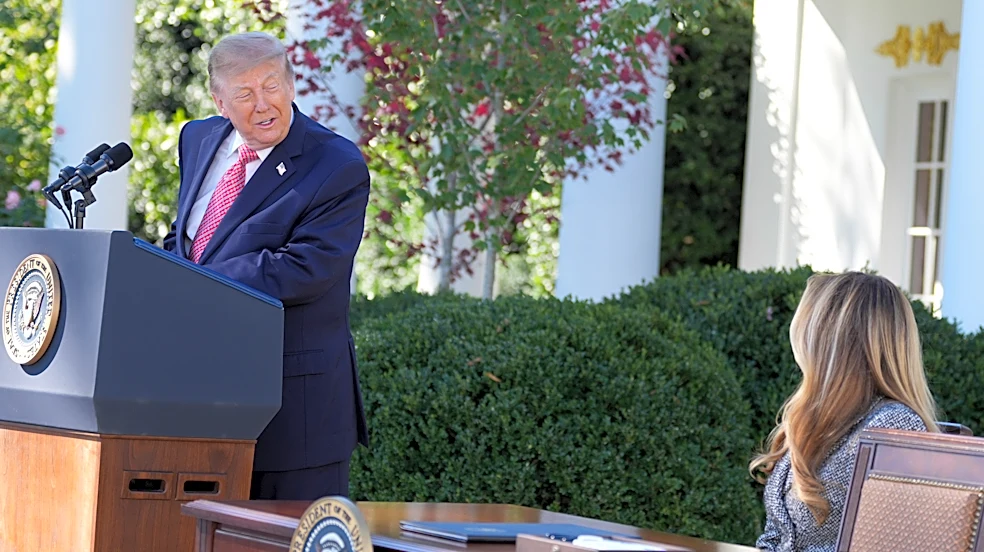
Nassau County since 2022. It has been a heated race, with Blakeman attacking Hochul for New York's high living costs and Hochul relentlessly tying him to an unpopular president whose Iran war and tariffs have spiked costs for New Yorkers.
Affordability and President Donald Trump's policies are also dominant themes in New York's most competitive House races, all playing out in the downstate suburbs. Most closely watched is the battle between second-term Republican Rep. Mike Lawler and Democratic challenger Cait Conley in the 17th Congressional District race in the Hudson Valley —a battleground that could help decide which party wins control of Congress in the midterm elections.
New York has no statewide referendums on Nov. 3, and neither of the state's U.S. senators — Democrats Chuck Schumer and Kirsten Gillibrand — is up for re-election (Schumer's current term ends in 2028, Gillibrand's in 2030). All 63 state Senate seats and 150 Assembly seats are up for election with no potential power swings at stake; Democrats are likely to retain their large majorities in both chambers.
More local races are on New York ballots this year because of a 2023 state law that required elections for certain county and town offices — including county executive, county legislator and town supervisor — be moved from odd-numbered years to even years to line up with state and federal voting. That shift is starting this year.
Here are more details on the key races New Yorkers will take up:
The Hochul-Blakeman showdown
Potential rivals in both parties started circling late in 2024, thinking Hochul looked vulnerable and sensing an opportunity in the next governor's race. But one by one, four would-be challengers bowed out after taking a closer look, sparing Hochul a primary and leaving just a single candidate willing to take her on.
Republicans face daunting odds in New York, where Democratic voters outnumber Republicans by more than 2 to 1. No Republican has won a statewide race since George Pataki claimed a third and final term as governor in 2002.

Hochul has led Blakeman by widely varying margins in public polls. On the same day in late September, one poll released by Siena College showed the incumbent ahead by 9 percentage points and another by Quinnipiac University put her lead at 19 points.
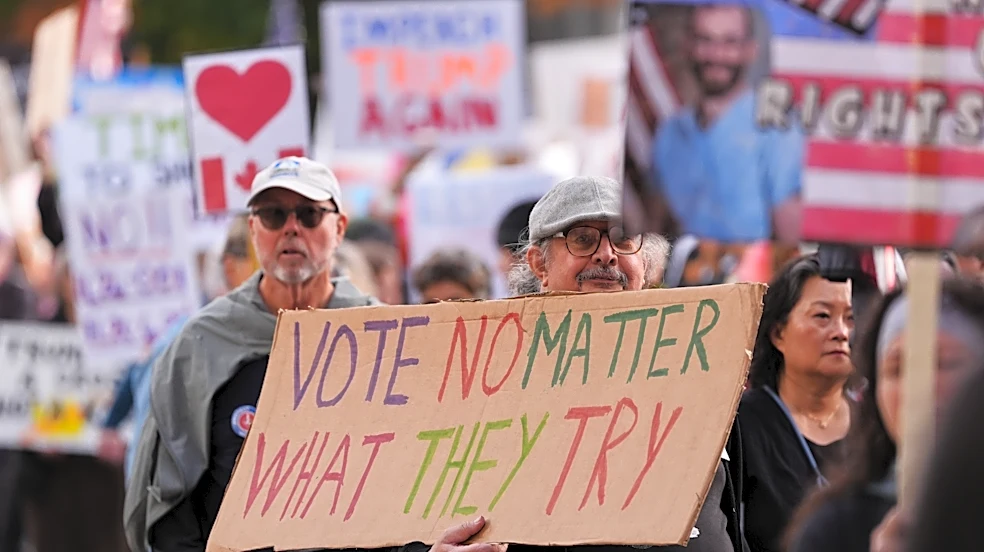
Blakeman, a steadfast Trump supporter with longtime ties to the president, has hammered Hochul particularly for New York's soaring utility costs, and has batted away Trump-related criticism by saying the race should be focused on state governance. Hochul's campaign, in turn, has kept the spotlight on Trump actions that raised New Yorkers' costs and on the federal immigration enforcement effort that Blakeman supports.
The other statewide races
New York Attorney General Letitia James, a Democrat who has held that office for eight years, is running for a third term as the state's top law enforcement officer and faces Republican challenger Saritha Komatireddy, a former federal prosecutor making her first foray into politics.

James, known nationally for winning a civil fraud case against Trump and his businesses in 2024, has positioned herself as a bulwark against the White House since Trump's return in 2025, leading or joining a slew of multi-state lawsuits against Trump administration policies.
Komatireddy, who was a prosecutor for 10 years before working for the Drug Enforcement Administration and then entering private practice, has run a law-and-order campaign that promises to use the Attorney General's Office to step up criminal enforcement at the local level.

Also running statewide is Comptroller Tom DiNapoli, the Democrat who has held that office since 2007 and faced his first primary challenge this year, easily fending off two opponents. He's being challenged on Nov. 3 by Republican Joseph Hernandez, an entrepreneur and investor who runs Blue Water Venture Partners, a biotech investment firm he founded.
New York's fourth statewide race is for lieutenant governor. The Democrat running with Hochul is Adrienne Adams, a former New York City Council speaker who left office in December due to term limits. Blakeman's GOP running mate is Todd Hood, a retired Syracuse cop and sheriff of upstate Madison County.
New York's congressional delegation
New York's marquee House race is the contest between Lawler and Conley for the suburban swing district he has won twice. Lawler, who held an early campaign rally with Trump in May, has been emphasizing the tax cuts Republicans passed last year and his role in securing a higher cap for a state and local tax deductions — a priority of his that he cast as a big win for New Yorkers.

Conley, an Army combat veteran and former national security official in the Biden administration, has stressed her military background and gone after Lawler for backing Trump on most matters, including the Iran war and Trump's tariffs. While Lawler touts his high scores for bipartisan bills, Conley paints him as a "party-first" politician and Trump loyalist.
Just as Democrats hope to flip Lawler's seat to win control of the House, Republicans have set their eyes on unseating two Long Island Democrats with competitive races in Nassau County. Democratic Rep. Tom Suozzi is being challenged by Republican Mike LiPetri in the 3rd District. Rep. Laura Gillen faces GOP challenger Jeanine Driscoll in the 4th District.
New York currently has 19 Democrats and seven Republicans in its House delegation.
Key midterm races in the Lower Hudson Valley
Putnam County has an unusual, three-way race for county executive with a third candidate joining the race in August on the Conservative Party line. Kevin Byrne, the Republican incumbent, was set to square off against Democratic challenger Brett Yarris when Conservatives named Tatiana Brahimi as their candidate in race, rather than offering their ballot line to Byrne.
The competition on the right could boost Yarris' chances in Republican-leaning Putnam, where no Democrat has been elected county executive in 44 years. Byrne, who is seeking a second term and was backed by the Conservative Party in his 2022 run, has accused Democrats and Conservatives of working together to unseat him. Brahimi rejected the notion she's a spoiler candidate and has been campaigning as "the real conservative choice."
Most prominent in Rockland County is the race between Republican state Sen. Bill Weber and Nyack Mayor Joe Rand, a Democrat, for the 38th Senate District, which takes in all of Rockland except Stony Point. Weber is seeking a third term. Rand has led the village of Nyack for almost three years.

Rockland elections also feature a rematch race between Clarkstown Supervisor George Hoehmann, a Republican, and Democratic challenger Eugene Bondar for the office Hoehmann has held for 11 years. Hoehmann won their first contest a year ago, when they were competing for a one-year term. (The tenure was shortened by a year because New York is starting its transition to even-year local elections.)
Westchester County has two U.S. House races: the Lawler-Conley faceoff in the county's northern half, which is part of the 17th District; and the contest between Democratic Rep. George Latimer and Republican challenger Joseph Cinquemani in the southern half, which falls in the 16th District. Latimer, the former Westchester County executive, was elected to Congress in 2024 and is seeking a second term in his heavily Democratic district, which includes a sliver of the Bronx.
Where and how to vote
New Yorkers can check their voter registration status online at https://voterlookup.elections.ny.gov/. They must be registered by Oct. 24 to vote in the Nov. 3 election, and may do so by applying online or submitting an application by mail or in person at their county election office. Forms and more details are online at https://elections.ny.gov/voter-registration-process.
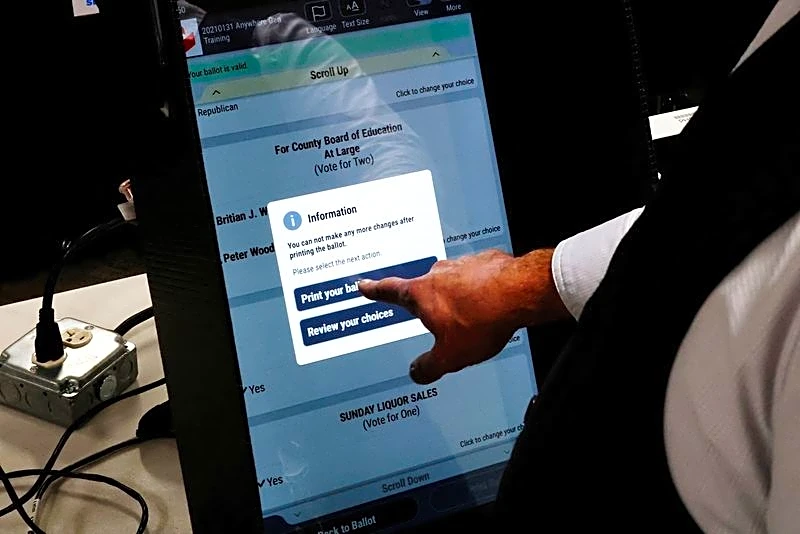
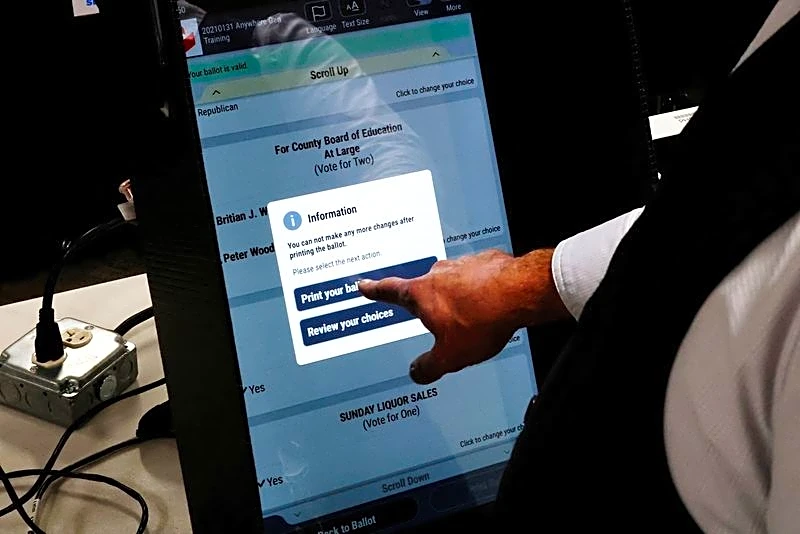
All New York voters can opt to vote my mail instead of in person. You can request a mail ballot online, by mail or in person at a county office. Details are at https://elections.ny.gov/request-ballot.

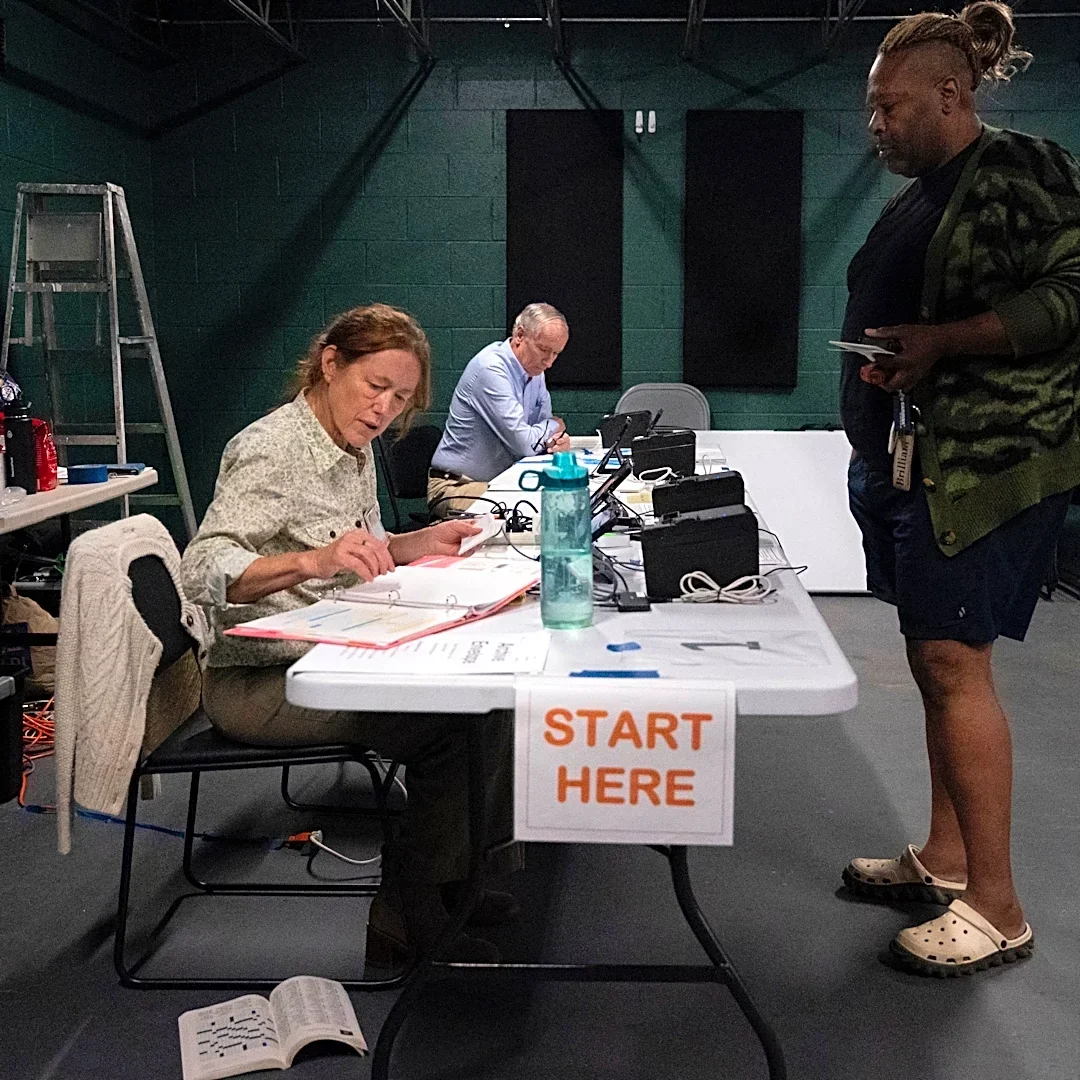
The nine-day early voting period begins Oct. 24 and is held during hours set by each county, generally at fewer poll sites than are used on Election Day. For poll locations, hours and candidate lists for the lower Hudson Valley, go to following county election sites:
Westchester: https://citizenparticipation.westchestercountyny.gov/
Rockland: https://www.rocklandcountyny.gov/departments/board-of-elections
Putnam: https://boe.putnamcountyny.gov/
Polls will be open throughout New York from 6 a.m. to 9 p.m. on Nov. 3. To find your Election Day voting location and see a sample ballot with the races you will be voting on, go to https://voterlookup.elections.ny.gov/.
Chris McKenna covers government and politics for The Journal News and USA TODAY Network. Reach him at CMcKenna@usatodayco.com.
This article originally appeared on Rockland/Westchester Journal News: What NY voters need to know for 2026 midterm elections