




Gov. Kathy Hochul's disaster declaration aims at easing access to measles shots and testing as the highly contagious virus continues to spread though the state. Measles cases have hit 108 this year in New York, including 92 cases reported since mid-July.
The bulk of cases recorded by the New York State Department of Health as of Oct. 3, are in rural counties in central and western New York. Four cases have been detected in Rockland County, a densely populated county in the Lower Hudson Valley that was a key site during the state's last big measles outbreak in 2018-2019. New York City has seen seven measles cases this year.
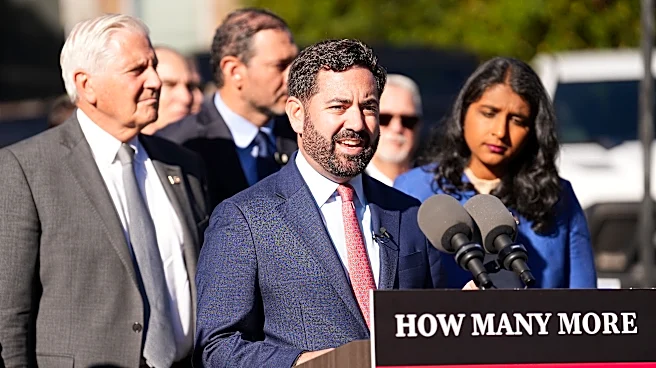
"No one should get seriously ill or die from a vaccine-preventable disease," Hochul said in an Oct. 5 statement. "That is why
I have taken steps to increase the number of health professionals who can vaccinate and test. These emergency measures will protect New Yorkers and support our community partners as they work tirelessly to address the spread of this disease."
The order comes as nearby Pennsylvania announced its measles cases have topped 1,000 in 2026.
Similarities, differences from 2018-2019 outbreak
The outbreaks differ in key ways: the current counties are mostly rural, while the prior Rockland outbreak was concentrated in more densely populated areas of the state, including Brooklyn.
By the time that outbreak officially ended in September 2019, there had been 312 confirmed cases in Rockland County and more than 600 cases across New York City.
One thing the outbreaks have in common: counties where measles cases have loomed largest have MMR (measles, mumps and rubella) vaccination rates below 80% for children age 2 and under, state data show.
How measles outbreak changed state laws
The 2018-2019 measles outbreak was concentrated in Orthodox Jewish communities of Brooklyn and Rockland.

The outbreak led to the 2019 change in education law that rescinded religious exemptions for school vaccination mandate. Children in public and private schools in the state must comply with vaccine requirements and can only get exemptions for health-related reasons.
According to the Rockland County Department of Health, the county's four cases in 2026 stemmed from a visiting international traveler and occurred between February and March. The four sickened with the virus were children, including a year-old, two 4-year-olds and a 7-year-old. County officials declined to provide further details, including the locations of the measles cases.
In 2025, Rockland reported 21 cases of measles, the bulk of those occurring between October and December when the virus spreads more easily as people spend more time indoors.
How order helps boost measles prevention
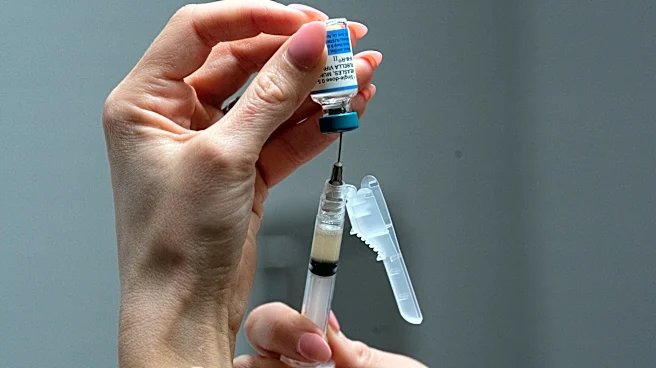
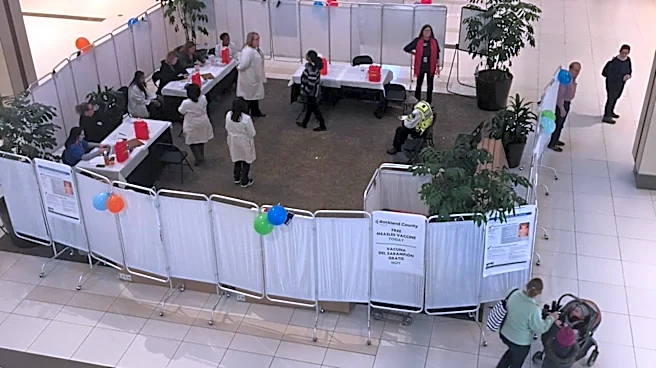
Hochul's executive order launched a State Disaster Emergency that aims at increasing access to the MMR (measles, mumps and rubella) vaccine and to testing for immunity to the virus.
The healthcare professionals who can now administer measles vaccines include: paramedics, advanced EMS providers, pharmacists and midwives.
Registered nurses can now order testing for the virus, as well as check for past exposure to the virus.
Measles risk: beyond the bumps
About 90% of unvaccinated people exposed to the virus will become infected, and one infected person can spread the virus to up to 18 others. One in 5 need hospitalization, according to state and federal health officials.
The virus can suspended in the air for up to two hours after an infected person leaves a room, so it can be transmitted even if a sick person isn't immediately around you.
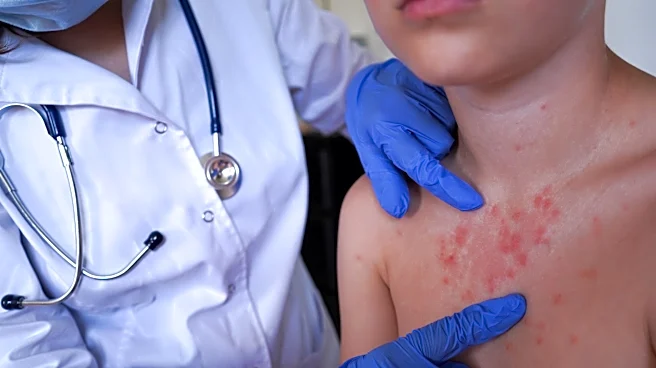
Common complications with measles include ear infections and diarrhea in young children.

But measles complications can be dangerous: 1 in 20 children end up with pneumonia and 1 in 1,000 suffer from encephalitis, or swelling of the brain, according the U.S. Centers for Disease Control and Prevention.
Nearly 1 to 3 of every 1,000 children who become infected with measles will die from respiratory and neurologic complications.
Contracting measles during pregnancy can lead to low-birthweight babies and other complications.
Measles also can cause "immune amnesia," potentially wiping out a child's pre-existing antibodies against other viruses and bacteria.
Nancy Cutler writes about People & Policy for lohud.com and the USA Today Network New York. Reach her at ncutler@lohud.com; follow her on Twitter, Threads and Instagram at @nancyrockland.
This article originally appeared on Rockland/Westchester Journal News: How NY measles disaster emergency compares to prior Rockland outbreak