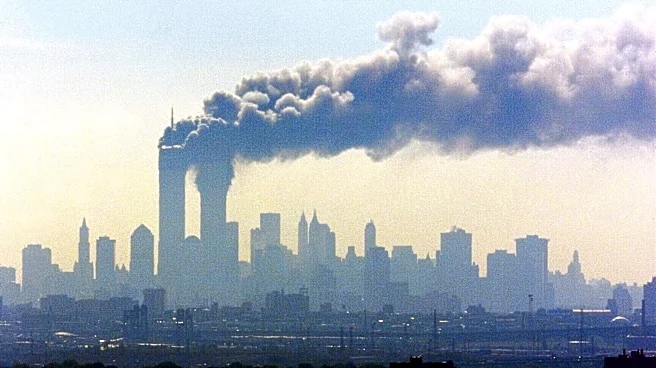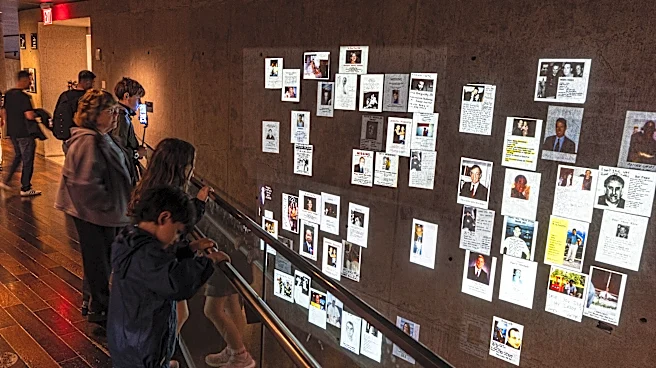




As the years pass, more and more of what we remember is held in photographs. That’s true for the memories we cherish and also for the ones that haunt us.
Take Sept. 11, 2001, the day I turned 42.
I was a photo editor at The Journal News, driving into work on a Tuesday morning filled with blue skies and the promise of an ordinary day — followed, I hoped, by a birthday celebration that evening with my husband and our 7- and 11-year-old children.
As I neared the office on Westchester Avenue, listening to WCBS 880 AM Radio, I heard the urgent breaking news: A plane had just flown into the World Trade Center. It was just before 9 a.m., and suddenly I could not get to the newsroom fast enough. Not long after, a second jet struck the second tower.
Understanding the unimaginable
I ran
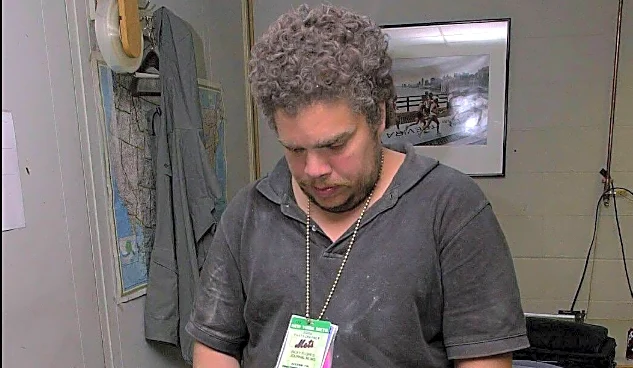
into the office and, within seconds, was on the phone with two of our photographers, Ricky Flores and Seth Harrison. Within minutes, they were heading toward the city.
What followed was a blur of activity: editors arriving, assignments being made, everyone scrambling to understand what had happened and how to cover it.

Back then, lohud.com was not yet the go-to digital news source it would later become. There were no cell phones that could transmit photographs, no social media to carry images in real time. We had reporters and photographers on the ground, calling back what they saw and filing what they could.
But to share many of those photographs, the photographers had to return to the office to upload them. They had been working digitally for less than two years, and most uploading and editing still happened in the newsroom. Ricky and Seth came back covered in dust and ash and, like so many who were there, visibly shaken.

Our photographer Frank Becerra Jr. had a different kind of dual role that day: working as a volunteer firefighter on the pile while stopping when he could to photograph the scene around him. Later, he found an apartment where he could connect his camera to a computer and transmit some of the images.
In the newsroom, we tried to understand the unimaginable, get an Extra edition out and produce the next day’s newspaper.
Around us were our own private fears — family members, friends, neighbors and colleagues who worked in the towers or might have been nearby that morning.

The hours turned into days, then weeks, then months. I don’t remember truly taking a breath until the first anniversary of the attacks. By then, working at The Journal News had changed forever for me.
A responsibility to bear witness
There was a before 9/11 and an after 9/11— in our sense of urgency, in the evolution of the tools we used, in how we delivered information and in the shared knowledge that the world itself had changed.
In the days and weeks that followed, my role was to keep looking for the people and moments that helped us tell this life-changing story. As part of a team of photo and news editors, I assigned photographers, edited hundreds of images and worked through coverage that seemed to move from one scene of devastation to another — cleanup, recovery, funerals, grief.

I sent photographers back out again and again, knowing what I was asking of them, and then tried to make sure their work was seen. That was part of the job, but it was also part of the responsibility: to bear witness, to help readers understand the scale of what had happened and to preserve what words alone could not hold.
Now, 25 years later, I find myself doing a version of that work again — going back through those photographs, editing them for a new generation of readers, and feeling the loss return with startling force.
One image carries an entire story
The Ground Zero site has been rebuilt. It is a place to visit, to remember, and for children born after 9/11 to learn what happened. But the photographs still pull the past close. They are not only records of what happened; they are memory itself.
One glance at an image can carry an entire story.
Some of those images remain almost impossible to take in: the sheer devastation, the incomprehensible scale of destruction, the exhaustion of a firefighter sitting in the rubble against his firetruck for a moment’s rest. And then there is Ricky Flores’ photograph of firefighters raising the American flag, an image that captured not only loss but the human spirit that endured inside it.
Photographs also bring back my own quieter memories of those towers — of photo shoots I had done there years earlier, including one with a bank executive six floors below ground, seated on a mound of bullion bars; of a party I photographed at Windows on the World, where I remember standing near the top of the North Tower, marveling at the panoramic views over New York City.
I wonder now whether I would remember those moments as clearly without the photographs to call them back.

The stories my colleagues tell, including some in today’s section, are deeply personal. Others help us understand the lasting questions about health, loss and survival — especially for the first responders who worked at the site and later became sick because of it.
As I read through these stories and look again at the images, I feel the grief of that day return. But I also feel something else: gratitude. Gratitude that these photographs remain. Gratitude that these stories are still being told.
And gratitude for the resilience of those who continue, 25 years later, to come to ground made sacred by loss, memory and the obligation never to forget.
Carrie Yale is Executive Editor of The Journal News and lohud.com.
This article originally appeared on Rockland/Westchester Journal News: 25 years after 9/11, photographs bear witness to tragedy, resilience