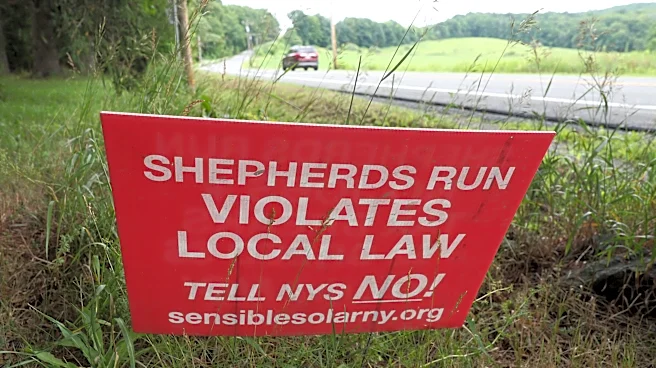








New York state has nixed a controversial plan to put solar panels on 215 acres of farmland in a Hudson Valley town, a victory for local opponents whose decade-long battle got a boost from key figures in the Trump administration this year.
The state’s Office of Renewable Energy Siting (ORES) and Electric Transmission on Oct. 14 denied Hecate Energy a permit for its Shepherd’s Run project in the town of Copake in Columbia County, two and a half hours north of New York City. The 42-megawatt project would generate power for 9,500 homes.
The ruling by ORES interim executive director Jason Zehr found Chicago-based Hecate’s application failed to fully address the adverse environmental impacts on wetlands and state-mandated floodplain protections for
local towns.
“Weighing the full record of evidence presented in this case showed that the application did not meet the criteria for permit issuance,” Zehr said.

While modest in size, Shepherd’s Run became a referendum of sorts on New York’s efforts to add more renewable energy upstate as it works to clean a downstate grid largely reliant on fossil fuels, a dependency exacerbated by the 2021 shutdown of the Indian Point nuclear power plant.
New York’s climate goals — 70% reliance on renewables by 2030 — bank on the state’s ability to send clean energy down to the Lower Hudson Valley and New York City along overhead transmission lines.
The Shepherd’s Run opposition, which counted members from both political parties, came together to form Sensible Solar for Rural New York, citing the potential loss of productive agricultural land. Hundreds of residents turned out for two days of hearings in January and hundreds more flooded the ORES site with comments.
Victory on blocking New York solar project (for now)
On Thursday, Oct. 15, Sensible Solar members declared victory — for now.
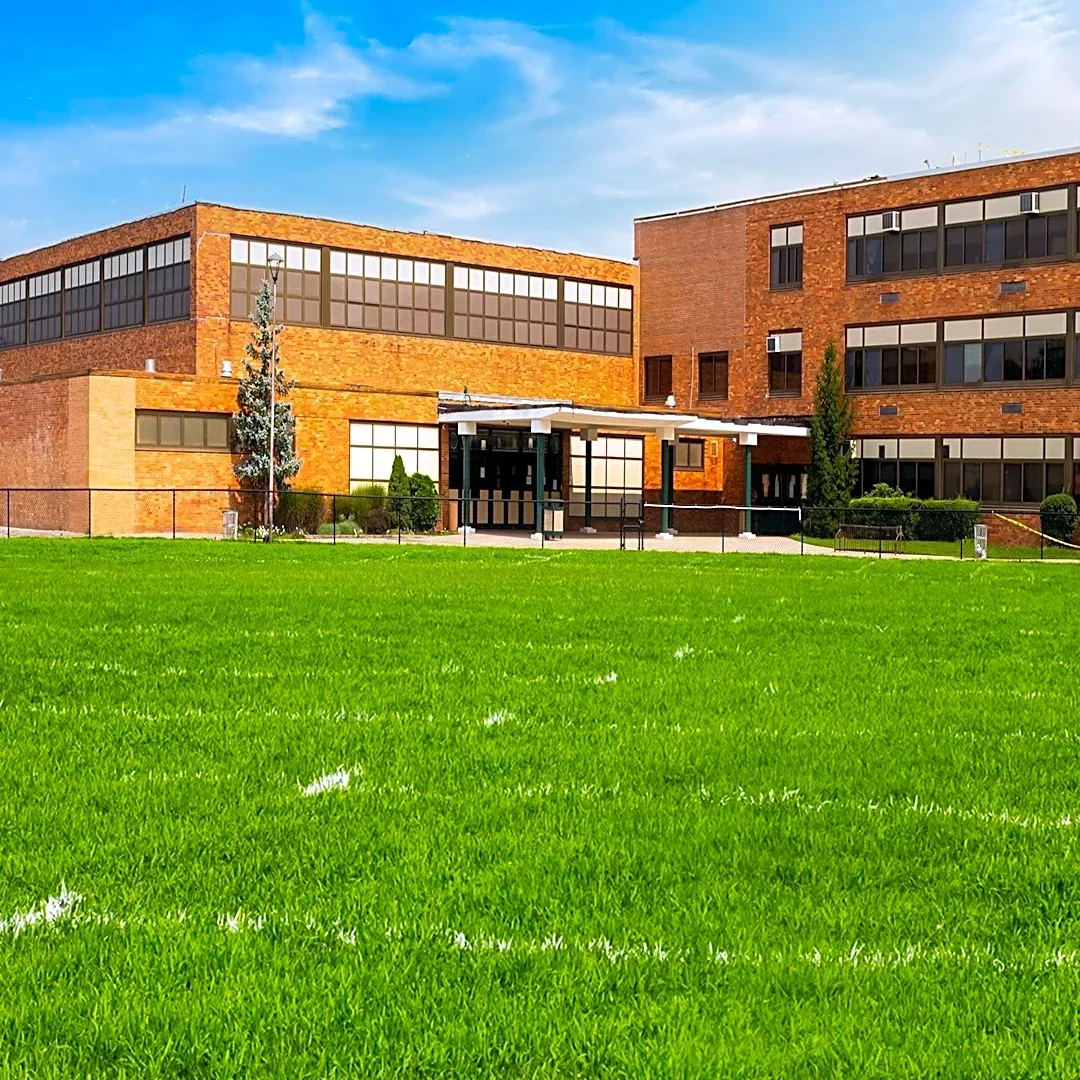
“Our community has shown amazing unity and commitment in this battle,” said Vicki Sander of Sensible Solar. “Project opponents have spanned the entire political spectrum. But they were united in their desire to protect the environment — trout streams, threatened birds, our beautiful and productive prime farmland — and protect our schools from noise and fire risks.”

It’s unclear whether Hecate will challenge the ruling. A spokesman could not immediately be reached for comment.
Previously, Hecate said the project would deliver millions of dollars in property taxes to local towns and villages and would allow landowners to continue farming on acreage free of solar panels.
In June, leading Trump administration figures — Agriculture Secretary Brooke Rollins and Environmental Protection Agency head Lee Zeldin — questioned why the state would allow farmland to be overrun by wind turbines and solar panels.
“Protecting prime farmland and preventing the United States from becoming a dumping ground for hazardous foreign-made waste are not obstacles to a sound energy future — they are part of it,” they wrote in a letter to Gov. Kathy Hochul at the time.
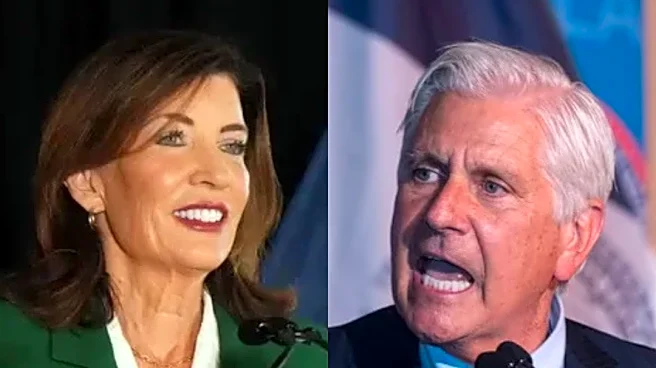
In April, Republican gubernatorial candidate Bruce Blakeman traveled to Copake, attacking a Hochul-backed renewables plan for driving up the cost of energy. “Does it make any sense to take thousands and thousands of acres of beautiful farmland and put these ugly solar panels on them?” Blakeman said.
Blakeman's appearance presented a dilemma for Democrats with Sensible Solar, which has vowed to remain politically neutral. Several chose not to attend. The group had the support of Democratic state legislators from the region.
Wednesday’s ruling was a rare denial for ORES, which has approved 38 projects since it was established in 2020 to speed up the state’s sluggish buildout of large-scale renewable projects. In 2022, ORES rejected an application for the North Side Energy Center in St. Lawrence County, citing the potential impact on wetlands and threatened and endangered species. And in 2024, ORES rejected an earlier Shepherd’s Run project that, at 60 megawatts, was slightly larger than the most recent proposal.
In September, the state announced that 13 large-scale renewable energy projects — solar, land-based wind and hydroelectric — received contracts from the New York State Energy Research and Development Authority.
But an investigation by the USA TODAY Network published in July found projects face significant hurdles after they're approved.
Few renewable projects break ground in NY
The investigation found that nine of 42 large-scale solar and wind projects approved by the state since 2021 are operating. Eight others were approved for construction.
Earlier this year, the state approved the Alle-Catt Wind Energy project in western New York. One of the largest the state has ever approved, Alle-Catt will spread wind turbines over 1,444 acres in Allegany, Cattaraugus and Wyoming counties.
Hochul has embraced an all-of-the-above energy policy that includes renewables as well as nuclear power to clean the state’s grid. And she’s been critical of NIMBYism (Not in My Backyard) that has hindered the buildout of wind, solar and battery storage upstate.
“New York remains committed to advancing renewable energy projects that meet all standards established by law,” said Rory Christian, the CEO of the state’s Department of Public Service, which oversees ORES. “This project application did not meet New York’s rigorous standards. I commend ORES on its decision to deny this permit based on the record presented in the case.”
Thomas C. Zambito covers energy, transportation and economic growth for the USA TODAY Network’s New York State team. He’s won dozens of state and national writing awards from the Associated Press, Investigative Reporters and Editors, the Deadline Club and others during a decades-long career that’s included stops at the New York Daily News, The Star-Ledger of Newark and The Record of Hackensack. He can be reached at tzambito@lohud.com
This article originally appeared on Rockland/Westchester Journal News: NY rejects Hudson Valley solar farm opposed by Trump administration