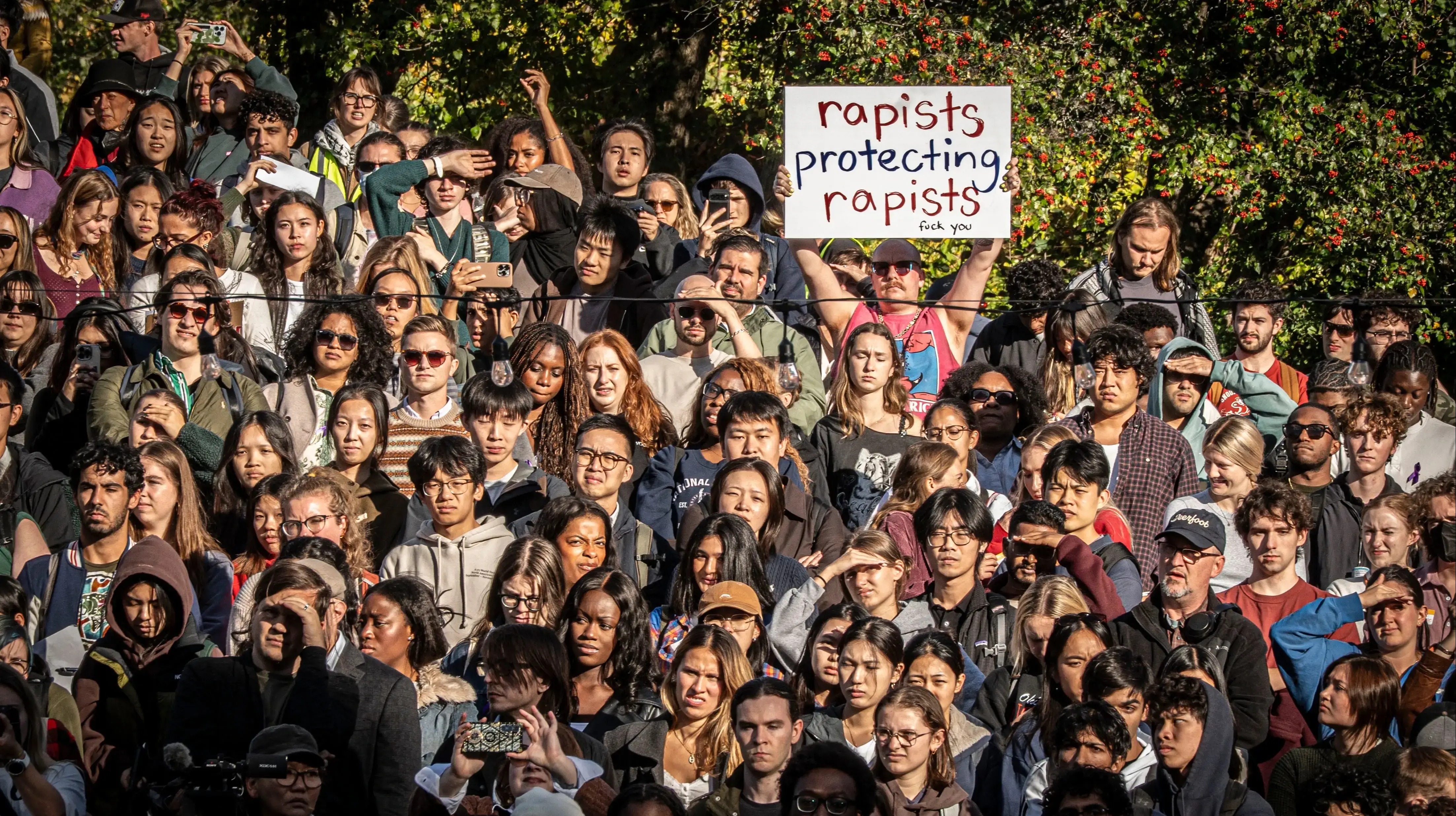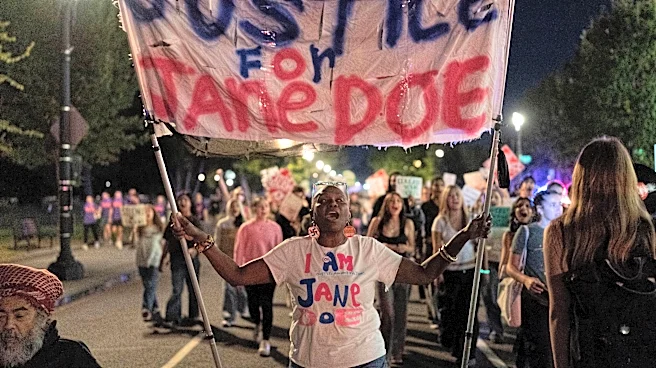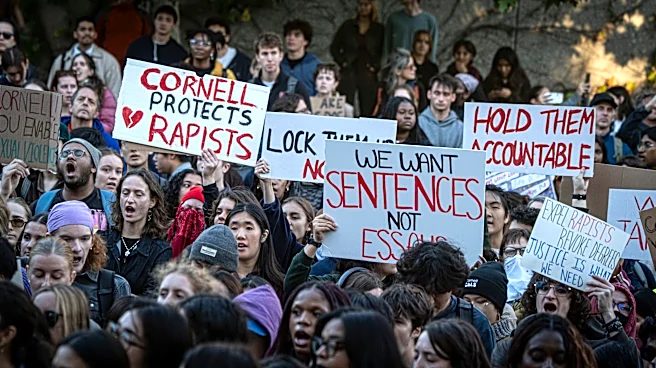






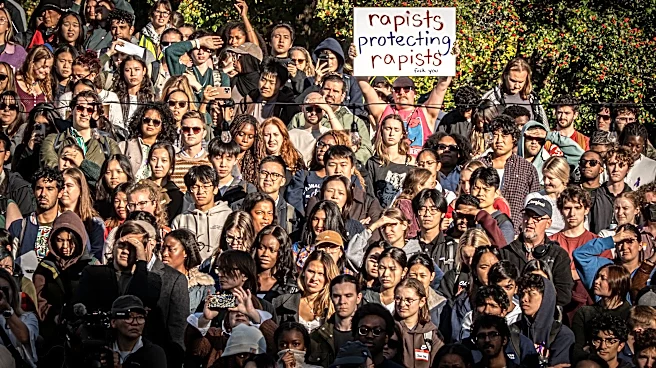

Cornell University President Michael Kotlikoff has promised to use frustration and outrage voiced by the campus community over the university’s handling of a former student’s allegations that she was raped at a campus fraternity house in 2024 to fuel systemic change at the Ivy League school.
“These conversations, and campus protests, have underscored my deep conviction that we must do better: that the time for meaningful and lasting change at Cornell, and at campuses across the country, is now,” Kotlikoff said in a statement on Tuesday, Oct. 13.
Kotlikoff banned fraternity parties and social events through the end of the academic year, agreed to have Cornell work with state police to investigate sexual assault allegations and will enlist the help
of faculty with expertise in sexual assault and rape culture.
But some faculty members say the changes are long overdue, citing in part a $1 billion legal settlement in a case involving a former Weill Cornell Medicine doctor accused of sexually abusing patients over a decade. Their concerns about campus culture have largely been ignored by administrators who’ve kept them at arm’s length, they say, despite their decades of experience working with business and organized labor to confront the sort of top-to-bottom institutional changes now confronting Cornell.
Faculty call out 'Cornell's failure' on sexual violence prevention
In a letter published recently by the Cornell student newspaper, members of the New York State School of Industrial and Labor Relations (ILR) and its Workers Institute said Cornell’s response to Jane Doe’s allegations “are in direct conflict with the practices and values we teach.”
“Cornell’s failure to adequately address and prevent sexual violence has negative effects on the campus community and on our work with our external partners, which is particularly damaging given ILR’s focus on how power is exercised, how workers and communities develop an effective voice in their employment and government, how institutions respond to harm and conflict and how trust and accountability are built,” the letter states.

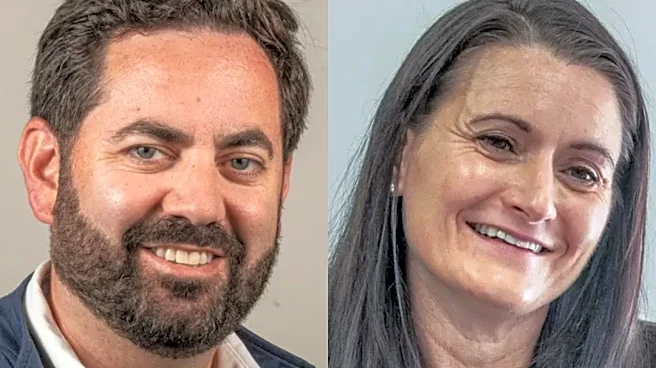
Among the six signers is Risa Lieberwitz, a professor of labor and employment law at Cornell and the worker institute’s academic director.
“The administration has not reached out to us over the years to do that, but I think this is the opportunity,” Lieberwitz said in an interview with the USA TODAY Network. “We’re ready to help…This takes a lot of good planning and so it’s not something that’s going to happen tomorrow. But this is the time to start.”
They're not alone in publicly airing their grievances with the university. The Cornell chapter of the American Association of University Professors recently called out university administrators for failing to “exercise leadership.”
“In moments of crisis such as this, we need leaders, not administrators,” the professors wrote in an Oct. 2 letter.
Lieberwitz noted, however, that Kotlikoff’s recent public statements were the first time she can recall the university embracing the role faculty should play in charting the course ahead.
“Cornell has extraordinary resources and expertise,” Kotlikoff said on Oct. 3. “We will bring them to bear, building respect for each other as human beings, understanding the factors that lead to this behavior and the interventions that mitigate it, improving support for those who experience sexual violence and advancing research that can deepen our understanding of sexual assault, trauma, intoxication and consent.”
$1B settlement of Weill Cornell case
The faculty group’s letter cites not only the Jane Doe allegations but Cornell’s August agreement to pay $1 billion to settle legal claims stemming from the actions of Dr. Darius Paduch, a former Weill Cornell urologist and assistant professor accused of sexually abusing patients over the course of a decade.
The school has failed to acknowledge that settlement contributed to budget cuts and staff reductions, the letter adds.
“Cornell’s missteps have created significant institutional and financial pressures that directly undermine the mission of the University and our ability to fulfill our public mission,” the letter adds.

The ILR is funded by the state through Cornell’s status as a land-grant university.
In a lawsuit filed last month, the former student, identified as Jane Doe, said she was sexually assaulted and raped by seven members of the Chi Phi Fraternity in October 2024. Criminal charges have not been filed.
Cornell last week named Sally Yates, an acting attorney general in the Obama Administration, to review how the school addressed the allegations.
But Arianna Schindle, the director of training and curriculum design at the Worker Institute, said a meaningful investigation should incorporate the experience of Cornell faculty and staff who spend their days putting into practice what their research into sexual assault and harassment has taught them.
“It’s not ‘Did we meet the legal requirement?’ ” Schindle said. “It’s ‘Did we actually address the harm?’ And in these kind of situations, when misconduct is intersecting with institutional power, we have to examine not just what happened, but who had the power to stop it.”
Changing the culture at Cornell
Under that approach, campus police called to investigate sexual assault would work side by side with experts in how victims of traumatic events respond to questions, as they build trust with the survivor, Schindle added.
“A traumatic memory is stored in a jumbled way,” Schindle said. “We sometimes talk about it like a closet where you shove everything in the closet and it’s all jumbled up. So, it’s difficult for trauma survivors to share, especially in the moment."

Sabrina Karim, an associate professor at Cornell who directs the Gender and Security Sector Lab, said law enforcement agencies, whether campus police or state or city departments, should be trained in how different genders process crime and trauma.
“It’s often seen as like a tick box activity in terms of training and not necessarily taken seriously and campus police are no exception to that,” Karim said. “It is absolutely a special skill set, and I think for a long-time universities have seen themselves as a site that’s not immune to sexual violence but maybe somewhat protected from or it’s not immediately transparent how prevalent things are.”
Karim penned her thoughts on the case for an essay that appeared in Slate.
“I think this case and so many others at universities and so many unreported cases show that it is prevalent and needs to be dealt with appropriate training and commitment by police forces and the city that those universities are in,” she said.
Thomas C. Zambito covers energy, transportation and economic growth for the USA TODAY Network’s New York State team. He’s won dozens of state and national writing awards from the Associated Press, Investigative Reporters and Editors, the Deadline Club and others during a decades-long career that’s included stops at the New York Daily News, The Star-Ledger of Newark and The Record of Hackensack. He can be reached at tzambito@lohud.com
This article originally appeared on Rockland/Westchester Journal News: Faculty call out Cornell sexual violence failure, cite $1B settlement