



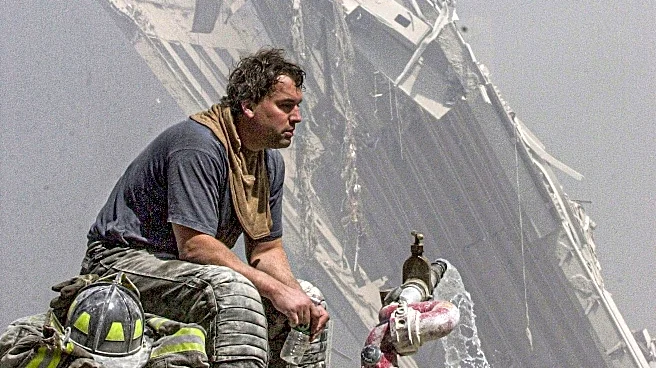
As revelations about the 9/11 illness fight continue to mount, advocates and responders have emphasized the importance of learning from the history of the federal programs caring for those sickened in connection to the Sept. 11, 2001 terrorist attacks.
What follows is a timeline of the World Trade Center Health Program, as well as key details about the federal legislative and funding debates involved in the ongoing fight to provide health care and other services to the thousands of people with 9/11-related conditions.
WTC Health Program: History of the fight
The original 9/11 Victims Compensation Fund of 2011 (VCF) was introduced in Congress just days after the 2001 terrorist attacks. But it closed in 2004.
In 2005 and 2006, members of Congress from New York pushed for health treatment
programs but legislation didn't go anywhere.
In 2006 Department of Health and Human Services released $75 million to monitor and provide health care to 9/11 volunteers. At the time, it was called a "down payment" by head of HHS, then-Secretary Michael Leavitt.
The New York Daily News documented the growing number of sick and dying first-responders in a series called “9/11: The Forgotten Victims." The paper's editorial board won a 2007 Pulitzer for their efforts "on behalf of Ground Zero workers whose health problems were neglected by the city and the nation."
The Zadroga Act, which would re-establish the VCF and set up the World Trade Center Health Program, was introduced in 2009.
The fight to get it passed was rough on 9/11 responders, many emaciated by cancer and other diseases, who wandered the halls of Congress to lobby members.
The legislation seemed to be stalling in 2010 when Jon Stewart used his popular "Daily Show" to explain what was at stake.
The bill passed in December 2010, with $1.6 billion to fund the World Trade Center Health Program for five years.
The James Zadroga Health and Compensation Act was named for an NYPD detective whose death at 34 from respiratory failure was linked to inhaled pollutants at Ground Zero.

The WTC Health Program was established as part of Zadroga and reopened the 9/11 Victims Compensation Fund. The two programs are distinct, but to qualify for the VCF, a person needs certification by the WTC Health Program.
There's been bumps along the way for Zadroga and WTC Health Program.
In 2015, the Zadroga Act expired and first responders headed to Congress to lobby for its extension and push for additional funding for the VCF, which was predicted to be drained by 2016.
Their efforts led to Zadroga's reauthorization, extending the Victims Compensation Fund for five years and extending the WTCHP through 2090.
But funding issues continued.
In February 2019, Rupa Bhattacharyya, the fund's special master, announced that the fund was running low and warned that pending and future claims faced deep cuts.
John Feal, a leader in the fight for Zadroga, Stewart and 9/11 responders, including retired NYPD Det. Luis Alvarez, were back in D.C. that June, urging Congress to act.
Sitting with a visibly ill Alvarez, Stewart excoriated the lawmakers: "They did their jobs. Do yours!"
Alvarez would die from 9/11-related cancer 18 days later, on June 29, 2019, at the age of 53.

That month, the House and Senate passed the The Never Forget the Heroes: James Zadroga, Ray Pfeifer, and Luis Alvarez Permanent Authorization of the September 11th Victim Compensation Fund, and on July 29, Trump signed it.
In 2022, Congress added another $1 billion to the WTC Health Center to keep it afloat.
In 2023, another $676 million in funding was approved for WTCHP.
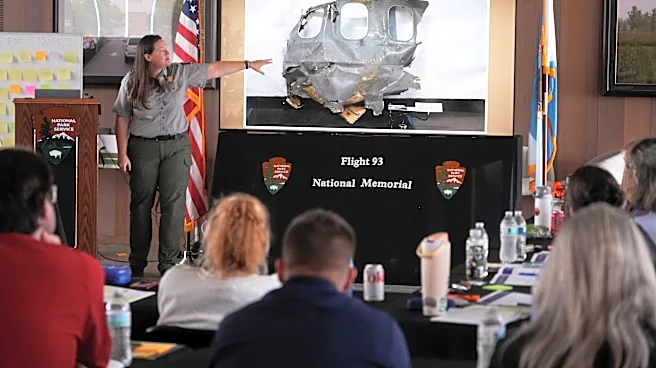
In 2024, federal responders to the attacks on the Pentagon and near Shanksville, Pennsylvania were made eligible for the program.
In December 2024, a fix was proposed for WTC Health Program funding mechanisms that kept falling short. But the deal collapsed along with an omnibus spending plan that folded under political pressure by then President-elect Trump and Elon Musk.
Threats to program operations came in 2025, including in February when Musk's Department of Government Efficiency, or DOGE, focused on the CDC and then in April when advocates raised warnings that HHS Secretary Robert F. Kennedy Jr.'s cuts would trickle down to WTCHP.
While congressional intervention seemed to smooth things out, staffing disruptions caused lingering issues with the program, advocates warned. U.S. Sen. Kirsten Gillibrand, D-N.Y., reported in May 2025 disruptions for as many as 800 responders and survivors seeking to enroll in WTCHP and significant delays for nearly 1,200 written treatment approvals.
In February of this year, the WTC Health Program funding formula was changed, making allocations based on the program's enrollment. The new method is expected to keep the WTC Health Program secure through 2090, when the program sunsets.
But advocates say the WTCHP has still faced challenges.
In March of this year, a reassignment of WTCHP support staff to other government departments, including Immigration and Customs Enforcement, was criticized.
Advocates say staffing shortages and delays continue, impacting 9/11 responders' and survivors' healthcare.
A new FDNY World Trade Center Health Program report issued Sept. 1confirms the growing need to examine issues like cognitive impairments and links to 9/11 exposures.
Meanwhile, information is just now being released about what was spewed in the air that day and lingered afterward. On Sept. 8, NYC Mayor Zohran Mamdani announced the city would release a trove of documents about air quality. The release is in response to a court action by 9/11 Health Watch and Chevat.
General death info - what it means
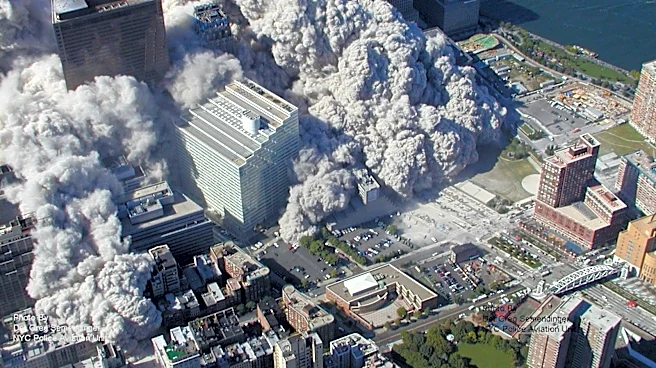
On Sept. 11, 2001, 2,977 victims of the terrorist attacks perished at the World Trade Center, the Pentagon, in Pennsylvania and on the four hijacked jets.

According to the World Trade Center Health Program, 9,677 claimants have died as of the end of July 2026.
Note: A statistical record does not determine causal links for every death. To die with a 9/11 illness is not necessarily to die of 9/11-related disease.
The 9/11 Victims Compensation Fund, which provides monetary relief to 9/11 victims and families, had provided 6,222 deceased enrollees compensation.
Who is enrolled in 9/11 health programs?
Since the WTC Health Program was established in 2001, more than 154,700 people have enrolled as of June 2026, CDC data show.
More than 62% of WTC Health Program enrollees are first responders.
The average age of a 9/11 first responder is now 63.
In the first quarter of 2026, for example, 694 first responders enrolled in the WTCH Health Program; 1,402 survivors joined in that same stretch of January through March.
What kind of care is provided
69 cancers are now covered by the World Trade Center Health Program.
About a dozen aerodigestive disorders are covered by the WTC Health Program, including interstitial lung disease, asthma, reflux and sleep apnea.
Mental health issues covered by the WTC Health Program include PTSD, depression, anxiety and substance use disorder.
Musculoskeletal disorders are covered for World Trade Center responders, which includes carpal tunnel syndrome and lower back pain.
9/11 illness trends, outcomes
9/11 responders have an up to 40% greater risk of developing prostate cancer than for the general population.
According to World Trade Center Health Program data, 86% who developed cancer are alive five years later, compared to 63% of those who develop cancer in the New York state general population.
The program offers smoking cessation: 4% of the 9/11 cohort smoke, compared to 9.3% in the New York state general population.
First responders who were part of the WTCHP had a 13% lower risk of death from any cause, compared to 9/11 responders who were not part of the program, according to a March 2026 study.
Around 2018, CDC data show that more survivors were enrolling in the program than responders.
How the program works
WTCHP is a federal initiative under the U.S. Department of Health and Human Services; the management is done by the U.S. Centers for Disease Control and Prevention, which is part of HHS, and the National Institute for Occupational Safety and Health, which is under the CDC umbrella.
Certification of a physical condition by the WTC Health Program is needed for the 9/11 Victims Compensation Fund to process a monetary claim on behalf of a victim or family.
In order to receive a VCF claim, a person or family must sign a waiver giving up the right to pursue civil lawsuits over a 9/11-related injury or death.
How to apply for 9/11 assistance programs and get other help
New York state agencies offer a range of guidance and resources for those who may be eligible for various programs and services related to the Sept. 11, 2001, terrorist attacks.
What follows are some key details on ways to get help, according to the state:
You may be able to receive no-cost healthcare and/or financial compensation from two federal government programs: the World Trade Center (WTC) Health Program and the September 11th Victim Compensation Fund (VCF).
You do not need a lawyer to apply for these benefits.
If you were at the World Trade Center in lower Manhattan or, in some cases, parts of Brooklyn on September 11, 2001, or you participated in the Pentagon, or Shanksville, PA 9/11 rescue, recovery, or cleanup effort, and you developed a physical or mental health condition as a result, you may be eligible.
Eligibility is not limited to first responders. You may be eligible if you participated as part of the rescue, recovery, or clean-up effort at any of the impacted areas, or if you worked, lived, attended school, or were a visitor at the World Trade Center or the surrounding area.
For further information, visit www.ny.gov/programs/911-assistance-programs. You can also call the VCF toll-free number: 1-855-885-1555, or the WTC program at 1-888-982-4748
Nancy Cutler covers People & Policy. Reach her at ncutler@lohud.com; follow her on X, Bluesky and Instagram at @nancyrockland.
This article originally appeared on Rockland/Westchester Journal News: Inside WTC Health Program's history as 9/11 illness fight evolves