







The majority of Rockland County families struggle to afford basic needs, even with a median household income that tops $100,000. For families in the rest of the Lower Hudson Valley region, the outlook's not much better.
That's according to the United Way's 2026 ALICE study, which looks at real costs needed to live here, and then figures out how much income a family needs to actually meet those basic needs.
The ALICE acronym stands for Asset Limited, Income Constrained, Employed; it uses actual local costs to calculate the income necessary for fulfilling basic needs.
In Westchester, 41% of families fall below the ALICE threshold; in Putnam, United Way calculations put 40% of families below the ALICE threshold.
In a high-cost region, the definition
of a high income is relative, data from the United Way of New York State's ALICE study shows.
"A six-figure household income can sound substantial until you compare it with the actual cost of housing, child care, food, transportation and health care in the community where that family lives," said Therese Daly, president and CEO of United Way of New York State. "ALICE gives us that local context and exposes an affordability challenge that traditional poverty measures simply do not capture."
Nonprofits see the struggles daily
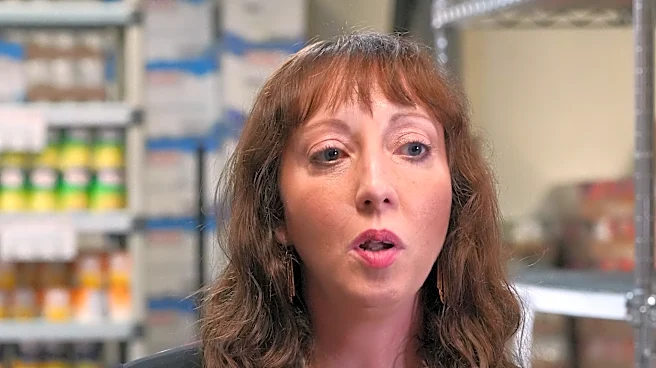
People to People CEO Sharon Mellis said the ALICE data shows that more than 50,000 families in Rockland have to make "tough choices every month between paying for rent, medical care, transportation to work, childcare and food. Something has to give." Mellis, whose agency operates the county's largest food pantry, noted it's often food that families cut back on, affecting nutrition and health long term.
"People to People sees this reality daily," Mellis said. Since 2020, the nonprofit has seen about 1,500 new households seeking food assistance each year. "We continue to provide food assistance to 45% more households than we did in 2023."

According to Stephen Papas, the CEO for United Way of Rockland and executive director of Catholic Charities of Rockland, his county saw a 4 percentage point increase in ALICE households over the last three years.
"ALICE data confirms what residents already know: rising housing costs are pushing more households to the brink, and we must continue fighting to keep Rockland home for the people who live and work here," Papas said.
Meanwhile, federal cuts to the Supplemental Nutrition Assistance Program, known as SNAP, has pushed more costs to local governments and agencies, and made regulations tougher to qualify for assistance known as food stamps.
“You can think about it in terms of funding, but how we want you to think about it is less food on tables, and less food in lunchboxes,” Kristine Borok, president and CEO of Feeding Westchester, told News12 during a recent press conference with U.S. Sen. Kirsten Gillibrand, D-NY.

What's the cost to live in our counties?
Here's what the 2026 ALICE study says about cost-of-living challenges in Lower Hudson Valley counties:
- Around 54% of Rockland County households were below the ALICE threshold, meaning they are struggling to afford basic needs, despite a countywide median household income of $103,847.
- Some 41% of Westchester County households were below the ALICE threshold, despite a median household income of $118,596.
- About 40% of Putnam County households were below the ALICE threshold, despite median household income of $121,485.
The statewide median household income is $85,820.
'ALICE is a person': Behind the numbers
The United Way calculates an ALICE Household Survival Budget by looking at costs for a particular area. That's considered a more accurate measure of what it takes to survive rather than the Federal Poverty Level, which United Way calls "obsolete" because it doesn't take into account regional cost differences.
Papas said those differing measures are key to gauging what's really going on with affordability in the region.
Just looking at federal data for Rockland, for example, one would assume an improving economic situation, Papas said. But, "based on ALICE guidelines, there are 4,188 more households struggling to survive within Rockland County. This is concrete data, which Rocklanders personally know to be true."
Households with an income below the ALICE Household Survival Budget are then counted as below the ALICE threshold.
According to United Way, the gap between what people earn and what they need to make ends meet puts financial stability out of reach.
ALICE families often have to choose between necessities. And they often lack resources to cover unexpected household expenses, like an unexpected vehicle repair bill or the cost of a medical crisis, which can unravel any financial stability.
“ALICE is more than an acronym for Asset Limited, Income Constrained, Employed. ALICE is a person. A neighbor. A parent. A friend. Someone you see every day, often without knowing their story," said Tom Gabriel, president and CEO of United Way of Westchester and Putnam. "ALICE works hard. But sometimes, hard work isn't enough."
Find the United Way's 2006 ALICE report at uwnys.org
Nancy Cutler writes about People & Policy for lohud.com and the USA Today Network New York. Reach her at ncutler@lohud.com; follow her on Twitter, Threads and Instagram at @nancyrockland.
This article originally appeared on Rockland/Westchester Journal News: Majority of Rockland families struggling, United Way ALICE report says