






A New York state legislator is aiming to expand the protections of the state's school cell phone ban in a packed bill that would further restrict and regulate the use of screens and technology in schools.
Sen. Andrew Gounardes, a Brooklyn Democrat, introduced the Fostering Optimal Classroom Use of Screens, or FOCUS, Act on Aug. 21, which he says would create "comprehensive, age-appropriate restrictions on technology in schools, regulating the use of screens, artificial intelligence, and other "ed tech" devices to ensure students' educational outcomes come before the profits of tech corporations."
Gounardes, who has been a fierce advocate for children's safety in New York, stressed that the FOCUS Act would address the gap left by the state's bell-to-bell
cell phone ban in schools as it only applies to students' personal devices, not ones issued by school districts. The New York City-based lawmaker also says the bill will "ensure learning comes first."
"Tech plays an indispensable role in the modern world, and we should prepare our kids to use it to lead rewarding, successful lives," Gounardes added. "But when it comes to screens in schools, we can't afford to be on AI-powered autopilot."
Here's what you need to know about the newly proposed legislation.

How the FOCUS Act would protect children in NY schools
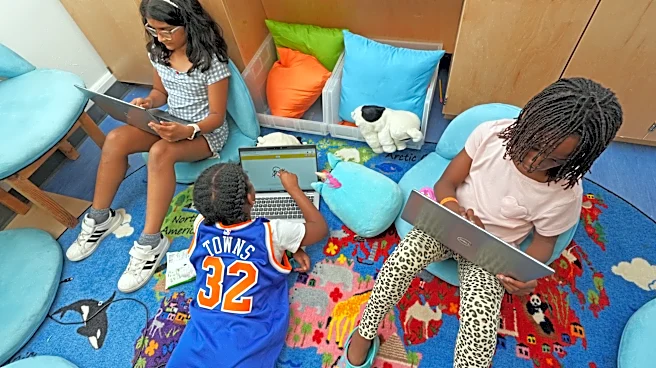
Gounardes says nearly 9-in-10 American public schools now have a program that provides every student a school-issued device like a laptop or tablet, even though some experts have linked increased classroom screen exposure with weaker learning outcomes in recent years.
Additionally, Gounardes said some features, including chatbots, gaming and generative AI, are "proven to be distracting, detrimental to youth mental health, and conducive to cyberbullying while providing little educational value."
Here's what's included in the proposed FOCUS Act legislation, which is co-sponsored by senators Jamaal Bailey and Jessica Scarcella-Spanton, both New York City Democrats:
- Schools would be required to offer screen-free learning to students in pre-K through fifth grade, while those in grades six through eight would have access to devices through a "computer cart." High school students could access screens through computer carts or on a one-to-one basis with a parent/caregiver opt in.
- Schools would be required to prioritize assignments that can be completed screen-free when feasible.Parents and students would be able to opt out of screen usage for assignments "where a reasonable, non-digital alternative exists" by way of a "right to analog learning" system.
- Social media, gaming, direct messaging apps, chatbots, generative AI, conversational AI platforms and cameras would not be allowed on school-issued devices.
- Schools would no longer be able to require students to create social media accounts in order to participate in official school functions.
- Educational technology companies would be required to register with the state Attorney General before they're able to offer products to school districts. If the product isn't in compliance with certain state privacy laws, includes distracting features that detract from educational purposes or haven't been shown to result in improved academic performance in at least one independent study, they would be banned from being installed on school-issued devices.
- The state Department of Education would be required to update its computer science and digital fluency learning standards, including requiring schools to teach students about the impacts of excessive screen time on young users.
- Educational tech providers would be banned from misusing student data through updated student privacy protections.
How advocacy, education groups are responding to the proposed legislation
Several groups advocating against the dangers of certain media on children and teens are backing Gounardes' legislation. Mothers Against Media Addiction founder and executive director Julie Scelfo said she supports the FOCUS Act as it "would put robust, thoughtful guardrails on the presence of technology."
"Schools should, above all, be places for children's intellectual, social and emotional development," Scelfo said. "Technology should only be introduced into classrooms if and when it is clearly proven to help our kids learn and grow."
And Elyssa East, special education parent, author, educator and Distraction Free Schools New York co-lead, calls the legislation an "absolute life saver."
"By reining in ed tech and AI, it will allow children to receive the kind of human-centered learning that has helped New Yorkers succeed for centuries," East said. "As a work of tech intentional legislation, this bill will maintain access to the kinds of technology that enhance learning and creativity for all, while safeguarding access for special education populations."
New York State United Teachers president Melinda Person agrees that these technologies deserve a closer look and should be limited in classrooms across the state.
"NYSUT looks forward to working with our education partners across the state to ensure every child has meaningful human connection in the classroom, while also learning to navigate the technology that will shape their lives," Person added.
However, the New York State School Board Association, which previously opposed the state's school cell phone ban, expressed some hesitation about the proposed FOCUS Act.
“We understand the positive intent behind this proposed legislation, but we would caution against legislation that erodes local decision making of school boards and school administrators together with their school communities,” NYSSBA's executive director Robert Schneider said in a statement provided to the USA TODAY Network on Tuesday, Aug. 25.
Emily Barnes covers state government for the USA TODAY Network-New York with a focus on how policy and laws impact New Yorkers' taxes, communities and jobs. Follow her on Instagram or X @byemilybarnes. Get in touch at ebarnes@usatodayco.com.
This article originally appeared on Rockland/Westchester Journal News: How FOCUS Act would limit use of screens and AI in NY schools