



Two of New York's top lawmakers are clashing with Gov. Kathy Hochul's stance on a federal school tax credit program as they have concerns that it will negatively impact the state's public schools.
The Federal Scholarship Tax Credit, often referred to as the Education Freedom Tax Credit, is part of the Trump administration's "big beautiful bill" passed last year and aims to provide scholarships for education-related services at private or public schools.
Earlier this year, the governor's office voiced Hochul's support for the program, saying New York was expected to opt-in to the program, but her office would "thoroughly review the details of the policy for poison pills that could harm New York's education system."
As some of those details are coming
to light, however, both Senate Majority Leader Andrea Stewart-Cousins, D-Yonkers , and Assembly Speaker Carl Heastie, D-Bronx, are raising red flags about the program and say New York should not opt-in to it.
"The regulations announced (on Oct. 1) would undercut New York's ability to establish meaningful guardrails, leaving the state with little control over which schools and expenses qualify or how this funding is used, and would allow those dollars to potentially flow to schools out of the state," Stewart-Cousins said.
And Heastie stressed that "public dollars should support public schools that serve all children and are accountable to the taxpayers who fund them." Hochul's office has not immediately said whether the governor's position has changed.
Here's the latest.

How the federal school tax credit program works
If New York joins the opt-in program, taxpayers looking to receive a federal tax credit of up to $1,700 for individual filers or $3,400 for married couples filing jointly must first make a charitable contribution to a state-approved charity that uses at least 90% of its income on scholarships for education choice options for eligible K-12 students, or Scholarship Granting Organization (SGO), according to the U.S. Department of Education.
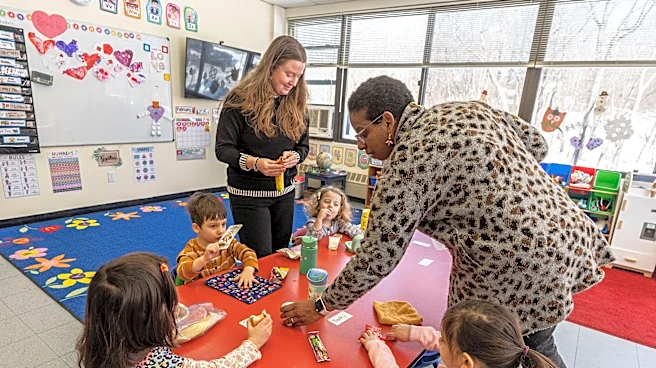
After receiving the funds, the SGOs use the money to provide elementary and secondary school students within the state scholarships to attend a school of their choice, or provide access to other education-related services and products. The amount of scholarship money awarded will be determined by the SGO and there is no limit on how much they can provide.
When it comes time for state taxpayers to file their annual federal income tax return, they would then receive a credit against their tax owed up to $1,700 or $3,400, depending on if they filed individually or jointly, and have up to five years after to use up the entirety of the credit. The program takes effect on Jan. 1, 2027.
How could New Yorkers benefit from the federal school tax credit program?

New Yorkers who are U.S. citizens or residents, make the qualified contribution to an SGO and are from a household with an income not greater than 300% of the area's median gross income may qualify for the program, the Department of Education says.
Those eligible can then use the scholarship money for a number of school-related benefits, including private school tuition, public school tutoring and support services for students with disabilities. The U.S. Treasury estimates around 95% of American children live in households that meet the credit's income limit.
"The Education Freedom Tax Credit will lower costs for parents and families, whether they choose to use these resources to send their child to a new school, pay for private tutoring, or provide other educational supports," the Department of Education says.
According to estimates by the Treasury and Internal Revenue Service, more than 11 million donors could contribute $26 billion annually to between 600-700 SGO's in participating states by 2030. Specifically, the agencies say the program's contributions could support around two million full-time $12,000 scholarships or five million part-time $4,500 scholarships.
Why is there opposition to the federal program in New York?
New York State United Teachers (NYSUT) members have been vocal in their opposition of the federal program because they say it will take money away from public schools and drain billions from state revenues.
According to the union, the program is estimated to drain around $2.3 billion from state revenues over the next decade, with New York expected to take a huge hit. School vouchers, which NYSUT asserts this is, redirect public tax dollars to pay for private school tuition and defund public schools because when students leave with vouchers, the public school loses that per-pupil funding but their fixed costs remain the same, they say.
And the income limit, which NYSUT says is more than $500,000 in parts of New York, makes the program "less an education program than a tax break for the wealthy."
NYSUT defended their position in a statement on Oct. 1, saying the regulations recently put forth by the Treasury and IRS are "loaded with poison pills."
"If New York opts in, the state would be prohibited from setting standards for scholarship organizations, deciding which organizations can participate, or limiting the types of schools and expenses that receive these federal tax dollars," the statement continues.
"That means New York could be forced to help funnel taxpayer-subsidized dollars to private schools that have admissions policies and practices that would never be acceptable in our public schools, while being denied the authority to put stronger safeguards around the program," NYSUT added.
A mid-June statewide poll conducted by Lake Research Partners revealed a majority of registered New York voters oppose Hochul opting the state into the program. And after learning more about the program, 57% of New Yorkers are against opting-in, according to NYSUT, with 38% strongly opposing it.
The poll also shows that 55% of the 800 registered likely 2026 voters who responded to the survey agree public dollars shouldn't be used to fund someone else's private school decisions, 46% believe opting in to the program will raise property taxes and 52% are concerned it will weaken New York's public schools.
Emily Barnes covers state government for the USA TODAY Network-New York with a focus on how policy and laws impact New Yorkers' taxes, communities and jobs. Follow her on Instagram or X @byemilybarnes. Get in touch at ebarnes@usatodayco.com.
This article originally appeared on Rockland/Westchester Journal News: NY lawmakers clash with Hochul on federal school tax credit program