




Construction to harden a 20-mile stretch of Metro-North Railroad’s Hudson Line prone to flooding, mud slides and downed trees begins in 2029, the Metropolitan Transportation Authority said Wednesday, Sept. 23 .
A $19.7 million design contract was recently awarded to a joint venture between STV and WSP, the first phase of a $270 million project to make track between Hastings-on-Hudson and Spuyten Duyvil more resistant to climate-related weather events that are occurring with greater frequency.
The Hudson Line is more vulnerable to climate change than any other MTA system, which includes city subways, according to Jamie Torres Springer, the MTA’s president for construction
and development.

“Unless we act, more than half of the 75-mile line is at risk of flooding during coastal storms,” Torres Springer said during a press conference at the Hastings-on-Hudson station. “Unless we act, that number will grow to 80% by the 2050’s. Unless we act, more sea level rise means that about 20% of all of the tracks on the line will be flooded on a monthly basis by mid-century.”
Sea levels at Spuyten Duyvil alone are expected to rise 30 inches by 2050. The MTA’s $68.4 billion capital plan for 2025-2029 includes $800 million to fortify the Hudson Line, more than half of the $1.5 billion dedicated to climate-related construction in the plan, Torres Springer said. Culverts will be expanded, retaining walls will be fortified and drainage improved along track and slopes.
A history of flooding impacting Metro-North Railroad
The MTA spent some $400 million restoring power and signal systems along a 30-mile section of the line between the Bronx and Croton-Harmon after Superstorm Sandy. After Hurricane Ida swept through the Lower Hudson Valley in 2021, service along the line was interrupted for several days while workers cleared mud and debris from tracks that hug the Hudson River coastline.
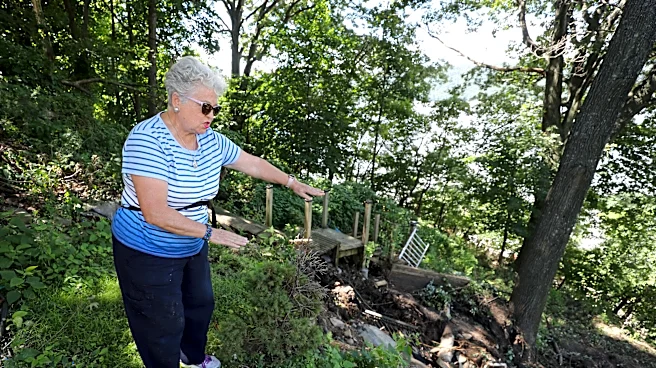
Rain that fell at a pace of three inches per hour caused backyards in Yonkers to slide down steep slopes onto Metro-North track. “It’s not a secret that as you are riding on the Hudson Line you can see how the water seems to be really getting very close to the railroad right of way,” MTA president and CEO Janno Lieber said.
Some 25,000 Metro-North riders use the stretch between Spuyten Duyvil in the Bronx and Hastings-on-Hudson each weekday.
Also in the design phase is a $20 million project to stabilize a section of the Hudson Line between Glenwood and Greystone station. Funding for that project will come out of the 2025 state budget.
“It’s critically important that New York’s public transportation system is responsive, is resilient in the face of extreme weather,” said state Sen. Majority Leader Andrea Stewart-Cousins. “And we all know about the hundred-year storms that happen all the time.”
Thomas C. Zambito covers energy, transportation and economic growth for the USA TODAY Network’s New York State team. He’s won dozens of state and national writing awards from the Associated Press, Investigative Reporters and Editors, the Deadline Club and others during a decades-long career that’s included stops at the New York Daily News, The Star-Ledger of Newark and The Record of Hackensack. He can be reached at tzambito@lohud.com
This article originally appeared on Rockland/Westchester Journal News: Metro-North Railroad gets $270M to address flooding. Here's why, where