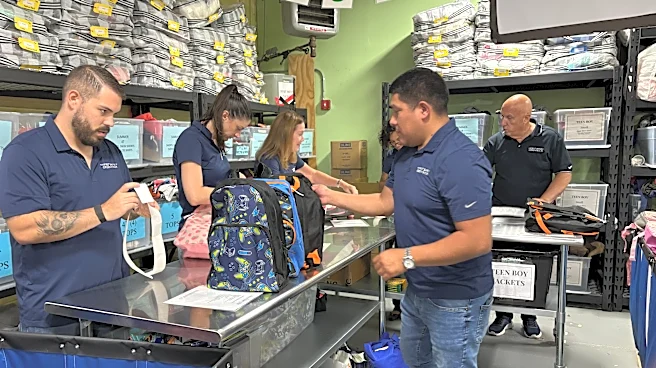








Every fall, the folding tables come out. In church basements, community centers and school lobbies across Westchester, volunteers fill backpacks with glue sticks, child-safe scissors and composition notebooks. It is a good tradition, rooted in the belief that every child deserves to walk into a classroom ready to learn. But when was the last time a glue stick helped someone land a job, solve a problem in a boardroom or put a person on the moon?
Our commitment to accessible education has endured. Our understanding of what readiness requires has not kept pace. A child who goes home to no computer and no internet connection is not ready, no matter how full the backpack.
This fall, our phones did not stop ringing with requests for computers from young
people. The STEM Alliance leads the region's only scalable Digital Navigator Corps, which brings computers, basic digital skills training and help enrolling in free and affordable internet service to anyone who needs it. In a typical season, that work reaches job seekers, older adults and parents. This season, the requests came from students who needed laptops to complete homework, begin a training program or study at home instead of trekking to the library. Among our clients 18 or younger, 92% need a computer.
Westchester students must be digital leaders
This week marked National Digital Inclusion Week. Today's students will enter a workforce that runs largely online, is increasingly shaped by AI and is changing at an unprecedented pace. Meanwhile, the national conversation about technology in schools has grown louder and more anxious. We are asking the right questions, but we should look carefully at the unintended consequences of our answers.

Andrew Bell, Program Director at Children's Mental Health, Westchester, is a member of Westchester's Disconnect to Reconnect movement, a countywide initiative that encourages play and interaction as an alternative to screen time. For him, the key distinction is this: "Technology is best used in the service of play. Brain science shows that there is a difference between being played by technology and using technology. It's not impossible to do this, but it has to be considered carefully."
The concerns about compulsive screen use are real, and they deserve serious attention. But the problem is not technology itself. The problem is passive technology, which turns children into consumers of screens rather than creators with them. The antidote is not to take devices away. It is to change what young people do with them.
Our competitive esports program, MAMK Gamers, might look like just another place where kids are on screens. In reality, it is a room full of students building friendships, practicing leadership under pressure, and discovering academic and career pathways. We moved kids out of their bedrooms and into an in-person, collaborative environment in a globally expanding industry. Platforms like Roblox can work that same way, letting young people build virtual worlds and learn to code in a real programming language alongside their peers.
The debate is not about online versus offline, or too much screen time versus none. It is about technology for playing and creating versus passive technology. It is about ensuring screen time puts kids in the driver's seat of their own constructive, joyful learning and discovery.
Every Westchester student needs digital access
More activity-based use of technology is just one part of the solution. We also need to address those who lack access entirely, kids and adults alike. Through our Digital Pathways program, we have screened more than 7,000 low- and moderate-income residents since 2020. 93% needed a device; 61% had no computer at all in the home; 32% had no internet connection. The digital divide was not started or solved by the pandemic. For thousands of New Yorkers, digital gateways to employment, healthcare, and education remain closed. Digital access is not a lifestyle luxury. It is a pathway to opportunity, and it belongs to all students, not just some. Yet as districts across the region write new technology use policies, many never mention the students who go home without a computer or an internet connection. Any policy that governs how kids use technology should also ask whether every kid has access. Otherwise, we risk widening a divide we have never closed.
So as we prepare kids to thrive in a digital world, let's fill their backpacks for the world they are actually entering. Keep the notebooks. But add a laptop, a reliable connection at home and someone to show them how to use both well. That is what ready looks like today.
Margaret Käufer is president of the The STEM Alliance.
This article originally appeared on Rockland/Westchester Journal News: Every Westchester student needs access to digital learning | Opinion