


It’s been more than 55 years since I have lived in Mount Vernon. I’ve heard it has changed in that time. I know I have. I’m curious to know if the memories I have are strong enough to make it feel like home again when I return in mid-October to speak at the Mount Vernon Public Library.
The library, a two-story, neo-classic edifice with entrances on First and Second Avenues, is inextricably linked to my childhood, growing up in the 1950s and 1960s.
My earliest memories are of Saturday mornings sitting on the floor of the children’s room downstairs listening to a kindly librarian read Dr. Seuss. The sessions began my love of the written word, something that would have a powerful influence on my career as a journalist and now, a novelist.
This is how I remember Mount Vernon
My connections
to the library go beyond recollections of the Children’s Hour or cutting through the building to escape inclement weather on my way to and from the YMCA which was down Second Street. My mother worked at the library for about 10 years.
Helen Holmes was not “officially” a librarian. She never earned a degree in Library Science or received training. Her title was library clerk. Still, she carried out many of the functions of traditional librarians. She checked books in and out and collected fines when they were overdue. She made sure books were correctly placed on the shelves. She helped students bewildered by the intricacies of the Dewey Decimal System. She even read to squirming youngsters at Children’s Hour.

Some of my fondest memories are not of my mother’s duties, but my own. Whenever my brother Gil and I were home early enough after swimming or baseball practice, my father, Chester Holmes, insisted we meet my mother when she got off from work at 6 p.m. and walked home with her. Later, when we could drive, we would convince our father to let us use the family car to pick her up.
I never knew why dad placed this chore on his sons. We lived only a five-minute walk from the library, and the neighborhood was not dangerous. Thinking back on it, he must have felt it was a way for show our respect and love for our mom.
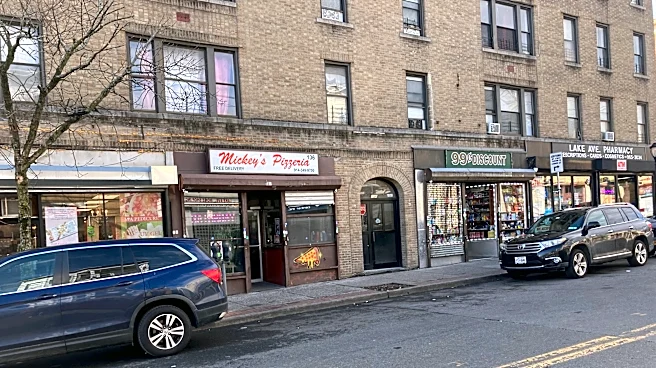
The library was one of several places that stand out in my memory of our quiet neighborhood on the city’s south side. Down Second Avenue, near the corner of First Street sat the YMCA. In my mind I still can see — and smell — the 20-yard pool where, as a member of the swim team I practiced. I remember the Y hosted meets there, and that we traveled to compete against other Ys in New Rochelle, Yonkers, Tarrytown and White Plains.
Around the corner from the Y was a small grill on First Street whose name I’ve forgotten, but whose gleaming counter and red vinyl upholstered stools I vividly recall. The counterman made the best cheeseburgers and vanilla egg creams. I remember I used to treat myself on Saturday mornings after swimming practice with the money I earned delivering the Daily Argus.
In the opposite direction, First Baptist Church sat on the corner of Second Avenue and Second Street, an imposing red-brick building with a narrow, sloping lawn. Troop 29 the Boy Scout troop the church sponsored met in the basement gym and community rooms (my father was the scout master). Involvement with the Boy Scouts gave me interests and skills that are rare for a "city kid": horseback riding, camping, canoeing and a general love of the outdoors.
Mount Vernon remains a huge part of my story
So much of Mount Vernon — and my family — remains embedded in me and found their way into "Black Messiahs," my new novel and the reason for my return to Mount Vernon.
One of my characters is named Helen after my mother. Another female character has the last name of Knuckles after my aunt, Alice Knuckles, the long-time school nurse at Mount Vernon High School. In the second chapter Sammie, one of my main protagonists, tells of being spurned by his Jewish girlfriend whose parents objected to her dating a Black man. That reflected a real incident in my youth in Mount. Vernon.
Indeed, the city’s demographics at that time, especially the makeup of the high school which was roughly one-third Italian, one-third Black and one-third Jewish infused me with an appreciation of other cultures. I remember, for example, attending my first Seder at the Free Synagogue, a reform Jewish house of worship on Columbus Avenue.
I look forward to returning to Mount Vernon. It poured so much into me; some of which I placed back into "Black Messiahs." Most, however, stayed inside me and have enriched my life. Thomas Wolf was wrong. You can go home again.
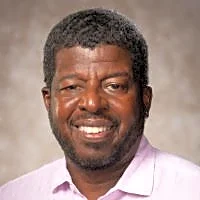
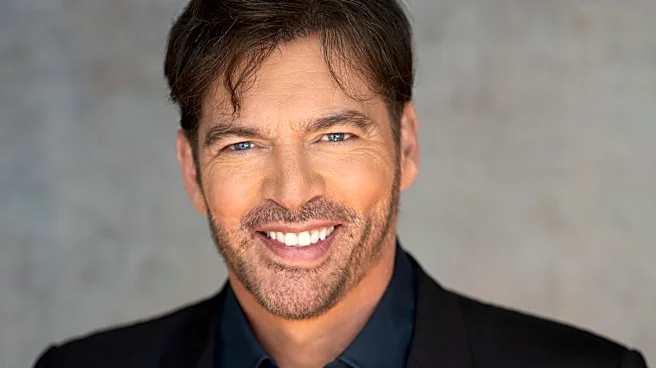
Steven A. Holmes was born and raised in Mount Vernon. He is a former Pulitzer Prize-winning journalist. His novel, “Black Messiahs,” was published in May.
This article originally appeared on Rockland/Westchester Journal News: 'Can you go home again?' Yes. For me, that's Mount Vernon | Opinion