


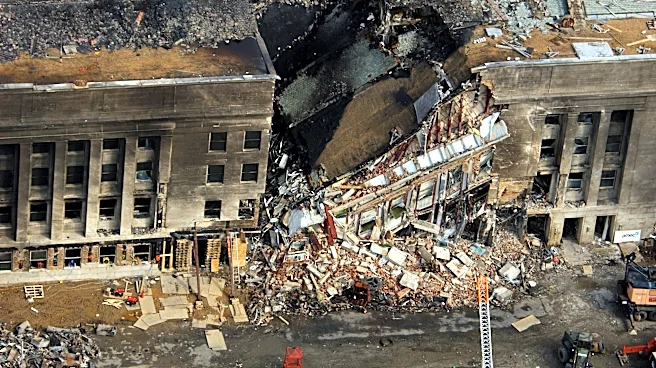

NEW YORK CITY - The Mamdani administration announced that reams of data and records about the air quality on and after Sept. 11, 2001, are being released by New York City's law department.
About 170,000 pages of records are now accessible through a special September 11th Public Records Portal. The announcement comes as part of a settlement of a court challenge to force the release of documents, some of which were gathered a quarter century ago as 9/11 recovery efforts were still underway.
The website that houses the portal, sept11documents.cityofnewyork.us, was officially launched Sept. 8, with city officials noting additional records would be added in coming months.
The court case, called an Article 78, was filed in 2024 by 911 Health Watch and
the nonprofit's executive director, Ben Chevat.
"For 25 years, four different Mayoral administrations kept from the public, the U.S. Congress, and the City Council documents showing what the city actually knew about the danger of the toxic chemicals in Lower Manhattan and Western Brooklyn after the World Trade Center collapse," Chevat said in a statement, "even as city officials continued messaging to the public that the air was 'safe and acceptable.'"
Chevat thanked NYC Mayor Zohran Mamdani, who was 9 when the 9/11 terror attacks occurred, for releasing documentation that "finally begins to answer the question, 'What did the City know about the dangers from the toxic cloud at Ground Zero and when did it know it?' "
Mamdani, in announcing the settlement during a Sept. 8 press conference, pointed out the database was searchable for key words, including terms like "asbestos" and "cancer."
Mamdani stood aside current and former elected officials, Chevat, comedian and 9/11 activist Jon Stewart and families of 9/11 responders killed by 9/11 illnesses as he said the documents would be accessible to all.
"People got sick because the leaders they trusted lied and said they were safe," the mayor, a democratic socialist elected as a Democrat, said.
9/11 health issues continue to claim lives
Around three times as many people have died with 9/11-related health conditions than were killed on 9/11 in Lower Manhattan, according to data from the World Trade Center Health Program.
Amid the toxic swirl, first responders ran to rescue people on Sept. 11, 2001, and then stayed for months to recover the victims.
In the weeks after, people were told the air was safe, even as documents showed government concern about toxins in the dust that covered the area and people.

The average age of a 9/11 responder is now 63. First responders and survivors with cancers and other 9/11-related illnesses continue to fall ill and die.
Last week, former Gov. George Pataki, a Peekskill native, disclosed he has a 9/11-related restrictive airway disease diagnosed in the last five years.
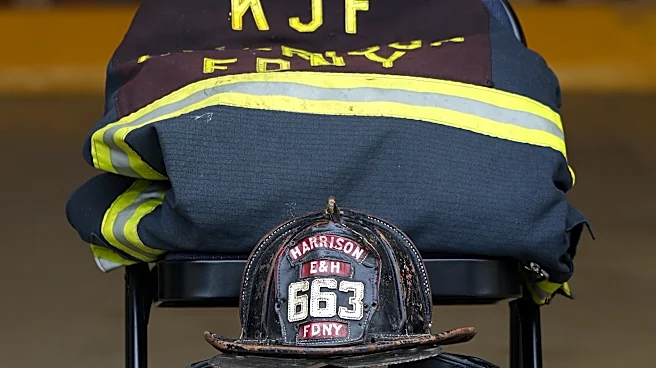
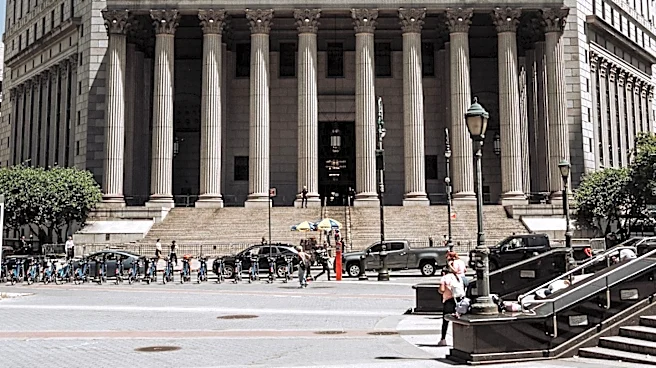
A funeral for FDNY Lieutenant Gerard M. Reilly, Ladder 22, was taking place Sept. 8 in Suffern, around the same time the Stipulation and Order of Settlement in the Article 78 filing known as Chevat vs. DEP, was entered into state Supreme Court records.
"For too long, information about the aftermath of September 11th has not been provided to the public. For years, families, city workers, and survivors have been crying out for more transparency from their government," NYC Corporation Counsel Steven Banks said in a statement.
"That is why the Mamdani administration has made a significant investment to give the public access to information and documents related to City government’s response to the September 11th attacks – documents that were never previously made available to the public," Banks added.
What court documents say about the settlement
The settlement order, filed with the court Sept. 8, includes the release of the so-called "Harding Memo," an internal city document written in October 2001 by a member of then-Mayor Rudy Giuliani's staff that warned New York City officials of massive legal liability from 9/11 toxic exposures while leaders publicly assured the public the air was safe.
The stipulation filed with the Manhattan court also states that NYC will use "diligent and good faith efforts" to identify any documents shared with its lobbyists or government liaisons to Congress and the Executive Branch in September, October, and November 2001 "for the purpose of seeking immunity or liability caps in federal legislation related to claims arising from the September 11th attacks."
The proceedings are expected to be voluntarily dismissed with prejudice a year after the portal's launch.
New York Supreme Court Justice James G. Clynes was the judge on the case.
Nancy Cutler covers People & Policy. Reach her at ncutler@lohud.com; follow her on X, Bluesky and Instagram at @nancyrockland.
This article originally appeared on Rockland/Westchester Journal News: 9/11 air quality records released by NYC, Mamdani. What they reveal