



County officials across New York are putting together their 2027 budgets while grappling with a cost hike imposed by Washington that makes it harder to avoid or minimize property-tax increases.
As part of last year's federal tax and spending cuts, Republicans in Congress and President Donald Trump forced states to take on a greater share of the cost of running the SNAP food aid program. And in New York, that means New York City and the 57 counties outside the city must absorb an estimated $168 million a year in new administrative expenses, starting Oct. 1.
New York counties bracing for that hit — and a bigger SNAP cost shift set to come next year — have been urging Congress to delay it for two years so they can prepare. But with no immediate prospect
of that happening, they are readying their budgets with added SNAP expenses that will cost several million dollars per year in the state's biggest counties.
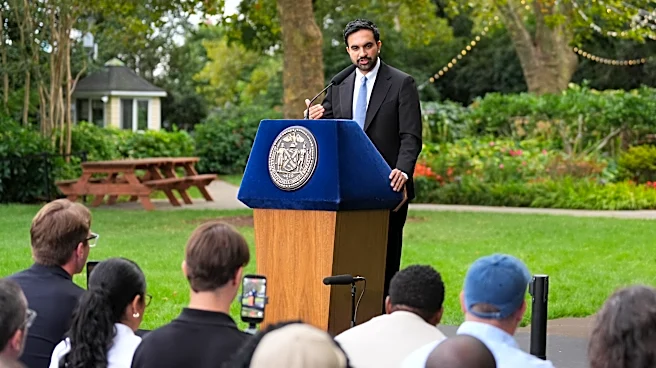
Westchester County's cost hike equates to a 1% property-tax increase, County Executive Ken Jenkins, a Democrat, declared at a recent campaign rally while railing against the GOP tax law, known as H.R. 1 and the One Big Beautiful Bill Act.
"On Oct. 1 in Westchester County, we have a 1% tax increase coming to us because of H.R. 1, because of SNAP cuts and the administration," Jenkins told a crowd in Tarrytown on Sept. 16 at the rally for Democratic House candidate Cait Conley.

The New York State Association of Counties sounded the alarm about the looming cost shift with a report detailing the estimated impact for each county. Among the largest increases:
- Westchester County, $4.5 million
- Rockland County, $2.2 million
- Monroe County, $3 million
- Suffolk County, $5.7 million
- Erie County, $6.4 million
"Whatever the law is, we will implement that law," Stephen Acquario, executive director of the counties association, told the USA TODAY Network in an interview. "But it will come at a cost."
Roughly 2.7 million New Yorkers — almost 1 in 7 residents — are enrolled in the Supplemental Nutrition Assistance Program, which gives grocery stipends each month to the poor, elderly and disabled. The federal government used to split 50-50 with states the cost of running the program, but last year's law hoisted the state share to 75% (which in New York is borne by its counties).
How will counties manage the higher SNAP costs?
The cost shift poses a permanent budget increase for counties, which already are strapped by federal and state mandates and other challenges, the counties association noted in its report. Their recourses, it said, include raising taxes, cutting other services or putting further strain on their social service offices.
Last year, 12 New York counties bypassed the state's 2% limit on property-tax increases so they could go higher, an unusual flurry of overrides that Acquario attributed to inflation-driven cost increases. He warned that feat could be repeated or exceeded this fall due to the SNAP cost increase, while stressing that tax hikes are a last resort.
"Counties will do everything they possibly can to avoid raising taxes at the local level to pay for a federal benefit," he said.
Acquario called the cost shift "counter-productive," arguing that added fiscal strain will make it harder for counties to root out SNAP payment errors, as Republicans were seeking to do with another SNAP change.
"It makes no sense what they did," he said.
Jenkins, in a USA TODAY Network interview, said Westchester's $4.5 million estimated cost increase will rise to $6 million after factoring in additional staff the county must hire because of H.R. 1. The county will now recertify SNAP recipients every six months instead of once a year to verify compliance with the federal work mandate, he said.
Last year, the county's $2.5 billion budget increased the tax levy by 3.3%. Jenkins, who expects to present his budget proposal in November, said he's mindful of residents' affordability struggles and will strive "not to add to that burden," despite the added SNAP costs, soaring diesel prices and other challenges.
"My budget has to balance, and there aren't many options for us," he said.
What is the next SNAP change NY faces?
Next up is a farther reaching step that will force states to pay a share of the SNAP benefit costs for the first time. Payments through the program originally known as food stamps have been fully funded by the federal government since it launched the program in 1964.
Starting in October 2027, states will have to pick up as much as 15% of the benefit costs, depending on their payment error rates. Republicans argue that giving states a stake in the benefit costs will spur them to make fewer payment mistakes. Democrats have deplored the federal SNAP cuts — totaling $187 billion over a decade — and said they will imperil food aid for the nation's neediest.
New York could absorb an estimated $1.1 billion a year in SNAP benefit costs as a result of the law. How much of that expense could be passed down to the counties and New York City hasn't been determined, Acquario said.
New York, which had a 13% payment error rate in the 2025 fiscal year, was one of 22 states with rates higher than 10% that would assign them the top payment share for SNAP benefits under H.R. 1. Only states with error rates lower than 6% will be spared any portion of SNAP benefit costs.
Sen. Kirsten Gillibrand, who made recent stops around New York to denounce the SNAP cuts and rising food costs, said in a statement: “At a time when people can barely afford a cart of groceries or a tank of gas, this president is making states and localities bear excruciating cost burdens for SNAP programming while he is funding tax cuts for the richest people in the country and pouring billions into a war overseas.”
In a statement in July, Republican Rep. Claudia Tenney of Oswego County called on Gov. Kathy Hochul to honor the Trump administration's demand for details on New York's SNAP participants, and to show the state's "corrective action plan" to reduce errors.

“New York cannot continue ignoring a problem that is costing taxpayers millions of dollars while putting the integrity of SNAP at risk,” Tenney said. “This program exists to help vulnerable families put food on the table, and every dollar lost to waste or improper payments is a dollar that cannot be used as intended."
Chris McKenna covers government and politics for The Journal News and USA TODAY Network. Reach him at CMcKenna@usatodayco.com.
This article originally appeared on Rockland/Westchester Journal News: How Republicans' SNAP cost shift could increase property taxes in NY