




A trial that will determine the mental competency of a Stockton man accused of killing six people and attempting to kill a woman is now underway, nearly four years after his arrest.

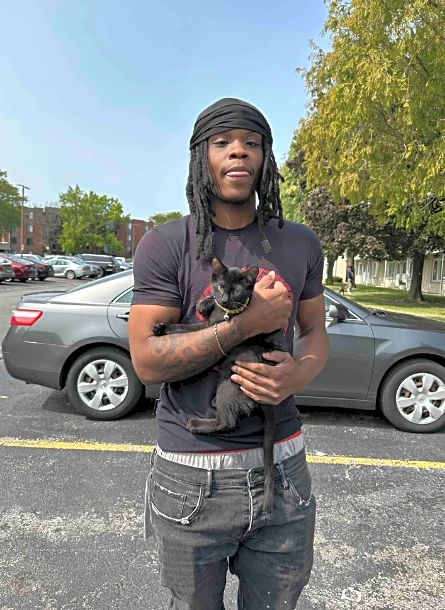
On Sept. 11, a San Joaquin County jury tasked with determining whether alleged serial killer Wesley Brownlee is competent to stand trial began hearing opening statements and witness testimony.
In October 2022, Brownlee was arrested for the shooting deaths of Juan Vazquez Serrano, 40; Paul Yaw, 35; Salvador Debudey Jr., 43; Jonathan Hernandez Rodriguez, 21; Juan Carlos Carranza-Cruz, 52; and Lawrence Lopez Sr., 54.
He is also accused of attempting to kill Natasha LaTour.
For a person to be deemed mentally competent, they must understand the nature and purpose of the criminal
proceedings against them, be able to assist counsel in a rational manner, and understand their status and condition within those proceedings.
Defense asks jury to find Brownlee incompetent for trial
In 2024, Brownlee’s defense attorneys, Allison Nobert and John Philipsborn, tendered a declaration of doubtregarding their client’s competence following what they described as a “shutdown in communication” with Brownlee.
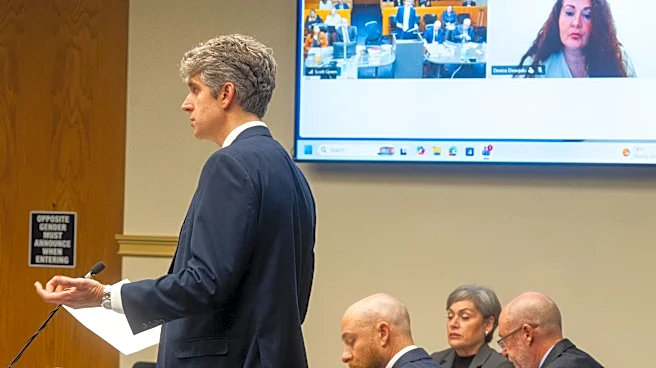
On the first day of the hearing, Nobert began her opening statements by telling the jurors the proceeding was crucial because competence is a critical part of the trial process.
She said the “central way” lawyers make decisions in a case is through communication with their clients, a process the defense team says has broken down.
“The main difficulty here, ladies and gentlemen, is we really can’t tell what is happening with Wesley Brownlee,” Nobert said. “One of the things the prosecutor is going to present to you, I believe, is that Mr. Brownlee is faking it and that this is just a decision on Mr. Brownlee’s part to not work with his lawyers.”
However, she asked the jury to question where such a strategy would come from and what it means.
Nobert said people who are accused of crimes typically want to explain themselves, respond to charges and have an opportunity to defend themselves.
“There’s great complexity to this case and quite frankly, I can’t make up Mr. Brownlee’s response. Lawyers can’t make up a defendant's responses for them,” she said. “So much of what I anticipate you’ll learn through this trial is about the journey we’ve taken that landed me in front of you.”
Nobert said before Brownlee stopped communicating, she made numerous efforts to engage with him and likely visited him more than anyone else involved in the case.
“I do that to form a bond with my client and trust. You’ll learn in order to facilitate this bond, I brought clips of basketball events and other sporting events, sometimes the news and sometimes I would read to my client,” Nobert told the jury. “In an effort to facilitate conversation, low-risk items, not about the case I was hoping to talk to him about.”
She said she at times showed Brownlee material related to his case, including surveillance footage, interview clips and crime reports, but there were no fruitful back-and-forth conversations between them.
Nobert spent a significant portion of her opening statement detailing the efforts of doctors involved in the case who attempted to assist Brownlee and gain insight into what was happening with him.
Before concluding her remarks, Nobert told jurors they would find Brownlee does not meet the definition of competence.
“We are going to establish that none of the three elements have actually been shown to be satisfied in this case — remember, that if any of them is not present, he is not competent,” Nobert said. “At the end of this, we will be asking you to return a verdict that Mr. Brownlee is not competent at this time to stand trial.”
Prosecutors point to 30 hours of family conversations
Deputy District Attorney Elton Grau began his opening statement by telling jurors that after an hour of listening to the defense, they still had not heard about what he described as the single most important piece of evidence that would be used in the trial: hours of communication involving Brownlee.
“Thirty hours. Repeat this. In the last four years, there are 30 hours of Mr. Brownlee speaking with his family, calling them on his own, where he has to dial a number, pick up the phone and talk to his mom, talk to his brothers,” Grau said.
He said those 30 hours included visits where family members talked about basketball games, people who died and discussions about what was happening in the courtroom.
“What this case is about is really simple and the defense said it: Mr. Brownlee is faking it,” Grau told the jury. “The point of this trial is whether he cannot or he is choosing to not. That’s the point of this trial.”
Grau said not speaking is a choice in itself and that there is a difference between a person who does not want to cooperate and someone who is unable to cooperate.
Grau told jurors they would hear from various experts during the trial and asked them to take in every piece of information given and ask if it made sense.
He said Brownlee spoke with family members, interacted with professional staff, and did activities such as using a computer kiosk to get items such as food and books.
Grau also referenced a conversation he said took place this year between Brownlee and his son, during which they talked about school, his report card, how he was doing and following the rules.
“He’s choosing this,” Grau said. “He’s choosing this because of one reason. The risk of punishment in this case.”
Grau told the jury that the law requires them to determine if Brownlee is competent today.
He said the defense did not mention the interaction because “they didn’t want to focus on the actual facts in this case.”
“What I’m saying to you is it is a choice he is making, not because of some disability, not because of some sort of mental health issue, but because he is choosing,” Grau told jurors.
According to Grau, three court-appointed evaluators were given the opportunity to speak with Brownlee.
Dr. Silvia Toress visited Brownlee at the jail in 2025, but he did not speak with her, Grau said. As a result, she informed the court that she was unable to perform the evaluation.
Grau said a second doctor visited Brownlee on several occasions and prepared a full report. In that report, she stated that she was not sure whether he was competent because he was unwilling to communicate.
This prompted a look into Brownlee’s life in jail. Grau said jurors would hear testimony from correctional officers about how Brownlee navigated daily life in custody, including a tally sheet calculating how much money was needed for certain kiosk items.
One distinction Grau asked jurors to focus on throughout the trial is whether Brownlee’s behavior stems from a condition that has affected him throughout his entire life or is something affecting him only when the legal process starts.
Grau concluded his opening statement with this message:
“By the end of this trial, after we hear roughly 30 hours of visits and phone calls, when we see Mr. Brownlee acting in rational and competent manners that the answer is going to be quite easy to decide: Mr. Brownlee is faking it and that he is competent,” Grau said.
Brownlee’s competency trial is scheduled to resume Tuesday, Sept. 15, at San Joaquin County Superior Court.
This article originally appeared on The Record: Five years after serial killings rocked Stockton, competency trial finally begins | Exclusive