



San Joaquin Regional Transit District board member Aaron Edwards threatened during a recent meeting to sue members of the public for defamation if they continued accusing the board of "stealing money," prompting a free-speech advocacy group and concerned residents to call on the board to disavow the remarks.
In an Aug. 11 letter to the San Joaquin Regional Transit District Board of Directors, the First Amendment Coalition, a nonprofit, nonpartisan organization that advocates for free speech, a free press and the public’s right to know, said Edwards’ threat was an “unacceptable attack on freedom of speech” that could have a chilling effect on protected public criticism of government officials.
"If it has not already done so, the full board should
disavow his threat, and Mr. Edwards should immediately withdraw it if that has not already happened," David Loy, legal director of the First Amendment Coalition, wrote in his three-page letter to RTD's board and legal counsel.

Edwards threatens defamation lawsuit over public criticism
Edwards' comments came at the end of the RTD board's July 17 meeting, when he said he wanted "to clear up some of the misconceptions that were said" by members of the public and emphasized that board members do not have authority to sign checks.
Public comments during the meeting raised concerns about RTD's lack of staff reports, the absence of job postings for some positions, the approval of the fiscal year 2026-27 budget on the consent calendar without a presentation, and the use of reserve funds, among other issues. No one who spoke during the meeting accused the board of "stealing money."
"This narrative has been put out there month after month after month after month that we're stealing money,” Edwards said. "I'm gonna let the public know that I will be filing a defamation suit on any public member, any public member that continues to spread that narrative, that we are stealing money."
Edwards said he was speaking personally because he and other board members have reputations to protect.
"That is me personally because I have a reputation," Edwards said. "Each board member has a reputation, and if you're not gonna get your facts straight, then please don't come up and speak. That is a forewarning. I'm tired, and sick and tired of that narrative. And trust me, I have no problem, no problem seeing you in court."
Edwards also said he would "not stand by and allow the public to continue to desecrate this board over and over and over again without consequences being had."
After Edwards' comments, Board Chair Derek Graves Jr. said, "Thank you, Mr. Edwards. That was really appreciated."
RTD's legal counsel, who was present at the meeting, did not publicly address Edwards' comments.
RTD officials did not respond to questions emailed on Aug. 11 about whether the board had discussed Edwards' comments, intended to disavow or retract his threat, or received legal advice about the legality of threatening litigation in response to public criticism. The questions also asked whether the board agreed that Edwards' remarks could have a chilling effect on protected criticism and whether the matter would be placed on a future board agenda for public discussion.
Edwards did not respond to questions sent through Erica Aguiñiga, executive assistant to the board, asking whether he had retained an attorney or taken any steps toward filing a defamation lawsuit based on statements referenced during the July 17 meeting.
Coalition says threat could chill protected speech
In his letter, Loy said the First Amendment Coalition was not taking a position on the substance of any disputes Edwards may have with speakers at the meeting, but he emphasized that such threats of legal action in response to public comments unjustifiably chill protected speech, undermine the First Amendment and attack the foundations of democracy and civic engagement.
Loy also noted that California law provides absolute immunity from defamation liability for statements made during proceedings such as transit district board meetings when the statements relate to the board's business. He cited California Civil Code Section 47(b) and two California appellate court decisions. He said that, for that reason alone, Edwards' threat of litigation is meritless to the extent it is based on comments made during a board meeting.
"Critique of the board or board members is democracy, not defamation," Loy said, citing the U.S. Supreme Court's landmark 1964 decision in New York Times Co. v. Sullivan, which established strong First Amendment protections for criticism of public officials. "The First Amendment reflects our 'profound national commitment to the principle that debate on public issues should be uninhibited, robust and wide-open, and that it may well include vehement, caustic and sometimes unpleasantly sharp attacks on government and public officials.'"
Loy further argued that criticism “of and concerning” a particular board member, even when made outside a board meeting, is not enough on its own to establish defamation.
Loy said that someone bringing a defamation claim generally must show that the speaker made a false statement of fact, rather than simply expressing an opinion. If the person making the claim is a public official, the official must also show that the speaker knew the statement was false or acted with reckless disregard for whether it was true, according to court decisions cited by the coalition.
Loy cited court decisions explaining that opinions generally are protected from defamation claims when they are based on disclosed facts that are true.
Loy also pointed to a California law that allows defendants to seek early dismissal of certain lawsuits involving speech or petitioning activity on issues of public interest. Successful defendants can also recover attorney fees under the law, according to the letter.
Resident alleges Brown Act violation
The First Amendment Coalition's letter follows a separate July 21 letter from Stockton resident Nate Knodt, an RTD retiree and former director of service development who frequently attends board meetings. Knodt was present when Edwards made the comments and was among those who spoke during the public comment period.
In his letter, Knodt accused the board of violating California's Ralph M. Brown Act during its July 17 meeting. He said he submitted the letter under Government Code Section 54960.1 and alleged that the board violated Section 54954.3(c), which protects the public's right to criticize an agency's policies, procedures, programs and services, as well as the acts or omissions of its governing body.
Knodt’s letter called for the board to formally rescind Edwards’ threat, acknowledge that it violated the Brown Act and commit to not threatening legal action or otherwise restricting public criticism.
Knodt also said the board had 30 days under the Brown Act to cure or correct the alleged violation or notify him that it would not do so. As of Aug. 12, RTD officials had not responded to questions about whether the board intended to take either action.
In an interview on July 29, Knodt said he was not personally offended by Edwards’ remarks but was concerned about the effect such statements could have on the public’s willingness to participate in board meetings.
"I was offended for the right of people to make public comments," Knodt said. "I am not intimidated by it, and I'm hoping there's no legal action of any kind."
Knodt said he had regularly attended RTD board meetings since 1997 and, during his 17 years as an agency employee, had attended every monthly board meeting. He said he had never heard an RTD board member criticize or threaten a member of the public for making comments.
Knodt said his letter was intended to formally establish that members of the public should not be criticized or threatened for making public comments, even when those comments are unflattering.
Knodt said his letter was sent to the Stockton City Council and San Joaquin County Board of Supervisors. The board of supervisors appointed Edwards to the RTD board at its Jan. 27 meeting. RTD's five-member board serves staggered four-year terms, with two members appointed by the city council, two by the board of supervisors and one jointly appointed by both bodies.
"They are the ones who put these people in positions with their votes," Knodt said. "We're trying to let the county board of supervisors and the city council understand that they have been put in that position by those elected bodies, and those elected bodies have to take responsibility for the people they appoint to positions."
District 1 Supervisor Mario Gardea, District 2 Supervisor Paul Canepa, District 3 Supervisor Sonny Dhaliwal, District 4 Supervisor Steve Ding, District 5 Supervisor Robert Rickman and Board of Supervisors public information officer Stefanie Cruz did not respond to a list of questions about the matter emailed on Aug. 11.
The questions asked whether supervisors were aware of Edwards' comments and the letters concerning them, whether the board of supervisors supported his threat of defamation litigation, and whether the comments were consistent with the public's right to criticize RTD and its board.
They also asked whether the board of supervisors or county counsel had discussed or reviewed the matter, whether Edwards' conduct could affect his appointment to the RTD board and under what circumstances the board would remove or replace an appointee. The questions also asked whether Edwards had contacted any supervisors about the matter, whether supervisors planned to ask him to explain his comments and whether the board believed appointees should face consequences for threatening litigation against members of the public over criticism.
County officials said on Aug. 12 they were unable to respond by the deadline because of technical issues.
In a July 23 interview, Loy said political speech is "the most protected speech of all under the First Amendment."
"It's at the heart of what the First Amendment is designed to protect," Loy said. "Nothing is more central to the First Amendment in democracy than the right to go to a board meeting and criticize public officials."
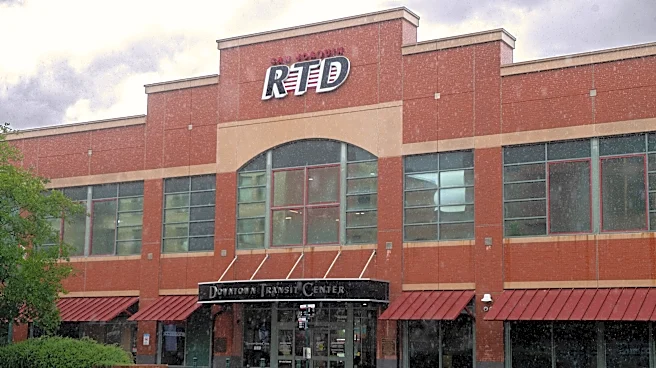
RTD’s next regularly scheduled board meeting is at 10 a.m. on Aug. 21 at the Downtown Transit Center at 421 E. Weber Ave.
Record reporter Hannah Workman covers news in Stockton and San Joaquin County. She can be reached at hworkman@recordnet.com or on Twitter @byhannahworkman. Support local news, subscribe to The Stockton Record at https://www.recordnet.com/subscribenow.
This article originally appeared on The Record: San Joaquin RTD faces calls to disavow board member's threat to sue residents