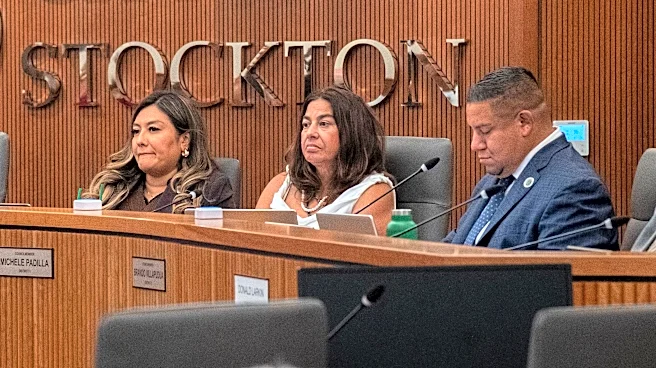









The Stockton City Council unanimously voted to remove data centers from the city's three-year economic development action plan, and city officials will now conduct community listening sessions and gather more information about the potential impacts of the industry.
The vote came on Sept. 1 after 40 residents spoke during public comment about concerns surrounding data centers, including their potential effects on water, electricity, noise, the environment and nearby neighborhoods.
The economic development plan, presented by Economic Development Director Ricardo Noguera, encompasses several projects and programs proposed for implementation over the three-year period from 2026 to 2028.
It outlines 10 areas of focus for the city, including image enhancement
and community promotion, revenue enhancement, attraction and diversification of employers in the industrial district, downtown development, retail and restaurant attraction and shopping center enhancement, auto dealerships, partnerships with educational institutions and job training agencies, small business development, and targeted services and incentives.
Noguera said the plan is intended to be a "living, breathing document" that can change as market conditions, available development sites, interest rates and city council priorities change.
Before beginning his presentation, Noguera said he wanted the audience to remember two key points. The first was that the city’s top priority should be promoting a "buy and dine local" campaign citywide.
"I can guarantee you, there's a lot of sales tax leakage taking place in Stockton," Noguera said. "We're the 10th largest city in California. There are a number of folks that are on the northern side that are shopping and dining in Lodi, and further north along that 99 corridor, and there are folks at the southern side that are patronizing businesses in Lathrop and Manteca."
Noguera said if the city can get a "commitment from the folks who call Stockton home" to buy cars, food and other goods and services locally, sales tax revenues would increase considerably.
The second point Noguera stressed was the importance of improving Stockton’s image locally and regionally.
"People beyond San Joaquin County need to hear from you," Noguera said. "They need to hear from the people who call Stockton home that this is a great community. When you travel to see family and friends in other parts of California and beyond, when you're on vacation, you need to speak positively of this city at the edge of the Delta and talk about all the positive attributes."
Noguera also highlighted Stockton’s four professional sports teams — the Stockton Crusaders, the Stockton Kings, the Stockton Ports and the Stockton Thunder — as well as St. Joseph’s Medical Center’s $850 million expansion and the city’s waterfront as assets that should be promoted.
The plan also calls for attracting additional retailers, restaurants and employers, particularly in the city’s industrial district.
Noguera described Stockton’s industrial district as an "economic engine," citing its jobs and revenue, including more than $7 million in sales and property tax revenue from companies in the district. He said the area has historically served as a logistics and warehouse hub because of its proximity to the Port of Stockton, Stockton Metropolitan Airport and rail infrastructure.
"There are more opportunities to bring more advanced manufacturing, aerospace, food processing, shipping, shipbuilding, drone industry and medical-device," Noguera said.
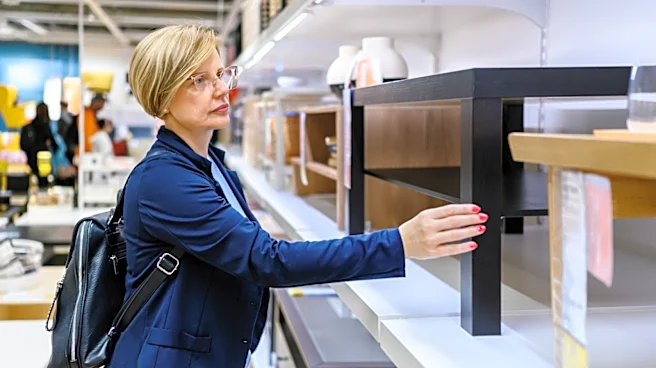
The city also is seeking additional market-rate housing downtown, Noguera said, as well as new retail and restaurants. He cited potential opportunities involving retailers such as IKEA, Nordstrom Rack and DSW, as well as Texas Roadhouse.
The city’s economic development efforts also include recruiting employers and connecting businesses with workforce-training programs through organizations such as San Joaquin Partnership, WorkNet and San Joaquin Delta College.
Noguera said Walmart.com is scheduled to open an operation in Stockton’s industrial district in October, bringing more than 1,000 jobs. He said the center will generate point-of-sale revenue for the city, which will receive 1% of its total sales, as the company delivers orders directly to customers’ homes to compete with Amazon.

Residents raise concerns over data centers
Data centers became the most contentious portion of the presentation.
A PowerPoint presentation for the initial plan included in the meeting’s agenda packet listed data centers as a "short- and medium-term" revenue enhancement, alongside auto malls and dealerships, big-box retailers not currently in the market area, and point-of-sale warehouses.
Noguera emphasized at the beginning of his presentation that the council was not considering a specific proposal for the development of a data center.
"I heard earlier in the day, folks were here to discuss 'the data center item,'" Noguera said. "This is not 'the data center item.' This is an economic development action plan, much broader than what you would hear from those who may be advocating or concerned about data centers."
The presentation provided no details about a prospective developer, operator or location for a new data center. It also did not estimate the revenue a data center could generate, the number of permanent jobs it could create or its potential electricity and water consumption.
Stockton already has an operating data center at the Port of Stockton. Nautilus Data Technologies' Stockton 1 facility has 6.5 megawatts of critical IT load across four secure vaults, according to the company. The facility uses water from the San Joaquin River for its cooling system, which Nautilus says operates in a closed loop and does not consume water for cooling inside the data halls.
During public comment, longtime Stockton resident Lawrence Calderon said he was concerned about additional data center development in the city and urged officials to provide more information that was not included in the plan.
"I feel like we glossed over it, didn't really talk about it," Calderon said. "Why is the city going after the data center industry? What does it offer? How does the city determine those benefits? What type of data center is the city planning to build? Where is the city planning to build the data center? How is the city planning to inform the residents in proximity to the potential buildout area?"
Spencer Fern, a District 3 resident and science program manager at Restore the Delta, raised concerns about the ecological impacts of the three-year economic development action plan, particularly its inclusion of data centers.
"Adding AI data centers and seating land for them in Stockton would likely lead to impacts and landscape changes, and with other large-scale projects like the Delta tunnel project providing extreme pressure on this Delta resource will further place burdens on disadvantaged communities in Stockton," Fern said. "Stockton already has a plethora of pollution problems and the city should focus on improving conditions for the constituents."
Jasmine Peterson, a Stockton resident who joined the city’s Climate Action Plan Advisory Committee in 2017, said the community deserves deeper economic analysis before pursuing new development. For the past decade, she has worked alongside residents, community organizations and the city on climate planning, neighborhood investment, workforce development and community health efforts.
"For the last 10 years, we've invested significantly in shaping our future through the 2014 Climate Action Plan, the 2040 General Plan, the 2019 Sustainable Neighborhood Plan, which all build on one another," Peterson said. "Those efforts have generated rich data about land use, infrastructure, housing, transportation, environmental conditions, neighborhood assets and where significant public investment is already occurring."
Mary Elizabeth, a Stockton resident and environmental justice educator and advocate, asked that language about data centers and advanced manufacturing be removed from the economic development plan. She pointed to the San Joaquin County Board of Supervisors’ direction for the county’s community development department to study the potential impacts of data centers and determine whether new land-use regulations are needed, which the board discussed at its Sept. 1 meeting.
"The board of supervisors today considered a moratorium because they don't have planning requirements," Elizabeth said. "The city of Stockton also does not have planning requirements, and that's something that we should be having in place before."

Council backs community input on data centers
Most councilmembers said the public’s concerns needed to be addressed before the city moved forward with any potential data center development.
Vice Mayor Jason Lee said the presentation was not an agreement to build data centers and argued that the council and city staff should remain open to emerging industries and technology. He said the presentation was an effort by staff to release information about potential developments rather than “hiding it behind a wall.”
"That's what transparency looks like and this is what transparency feels like when the community does not like what it hears," Lee said. "This is why this process is important."
Lee said Stockton should seek opportunities to attract technology-related businesses and create higher-paying jobs, while also acknowledging the need for public involvement.
Lee proposed that any future data center development receive substantial public discussion and that the city council ultimately have a role in approving such projects. He also asked city staff to identify potential locations for data centers and examine their proximity to homes and other community resources.
District 5 Councilmember Brando Villapudua said he wanted more community input on the economic development plan to better understand what residents supported and opposed. He added that he would not support future data center development because the community did not want it.
District 2 Councilmember Mariela Ponce agreed with Villapudua and said she would like to see greater engagement with residents across all districts.
In response to Villapudua and Ponce’s comments, City Manager Johnny Ford said there would be community meetings to hear feedback on data center development. He said there were still questions to be addressed, including where a data center would be located.
“That's the stage where we're going to get to beginning in mid-November to begin to go on a listening session throughout this community,” Ford said. “Now, we hear you, folks. Some folks don't want to do them. That's fine and A-OK. We may have a whole lot of folks out there that do want to do them, but this is not the public forum that we were expecting today.”
Ford said the city's plan was to go to every district to hear from every part of the city and assured residents that the city would not "make a decision in a vacuum."
District 1 Councilmember Michele Padilla emphasized that Noguera's presentation was about providing information and "just exploring the possibilities that our city can have," not committing to the development of data centers in Stockton.
"I see this as the first step," Padilla said. "We hear the concerns and we want to have the questions from our community. We're going to have town halls. We're going to have listening sessions, but again, this is not about a vote to bring data centers here."
District 4 Councilmember Mario Enríquez said listening sessions would be helpful and acknowledged the concerns raised by residents during public comment.
"I think the challenge was, and again, this isn't blaming anybody, but when we put that word in a document to say that this is the economic development plan for the city, it is going to activate people," Enríquez said.
Enríquez suggested removing data centers from the plan for now and bringing the issue back after the city had conducted listening sessions.
Mayor Christina Fugazi said the city needs additional revenue to fund services and infrastructure but acknowledged that community listening sessions were necessary.
"As we move forward, the listening sessions must happen," Fugazi said.
Following the discussion, Enríquez made a motion to remove data centers from the economic development plan while the city conducts community listening sessions.
The council unanimously approved the motion.
The vote allows the city to move forward with the remainder of the economic development plan while continuing discussions about data centers separately. The city has not yet announced dates or locations for the November listening sessions.
Noguera said city staff will continue evaluating economic development opportunities and that he plans to update the council as projects progress.
Record reporter Hannah Workman covers news in Stockton and San Joaquin County. She can be reached at hworkman@recordnet.com or on Twitter @byhannahworkman. Support local news, subscribe to The Stockton Record at https://www.recordnet.com/subscribenow.
This article originally appeared on The Record: Stockton to hold listening sessions on data centers after council removes them from plan