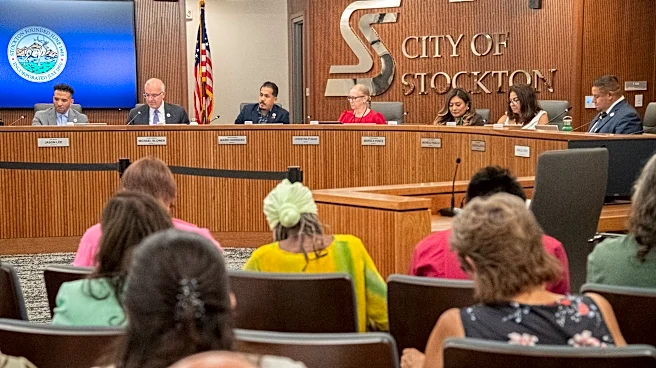







Stockton residents are calling on the city to terminate its contract with Flock Safety, citing concerns over surveillance, data sharing, privacy and limited public oversight of the multimillion-dollar agreement.
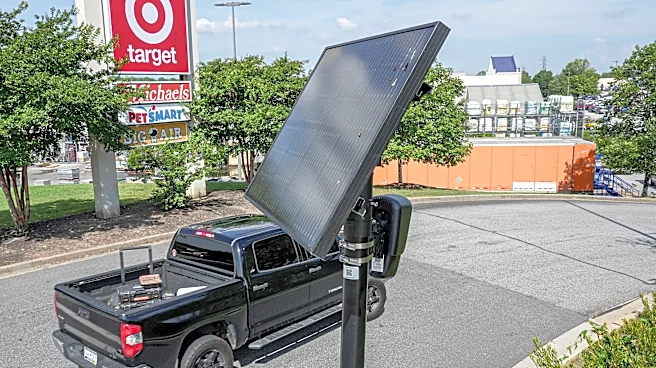
The comments at the Aug. 18 Stockton City Council meeting came months after the council approved a $3.15 million amendment in March to expand the city’s Flock technology to include a drone program. The amendment increased the city’s total Flock contract to about $5.4 million and extended the agreement through April 2031.
Flock was not listed as an agenda item for the meeting. Instead, a coalition of community members and local organizations, including Empowering Marginalized Asian Communities’ Get the Flock Out campaign, coordinated public
comments urging the council to reconsider the city’s Flock contract.

Residents raise transparency concerns
David Sengthay, president of Stockton Democrats Together, said his club reviewed the city’s public records related to the Flock contract and found what he described as a lack of transparency in how the agreement has been tracked.
Sengthay said the $3.15 million drone amendment was coded in the city’s accounting system under a project string labeled "Animal Shelter Study."
He also said the contract had been amended four times since December 2021 to add cameras, 911 integration and drones, with what he characterized as little public notice.
"This is not how a multimillion-dollar, five-year obligation should be tracked or disclosed to the public," Sengthay said.
Sengthay called on the council to suspend the Flock contract, conduct a public accounting of how money has been spent under the agreement and hold a public hearing before spending additional money on Flock.

Privacy and data-sharing issues
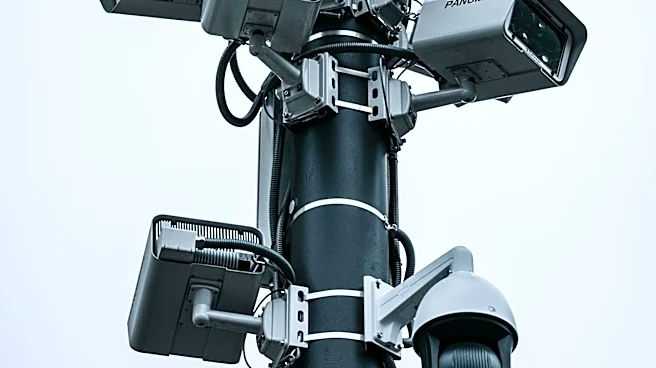
Other speakers focused primarily on concerns about the collection and sharing of data captured by Flock’s automated license plate reader (ALPR) cameras.
Hilda Cabello-Garcia, a local youth organizer and south Stockton resident, said the city should reconsider its investment in what she described as mass-surveillance infrastructure.
Cabello-Garcia said Flock has allowed federal and out-of-state law enforcement agencies to access its data, adding that such access could put immigrants and other vulnerable communities at risk.
Those concerns have surfaced in other California cities, including San Francisco, where a June police audit found 299 improper queries of the city’s Flock automated license plate reader network on behalf of federal and out-of-state agencies over about a year.
In Ventura County, a February audit found that out-of-state law enforcement agencies, including federal agents, accessed the sheriff’s office’s Flock data more than 364,000 times over about a month without the department’s approval or knowledge.
The concerns echo objections raised when the council approved the drone expansion in March. At that meeting, police officials said Stockton owns its Flock data and does not share information with federal agencies for immigration enforcement.
Stockton Deputy Police Chief Kyle Pierce cited the California Values Act (SB 54), a state law that limits state and local law enforcement agencies from using their resources to assist federal immigration enforcement. He also said the police department periodically audits the system to ensure the information is not being accessed by unauthorized parties.
Flock has been accused of violating SB 54 and state privacy laws by allowing out-of-state and federal agencies, including ICE, to access California license plate reader data. A 2025 data-sharing settings error reportedly allowed unauthorized access, prompting lawsuits and investigations by local law enforcement agencies.
Since reports of those alleged violations surfaced, municipalities across California have moved to terminate their contracts with Flock, including Los Altos Hills and Santa Cruz in January and Mountain View and Oxnard in February. That same month, Oakland-based law firm Gibbs Mura filed a class-action lawsuit alleging that Flock’s automated license plate reader cameras violate California privacy laws by sharing driver data with out-of-state and federal agencies.
Lily Ho, Flock’s western region public affairs manager, told the council in March the company had implemented digital safeguards preventing law enforcement agencies outside California from accessing data collected within the state.
The pushback against Flock has continued across California, with communities canceling contracts, deactivating cameras, declining to renew agreements or rejecting proposed systems amid concerns over privacy, data sharing and government surveillance.
While addressing the council at its Aug. 18 meeting, Stockton resident Diana Tapia pointed to recent decisions by other California cities to end or not renew Flock contracts.
"Cities and police departments are canceling their contracts with Flock in response to public pressure, but when will we?" Tapia said.
Grass Valley police announced in August that the city would indefinitely suspend its use of automated license plate readers, including Flock cameras, and exercise its option to cancel its Flock contract. Grass Valley Police Chief Alex Gammelgard said the decision followed a comprehensive review of the technology and conversations with community members.
In July, the Los Angeles Police Department halted its use of Flock's license plate reader cameras amid concerns over data privacy and sharing. The move followed an inspector general audit that recommended pausing new deployments and contracts until enforceable privacy, security and oversight measures are in place.
Tapia also cited concerns about false alerts. In Roseville, police said in August that department policies prevented wrongful traffic stops or arrests despite more than 1,000 incorrect license plate reader alerts generated by Flock cameras between 2023 and 2024. The police statement followed a recent investigation that raised questions about the technology’s accuracy.
"If you truly cared about the people in Stockton, you would terminate our contract for its ALPR tech," Tapia said.
Peter Holly, another Stockton resident, questioned whether state laws, including California Senate Bill 34 (SB 34), provide enough enforcement and oversight. The 2015 privacy law establishes rules for how public and private entities collect, use and store data from automated license plate recognition systems. He also pointed to SB 54, which Stockton police cited in March.
"The problem is that the legislative language is not strong enough to guarantee any meaningful enforcement over how this data in our city or elsewhere in California is used," Holly said. "Much of the responsibility is left to individual agencies to create and enforce their own policies. This creates a serious gap between what state law says and what actually happens to the data."
Holly emphasized that assurances were not the same as accountability and that public trust should not be blindly given to institutions. He called on the council to terminate its contract with Flock and urged officials to avoid future contracts with other technology companies, including Axon and Motorola.

Council considers special meeting on public safety
Vice Mayor Jason Lee, who supported the Flock expansion in March, acknowledged the concerns raised during the meeting's public comment period.
"Obviously, there's a lot of concern from the community around Flock cameras," Lee said. "I do know about the national conversation about Flock cameras, but given our city, I am a supporter of Flock cameras, but very much interested and open to hearing from our community around their concerns."
Lee suggested the council consider a special meeting focused on public safety that could include a discussion of Flock cameras, recent homicides and other issues.
Mayor Christina Fugazi said the meeting could be a special study session and include a discussion of street repairs. A date for the session has not yet been announced.
The March vote to expand the Flock system was unanimous, with all seven councilmembers voting in favor.
At the March meeting, police officials said the city had 120 Flock cameras. The drone program approved by the council called for six drones stationed at three locations throughout Stockton.
Police officials have said the drones are intended to respond to emergency calls ahead of officers, providing real-time video and situational awareness. They said the technology could reduce response times and allow some lower-priority calls to be handled remotely.
The first year of the drone program is expected to cost $390,000, with annual recurring costs of $690,000 for the remainder of the contract. The city has said future funding would depend on grants or additional appropriations.
During the March meeting, District 4 Councilmember Mario Enríquez questioned whether the city had sufficient data to determine whether its existing Flock cameras were delivering the results promised by the company.
Police officials said they did not have specific data on the cameras available for that presentation, though Pierce said Flock technology had contributed to significant arrests.
Enríquez said the council should receive data showing how the technology was performing because it represented a significant investment of taxpayer money.
"If you don’t have that right now, then it’s a little concerning," Enríquez said at the time.
The council had not received a public presentation on the performance of the city’s Flock system as of the Aug. 18 meeting.
Record reporter Hannah Workman covers news in Stockton and San Joaquin County. She can be reached at hworkman@recordnet.com or on Twitter @byhannahworkman. Support local news, subscribe to The Stockton Record at https://www.recordnet.com/subscribenow.
This article originally appeared on The Record: ‘Get the Flock out’: Residents urge Stockton City Council to end Flock contract