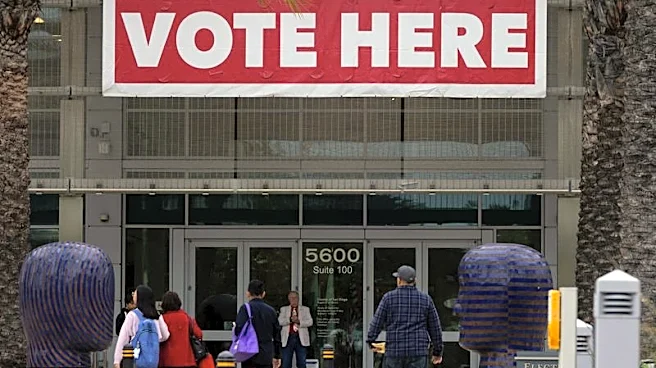






In the Nov. 3 general election, voters will select trustees to represent four areas on the Stockton Unified School District Board of Trustees.
The Stockton Unified board has seven trustees, each elected to represent one of seven areas within the district. The district serves 33,239 students.
Trustees are limited to two four-year terms.
In every race on the ballot for the board of trustees, challengers are seeking to unseat an incumbent. Some races also include candidates who appear to be inactive and have little or no publicly available information about their campaigns.
For the Area 2 and 5 races, all candidates with publicly listed contact information were contacted for interviews.

The Record received a response from three of the five candidates
contacted by deadline. The responding candidates sent their answers in writing.
Here is a look at the candidates running for the school board in Areas 2 and 5.
Area 2
Two candidates, Sam Carpenter and Alicia Hernandez, are running against incumbent Patrick Martin to represent Area 2 of the school district.
Schools in Area 2 include Jane Frederick High School, Hamilton Elementary, Merlo Institute of Environmental Technology, Monroe Elementary School, Montezuma Elementary School, Nightingale Elementary School, Spanos Elementary School and Van Buren Elementary School.
Martin

On Nov. 1, 2025, Martin was appointed to represent the area after former Trustee AngelAnn Floreswas removed from office following a felony insurance fraud conviction.
Before stepping into the role, Martin was an applied behavior analyst and paraprofessional at Bear Creek High School.
In an interview with The Record, Martin called the unanimous appointment a responsibility that he took “with the utmost seriousness.”
“The transition required shifting the focus from past adult-centered political turmoil back to what matters most: our students, their literacy, and their academic success,” he said. “I adapted quickly by diving deep into our budget, listening to educators, and prioritizing stability.”
His term on the board will end Dec. 11, 2026, unless reelected.
Martin said that since his appointment to the board, the trustees have worked hard to foster a culture of professional collaboration under Superintendent Michelle Rodriguez’s leadership.
“The most significant progress we have made as a governance team is restoring administrative stability and rebuilding public trust, ensuring that board meetings remain orderly, transparent, and strictly focused on student outcomes rather than personal politics,” he said.
When asked why he is seeking reelection, Martin said the school district’s structural turnaround is an ongoing process that requires stable, experienced leadership.
“When I was appointed, my immediate focus was on stabilizing the district,” Martin said.
If reelected to a full term, Martin said he intends to transition from stabilization to aggressive growth, especially in areas he is deeply passionate about.
He said those areas include improving early student literacy rates and expanding special education and applied behavior analysis therapy resources.
“Many of our students require specialized behavioral and learning plans, and my goal in a new term is to build a robust, in-district pipeline of behavioral health services so we can meet these needs early, keeping students on track for graduation and beyond,” Martin said.
The Stockton Unified School District was removed from California's high-risk designation this year, nearly three years after the state cited serious fiscal and compliance problems. The district was placed on high-risk status in October 2023 after the state cited fiscal and compliance issues, including findings in the Assembly Bill 139 Extraordinary Audit Report issued in February 2023.
The report concluded there was sufficient evidence that fraud, misappropriation of funds or assets, or other illegal fiscal practices may have occurred.
Martin was asked what steps the district and board of trustees should take to maintain fiscal stability and avoid returning to that list.
“Getting removed from the state's high-risk list was a monumental milestone for SUSD, but staying off it requires strict, unwavering oversight,” he said. “As a board, we cannot afford a return to the lax accountability of the past.”
To maintain fiscal stability, Martin cited strict budget oversight, aligning expenditures with student outcomes, protecting reserves and standardized bidding procedures as priorities.
He said the district and trustees must make greater use of the Budget Oversight Committee to continuously audit expenditures against real-time revenues rather than rely on standard quarterly reviews.
Regarding aligning expenditures with student outcomes, Martin said every dollar spent from the district's multimillion-dollar budget must be explicitly tied to measurable student growth.
“For instance, instead of approving broad, unquantified technology or consulting contracts, funding must target specific interventions — such as evidence-based literacy curricula and direct classroom support,” Martin said.
Additionally, Martin said, “The district must maintain healthy fiscal reserves to withstand state-level funding fluctuations and enforce absolute transparency in our procurement processes to prevent the contract-related irregularities flagged in historical FCMAT reports.”
When asked about the most significant academic challenges facing students in the district, he said the systemic gap in foundational literacy and mathematics proficiency is exacerbated by years of administrative instability.
“If a child cannot read proficiently by the third grade, their long-term academic trajectory is severely compromised,” Martin said.
To address the issue, Martin said he supported universal implementation of the Science of Reading, shifting the district’s curriculum toward phonics and evidence-based literacy strategies from transitional kindergarten through elementary school.
Another solution he proposed is expanded targeted tutoring and intervention blocks, which would mean protecting specific times during the school day for “high-dosage” tutoring in math and reading. Additionally, ensuring students who are falling behind receive immediate support rather than waiting for summer school.
He also said early behavioral intervention would be a solution. Martin said he supported integrating behavioral analysis models within early childhood education to address classroom behavioral challenges before they disrupt a child's academic learning window.
When asked about the biggest challenges facing teachers, Martin said educators are dealing with intense burnout, larger class sizes and an increase in unaddressed student behavioral and mental health needs following the pandemic.
“Teachers cannot effectively teach if they spend the majority of their instructional time managing severe behavioral crises without assistance,” Martin said.
Martin said solutions for teachers included expanding special education and behavioral staffing, which would mean bringing more behavioral technicians, co-teachers and paraprofessionals directly into classrooms to assist students with high needs.
Martin proposed working productively with labor partners to ensure competitive compensation and comprehensive benefits that attract and retain high-quality teachers in Stockton.
He said he would support reducing redundant data-tracking mandates so teachers could focus on instruction and lesson planning rather than paperwork.
Martin was asked what specific actions he would take as a trustee to address achievement gaps and ensure the district's curriculum, resources and support systems are meeting students' needs.
“Closing the achievement gap requires moving away from ‘one-size-fits-all’ budgeting and shifting toward an equity-based resource allocation model," he said. "We must meet students exactly where they are.”
His proposed solutions included data-driven support for student subgroups, expanding career and technical education, and regular evaluations to ensure accountability.
Carpenter
Martin’s opponent, Carpenter, is a small business owner, according to the official election ballot.
Carpenter's name might be familiar to voters as he fought a legal battle to have his name appear in the June primary for Stockton City Council area 5.
Hesued Stockton and San Joaquin County election officials in March after he was disqualified from appearing on the June 2 primary election ballot. A judge denied his request to be added to the ballot, and Carpenter later ran as a qualified write-in candidate, receiving 22 votes, or 0.64%.
In an interview, The Record asked Carpenter what motivated him to continue fighting for an opportunity to represent Stockton and why he wanted to serve as a trustee specifically.
“Sometimes you have to fight a battle more than once in order to win it," Carpenter said.
According to Carpenter, Vice Mayor Jason Lee called the special meeting that led to his removal. Carpenter said Lee endorsed his opponent and contributed money to her campaign at the time.
“In my view, that is a clear conflict of interest,” Carpenter said. “An elected official with a political and financial stake in a race should not be the one driving the process that decides who appears on the ballot.”
Despite the struggles, Carpenter said he chose to continue his candidacy for the Stockton Unified School District Board of Trustees because no responsibility in this city matters more than the children.
“My own children will attend SUSD schools,” Carpenter said. “The board sets district policy, approves the budget and holds leadership accountable, and that is where I can make the most direct difference.”
He added, “Our children are our future, and they deserve far better. Above all, they deserve to be safe. When an adult in a school is accused of harming a child, families deserve swift action, full cooperation with law enforcement and complete transparency from the district. As a trustee, I will insist on exactly that.”
Carpenter was also asked about the district being removed from California's high-risk designation.
He said leaving the high-risk list was a milestone, not a finish line.
To prevent the same problem from recurring, Carpenter said he supported keeping a permanent, qualified chief business official in place, one of the state’s conditions for removal from the high-risk list.
He also supports quarterly public budget reports in plain language and posted online so the community can track spending; an independent audit committee that includes community members with finance experience; board review of all significant contracts in open session, with no last-minute additions or side agreements; and protecting reserves rather than spending one-time money on ongoing costs.
Carpenter believes the most significant academic challenges facing students in the district are foundational literacy and math.
“I would support structured, evidence-based reading instruction in the early grades, intensive math tutoring during and after the school day, and strategies to reduce chronic absenteeism, because students cannot learn if they are not in class,” Carpenter said.
Carpenter believes teachers’ biggest challenges are closing large learning gaps while dealing with student behavior and safety concerns, heavy workloads and pay that has not kept pace with the cost of living.
If elected, Carpenter said he would push for timely, good-faith bargaining, competitive pay to recruit and retain experienced teachers, consistent support from administrators on discipline and safety, and fewer administrative demands that take time away from teaching.
He was also asked about addressing achievement gaps and ensuring the district's curriculum and support systems are meeting students' needs.
Carpenter said he would start with transparency. He said this included publishing school-by-school results so parents can see where students are struggling and whether interventions are working.
From there, he said he would direct resources to the schools and student groups with the greatest need, require that curriculum be research-based and aligned with state standards, expand tutoring and summer learning, and strengthen support for English learners and students with disabilities.
“Every program should have measurable goals, and the board should review the results in public at least twice a year,” he said. “If a program is not producing results, we should change course.”
Hernandez
The third contender in the race is educator and college student Alicia Hernandez.
The Record could not find a campaign website or publicly available campaign information for Hernandez.
One pink campaign poster found online read, “Lucharé por nuestros niños,” but did not list a phone number or email address.
Area 5
Incumbent Donald Donaire will run against student and swim teacher Malina Sanchez to represent District 5 as a trustee.
Schools in the area include Cleveland Elementary School, Hazelton Elementary School, Stockton Early College Academy, Stockton High School, Washington Elementary School, Weber Institute of Applied Sciences and Technology and Wilson Elementary School.
Donaire

Donaire has been a trustee since 2022 and holds a position at Empowering Marginalized Asian Communities. He has also worked as an after-school program coordinator and a nonprofit youth development leader.
Donaire also attended the candidate forum in September, where he told voters that he is from Stockton and attended eight different public schools, including a local high school.
“Public education is really important for me,” Donaire said. “I really want to expand those opportunities for our young folks here.”
He said his three priorities if reelected are to ensure safe schools for all, improve early math and reading literacy, and expand student success and well-being.
He said one area the district needed to focus on is improving early math and reading literacy.
“If we can get students to be really good at math and reading and writing by the third grade, they will be more prepared to enter the workforce as they get older, and they are more likely to graduate high school by the 12th grade,” Donaire said.
He said the district also offers other certificates and programs for students who may not go to college after high school.
At the end of the forum, Donaire told voters that his focus was to ensure Stockton Unified remains fiscally solvent and continues to put students at the center of its decisions.
Sanchez
Sanchez is listed on the election ballot as student and swim teacher.
Sanchez said she wanted to be elected because she believes she offers an “infusion” of youth, new ideas and a fresh, “common-sense” approach to decision-making.
“If voters feel that Stockton Unified is on the right path and there are no issues then they should vote for my opponent,” Sanchez said. “If they feel that the focus should be placed back on the students, then they can vote for me.”
When asked how voters could learn about her and her campaign in the absence of a campaign page, Sanchez did not provide an answer. She said, “I have had a positive response from the community since becoming a candidate.”
If elected, Sanchez said her top priorities would be student and campus safety, efficient operations, career and technical education and strong graduation rates.
When asked about the district’s removal from the state’s high-risk list, Sanchez said she was aware of its financial position.
“Obviously as long as our revenues exceed our expenses and we maximize and leverage all state and federal grants, we should maintain a financial healthy district,” she said. “However, if SUSD continues to exhibit declining enrollment from charter schools, then this will continue to affect our budget.”
Sanchez was asked why she should be elected over her opponent.
“Four of the current incumbents running for re-election have been endorsed by the Stockton Teachers Association and Stockton Democrats Together,” Sanchez said. “I don't think this is healthy to have an employee union deciding who should be their bosses because now they are compromised when the collective bargaining process begins.”
Stockton Democrats Together is a chartered Democratic club serving Stockton and San Joaquin County. The website states, "We work to elect Democrats who share our values, support local candidates and campaigns, take positions on ballot measures and local ordinances, and engage our community in the democratic process."
Sanchez believes the biggest academic challenge facing the district is keeping students “in their seats” so they can have stability and learn. She said the district needs to strengthen resources and tools for the child welfare and attendance department and ensure all students are reading at grade level.
She concluded her written response by saying, “I currently support the efforts Dr. Michelle Rodriguez.”
As part of her neighborhood campaign, Sanchez has left letters for voters in their mailboxes. A letter signed by Sanchez and dated Oct. 5 was sent to some voters.
“I was a student in these classrooms, and I graduated from this district,” Sanchez wrote. “This isn’t new to me. It’s personal.”
She did not provide answers when asked in an interview which school she attends and where she teaches swimming.
In the letter, Sanchez described herself as a “common sense Democrat” who is running because she has seen firsthand the failures within the schools in the district.
“Kids being passed along year after year, knowing full well they can’t proficiently read or write,” she wrote. “That’s not just a broken system. It’s an injustice to that child and the future of this community.”
Sanchez wrote that her positions include opposing boys competing in girls’ sports, making affordable daycare and after-school programs mandatory rather than a luxury, and ensuring children are not priced out of learning.
As of Sept. 24, the San Joaquin County Registrar of Voters (ROV) began mailing the county voter information guides. More election information can be found on theSan Joaquin County Registrar of Voters website.
Record reporter Victoria Franco covers public safety in Stockton and San Joaquin County. She can be reached at vfranco@gannett.com. Support local news, subscribe to The Stockton Record at https://www.recordnet.com/subscribenow.
This article originally appeared on The Record: Challengers look to unseat incumbents in SUSD Areas 2, 5