






As San Joaquin County celebrates 175 Years of Growing Greatness, it’s an opportunity to revisit the places where its earliest communities took root.
Stockton — which marked its own 175th in 2024 — is home to 19 National Register landmarks, but none hide their age more humbly than the original Temple Israel.
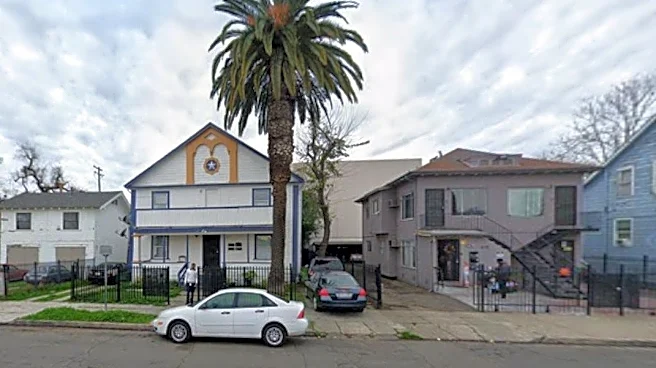
Tucked into the Magnolia Historic Preservation District, the modest clapboard building at 821 N. American St. may not look like a milestone. Yet it’s the oldest structure on the city register and the oldest surviving wooden synagogue in California, a rare Gold Rush‑era survivor still standing in plain sight.

Built in 1855, the original Temple Israel served as Stockton’s first synagogue and anchored one of California’s earliest Jewish communities.
The simple wooden sanctuary seated about 200 worshippers and originally stood near Miner Avenue and El Dorado Street, drawing congregants from surrounding counties, before it was relocated following a flood.
Historical accounts show the lumber was shipped around Cape Horn in South America, The Record reported in 2011. The materials were unloaded at the Stockton waterfront and hauled to the building site by members of the temple using horses and wagons. The total cost in 1855: $2,650.
Today, it remains the oldest building formally recognized by the city, added to the register in 1982 — a testament to Stockton’s layered, multicultural past. Even older, though, is the Temple Israel Cemetery on East Acacia Street, established in 1851 on land donated by Captain Charles M. Weber for Stockton’s Jewish community and is the oldest Jewish cemetery in continuous use west of the Rocky Mountains. It was designated California Historical Landmark No. 765 in 1961.
The building’s survival may be partly owed to reinvention. In 1905, the synagogue was moved to its current American Street location and converted into multi‑family apartments, a change that helped preserve the structure even as Stockton modernized around it, city records show.
Now part of the Magnolia Historic Preservation District, the building stands as a quiet counterpoint to the city’s newer landmarks — a reminder that Stockton’s 175‑year story isn’t just found in grand architecture, but in the unassuming places that have adapted, endured and continued to hold the city’s earliest history.
Take a step back in time with these 36 San Joaquin County listings on the National Register of Historic Places. Stockton is home to 19 of the iconic spots on the list that denotes historic U.S. places worthy of preservation.
Take a look at our local landmark sites:
Stockton National Register of Historic Places
- Cole's Five Cypress Farm — 11221 E. Eight Mile Road. Completed in 1863, the “large pioneer farmhouse is representative of the homes built by the grain barons when ‘Wheat was King’ in the great San Joaquin Valley,” according to the National Park Service.
- Commercial and Savings Bank — 343 E. Main St.
- El Dorado Elementary School — 1540 N. Lincoln St.
- Elks Building — 42 N. Sutter St. The landmark site, built in 1908, was home to the Benevolent Protective Order of Elks until 1976.
- Farmer's and Merchant's Bank — 4612 McGaw St.

- Bob Hope Fox California Theatre — 242 E. Main St. The Fox California Theatre, renamed the Bob Hope Theatre in 2004, is a city treasure, called "Stockton's crown jewel" by Sylvia Sun Minnick, who wrote the story of the old theater for the Friends of the Fox, Record archives show.
- Wong K. Gew Mansion — 345 W. Clay St. "Wong Gew came to California from China in the 1880s, settling first in San Francisco and then moving to the San Joaquin Valley," states a National Register of Historical Places Inventory Nomination Form from 1978. "In Stockton, Wong Gew became a prominent gambler and established several large gaming houses, including the Tong King Company in the Roosevelt Hotel."

- Benjamin Holt House — 548 E. Park St. Built in 1869, it was home to Holt Manufacturing Co. President Benjamin Holt, inventor of the Caterpillar tractor, until his 1920 death.
- Hotel Stockton — 133 E. Weber Ave. Built over Weber's Hole, once home to hot water baths before the hotel opened in 1910 as a first class travelers’ hotel, it was renovated in 2005 by the city and is now home to downtown apartment dwellers.
- Nippon Hospital — 25 S. Commerce St. In 1910, the Stockton Japanese community started its own medical facility, the Nippon Hospital, as the population here continued to grow. By 1938 there were 800 Japanese Stocktonians. It became a hotel in 1930 and is now home to The Waterfront Steamboat Landing affordable apartments.
- Old Weber School — 55 W. Flora St. Opened in 1873, it was named after Stockton founder Capt. Charles Weber and joined the register in 1973, 100 years after its debut.
- Philomathean Clubhouse — 1000 N. Hunter St. The Philomathean Clubhouse opened Feb. 9, 1912, the first women’s club in Stockton, where the city’s academic and influential women gathered.
- Moses Rodgers House — 921 S. San Joaquin St. Rodgers escaped slavery to become one of the most successful Black pioneers to settle here during the Gold Rush. The first man to drill for natural gas locally, Rodgers was said to have earned a reputation as one of California’s premier mining engineers and metallurgists. He owned several mines in Mariposa County, and moved to Stockton to provide his five children an education.

- Sperry Office Building — 146 W. Weber Ave.
- Sperry Union Flour Mill — 445 E. Weber Ave.
- Stockton Savings and Loan Society Bank — 301 E. Main St.
- Tretheway Block — 229 E. Weber St.
- US Coast Guard Cutter Fir — Assigned to the Navy during WWII, the Fir was most recently listed as moored in Little Potato Slough along West Eight Mile Road. Plans to turn her into a floating museum have yet to materialize.
Tracy National Register of Historic Places
- Bank of Italy — 628 Central Avenue
- Bank of Tracy — 111 W. Tenth Street
- Tracy City Hall and Jail — 25 W. Seventh Street
- Tracy Inn — 24 W. Eleventh Street
- John Ohm House — 31524 S. Kasson Road
- West Side Bank — 60 W. Tenth Street

Lodi National Register of Historic Places
- Hotel Lodi — 5 S. School St.
- Lodi Arch — Pine Street at Lodi Avenue. Built in 1907, the historic Mission Revival arch is home to a gilded California grizzly bear, restored in 2001. The original bear was placed on top of the Pine Street arch in 1909, after Lodi members of the Native Sons of the Golden West swiped it from the Stockton club. That bear was replaced in 1934.
- Morse-Skinner Ranch House — 13063 N. Highway 99 Frontage Road
- Terminous Culling Chute — 14900 W. Highway 12
- Woman's Club of Lodi — 325 W. Pine St.
Lockeford National Register of Historic Places
- Harmony Grove Church — 11455 E. Locke Road. Founded in 1859 along with the historic Harmony Grove Cemetery, where tombstones read like a who's who of Lockeford-area pioneer names like Locke, Tretheway, Brandt, Linn and Hammond.
- Dean Jewett Locke, who, with his brother Elmer, settled in the area in 1851.
- Locke House and Barn — 19960 N. Elliott Road
- Locke's Meat Market — 13480 Highway 88

Woodbridge National Register of Historic Places
- Woodbridge Masonic Lodge No. 131 — 1040 E. Augusta St.
- I.O.O.F. Hall — 18961 N. Lower Sacramento Road. The historic “Lincoln Highway” passes the landmark building, built in the 1860s, eight years after the community was founded in 1852.
Clements National Register of Historic Places
- IOOF Lodge No. 355 — 18819 E. Highway 88
Note to readers: If you appreciate the work we do here at The Record, please consider subscribing yourself or giving the gift of a subscription to someone you know.
This article originally appeared on The Record: What is the oldest historic building in Stockton? It dates to 1855