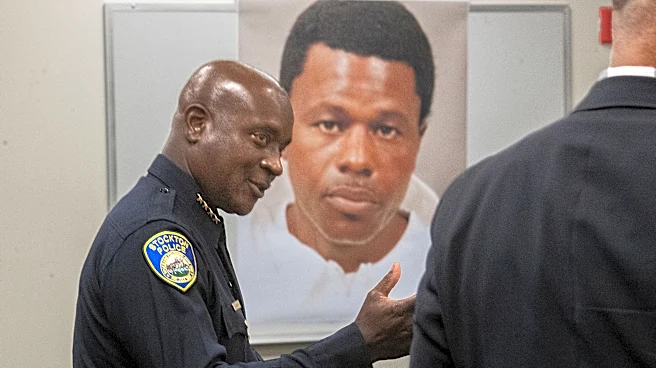

Recorded phone calls involving alleged Stockton serial killer Wesley Brownlee from as recent as April were played in court as prosecutors presented evidence on the third day of his competency trial.
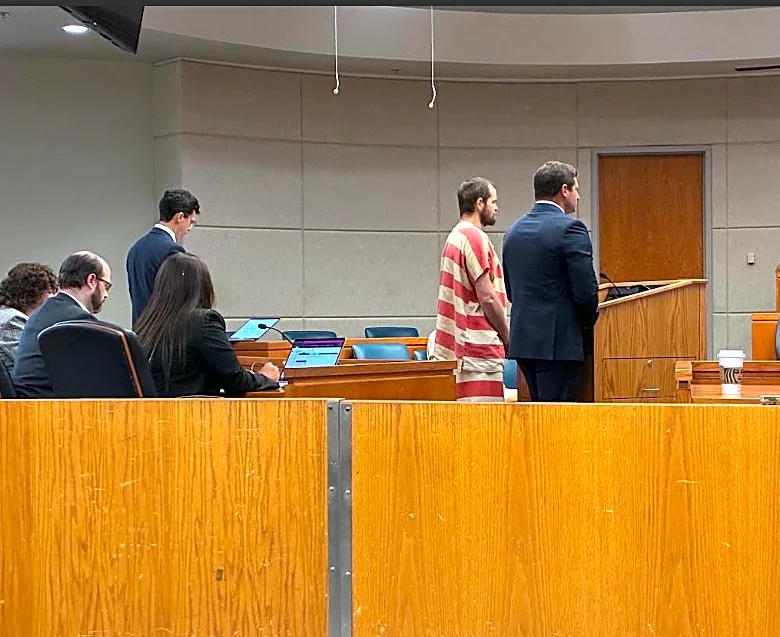
The competency trial for 47-year-old Brownlee began on Sept. 11, nearly two years after his attorneys, Allison Nobert and John Philipsborn, filed a declaration of doubt about their client’s competence.
Although Brownlee is charged with the deaths of six men in Stocktonand the attempted murder of a woman, the trial currently underway is not intended to determine whether he is guilty of those charges. Instead, San Joaquin County jurors are tasked with determining whether Brownlee is competent to stand trial.

Recorded calls played for jury
On the third day of the trial, Sept. 17, Deputy
District Attorney Elton Grau played two phone calls Brownlee placed to his younger brother, Kevin Rowel, on April 11.
The first call played in court took place at about noon, according to Grau.
As with other phone calls made by Brownlee, the conversation began with him greeting Rowel by saying, “What it do, man?” When Rowel asked his brother if everything was good, Brownlee responded, “Yeah, yeah, yeah, for sure.”
The brothers then discussed Rowel sending Brownlee money weekly, which Brownlee said he appreciated.
At some points during the phone call, Rowel can be heard talking, but Brownlee does not respond. When Rowel says, “Hello” to his brother, Brownlee tells him, “Yeah, I’m here, man. I’m here. I hear you.”
During the conversation, Brownlee also asked his brother what had been going on, but the call ended quickly because he ran out of phone minutes.
Following the audio recording, Grau asked Rowel if his brother had told him that he first had to call their mother in order to get Rowel’s new number. Rowel answered, “Yes.”
An additional phone call
Later that day, Brownlee placed another call to Rowel. Brownlee told his brother that, as he had told their mother and sister, “It’s programming one day at a time.”
Rowel testified that he did not know what “programming” meant to his brother, but he suspected it was reading and exercising.
Brownlee then asked whether his brother had heard from Brownlee’s son and requested his son’s phone number. Later in the call, he asked for another person's number.
Since the start of the trial, Grau has sought to demonstrate that Brownlee can memorize phone numbers and recite them back.
Brownlee’s defense team has spent much of the trial arguing that their client has experienced a shutdown in communication with them, doctors, family members and others.
The April phone calls, placed just five months ago, presented jurors with a different perspective on Brownlee’s ability to converse.
Rowel and Brownlee continued their phone call by talking about a person they knew who was facing a criminal case, a family member who died and other family matters. Before the conversation ended, Brownlee told his brother he loved him and again expressed appreciation for his support.
When Grau resumed questioning Rowel, he asked if during the second phone call Brownlee had told his brother to tell the family to stay focused. Rowel responded, “Yes.”
More phone calls and conversations
Another call played by the prosecution was from April 12.
Brownlee told Rowel he was being housed in a different part of the jail and had seen a friend from Oakland who was also incarcerated. Rowel said he had not seen the friend since they were children.
When Rowel told Brownlee that their mother was worried about him, Brownlee said there was no need to worry and asked his brother to reassure their mother that he was OK. Brownlee also spoke about his son and asked his brother to tell him he loved him and to stay focused on school.
As in other recorded calls, Brownlee and his brother talked about family members, the cost of living, boxing and truck driving.
During cross-examination, Grau referenced Rowel’s earlier testimony that he felt his brother needed to talk to someone.
Grau then asked Rowel whether, during the six or seven calls played in court, he had ever asked Brownlee to speak to a doctor. Rowel testified that he did not.
Grau also asked if Brownlee ever told Rowel that he did not know he was in jail, did not know what a lawyer was, did not know what his criminal charges were, did not know what his attorneys were saying or did not know what a court was. Rowel replied, “No,” each time.
Rowel gave the same “no” answer when Grau asked if Brownlee had ever told him that voices ordered him not to talk or that he wanted to answer but physically could not.
Final redirect on Rowel
Before Rowel’s testimony concluded, Nobert conducted a redirect examination.
When Nobert attempted to ask when Brownlee had “lost contact with the world” and whether the family had lost communication with him between 2024 and 2025, Grau objected.
Rowel testified that his brother had lost contact with family members after spending a couple of years in jail around 2024.
Nobert asked Rowel if he had visited Brownlee in jail between Oct. 12, 2025, and the phone calls in April. Rowel said, “Um, no.”
He also testified that he had not talked to Brownlee on the phone until that point. Rowel said that from April until then, he had not visited Brownlee.
During the redirect examination, Nobert showed Rowel paperwork that indicated Brownlee had used a company referred to him by his younger brother to help him create a limited liability company.
Nobert then asked Rowel several questions about what the process of learning about trucking entailed. When asked how difficult it is to get a trucking license, Rowel said it was the same as getting a regular driver’s license.
She then attempted to question Rowel about Brownlee having a learning disability in school, but the judge sustained Grau’s objections and she moved on.
Nobert also asked whether Brownlee ever talked to his brother about what he was reading during his time in jail or whether Rowel had any idea if Brownlee was actually reading. Rowel responded that he did not know.
She concluded her redirect examination by asking Rowel a series of questions about whether Brownlee had ever asked him to do legal research, conduct investigations, check newspapers or tell him what information he knew about the case. Rowel answered “no” to each question.
Just before Rowel’s testimony ended, the prosecution argued that some topics related to the case were not discussed over the phone because it was a recorded line. The defense countered that the brothers had talked freely about topics such as smoking cannabis, despite knowing the calls were being monitored.
The next witness to take the stand during the two most recent days of the trial was Christy Trombley, a court-appointed doctor tasked with evaluating Brownlee.
The competency trial will resume Sept. 22 in Dept. 9B of the San Joaquin County Superior Court.
Record reporter Victoria Franco covers public safety in Stockton and San Joaquin County. She can be reached at vfranco@gannett.com. Support local news, subscribe to The Stockton Record at https://www.recordnet.com/subscribenow.
This article originally appeared on The Record: Phone calls show alleged Stockton serial killer speaking as recent as April