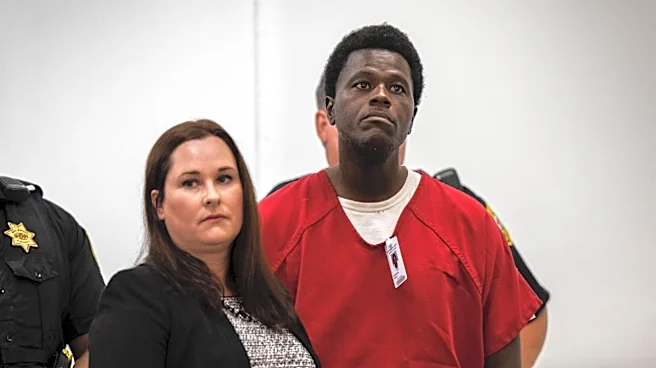




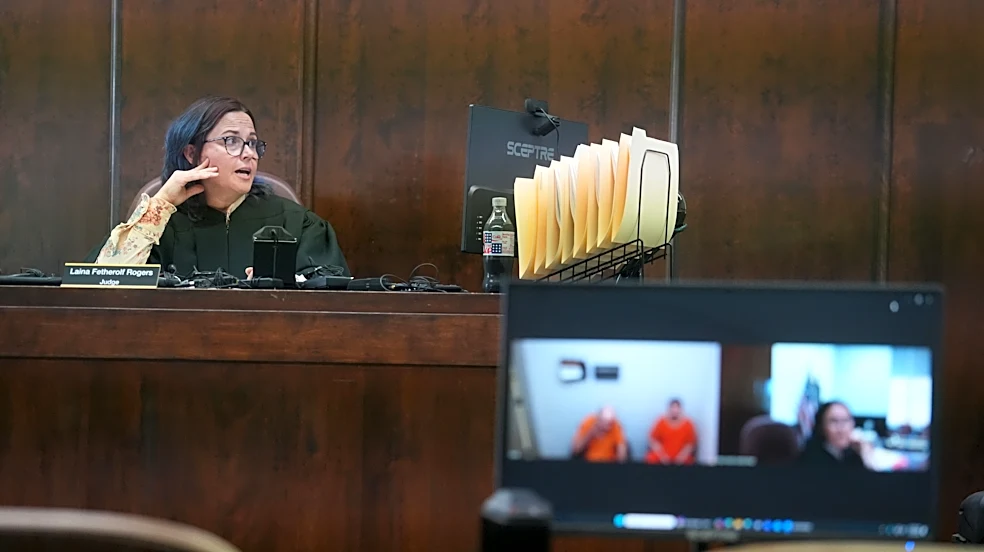
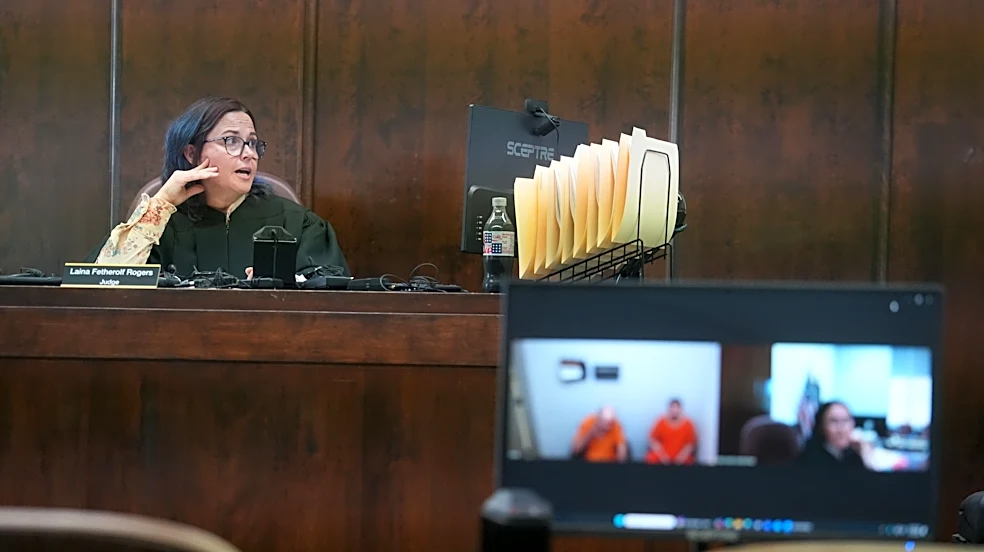

A San Joaquin County jury began deliberations Thursday in the competency trial of alleged Stockton serial killer Wesley Brownlee.
The 12-member jury will render a verdict determining whether Brownlee is competent to stand trial. The verdict must be unanimous.
In October 2022, Brownlee was arrested for theshooting deaths of Juan Vazquez Serrano, 40; Paul Yaw, 35; Salvador Debudey Jr., 43; Jonathan Hernandez Rodriguez, 21; Juan Carlos Carranza-Cruz, 52; and Lawrence Lopez Sr., 54.

He is also accused of attempting to killNatasha LaTour.
In 2024, Brownlee’s defense attorneys, Allison Nobert and John Philipsborn, filed adeclaration of doubt regarding their client’s competence after what they described as a “shutdown in communication” with Brownlee.
For
six weeks, the jury heard testimony from psychiatrists, psychologists, San Joaquin County Jail correctional officers and staff, Brownlee’s family members, including his mother and son, and more than 80 other witnesses.
According to jury instructions, Brownlee is mentally competent to stand trial if he understands the nature and purpose of the criminal proceedings, can assist counsel in presenting a defense in a rational manner and understands his own status and condition in the criminal proceedings. The jury must find all three elements to be true.
Closing statements
Nobert addressed the jury first, saying Brownlee is a man with an untreated mental disorder who is not competent to stand trial.
She said the evidence in the case had a common thread: Brownlee is struggling with a disorder. Nobert referred to him as “a man who is barely holding on.”
In opening statements, Deputy District Attorney Elton Grau said Brownlee was faking it. He said Brownlee had communicated with his family for hours since being taken into custody.
During closing statements, Nobert challenged the prosecutor’s claim.
She said her client had never reported a mental health disorder and argued that if he could not rationally assist counsel, he could not be found competent to stand trial.
“You don't see Wesley Brownlee enthusiastically raising his hand and saying, ‘I'm incompetent to stand trial,’” Nobert said. “That's not what we have here. It's the lawyers who have raised the doubt.”
Additionally, she said the defense had never denied that Brownlee occasionally talks to people. However, she said his communication with people fluctuates because of his mental health symptoms.
“What we saw here was a downward trajectory from Wesley Brownlee,” Nobert said. “The whole point of bringing in all of those individuals is because we tracked that downward trajectory of Wesley Brownlee not talking to people and going into further isolation.”
She told the jury that Brownlee had very limited involvement in his case and that the defense needed its client to be able to participate in tasks such as reviewing discovery.
“We need access to his information that only he has,” Nobert said. “While it’s true we have resources … what we don’t have is the central piece here and that is Mr. Brownlee — a participant in his defense.”
Nobert used a PowerPoint presentation to walk jurors through how each expert became involved in the case after communication with Brownlee ceased.
“There's a genuine mental health disorder here that multiple experts have testified to,” Nobert said.
Nobert played audio clips of phone calls between Brownlee and his family in which he was silent or barely spoke. She argued the calls showed Brownlee’s increased agitation, lack of communication with family members and responses to questions from his family that did not align with what was being asked.
As Brownlee’s mother’s voice played through the courtroom during a playback of phone calls, Brownlee kept his head and face tucked into his jail shirt.
When Nobert referenced the lengthy periods of silence heard during phone calls and visits played at trial, she told jurors that although she would have liked to fast-forward through the silence, doing so would have deprived them of the experience hearing it.
“You couldn't actually experience what it's like to sit in that room and feel that silence to understand that he is in crisis,” Nobert said.
Nobert asked the jury to consider if Brownlee’s behavior was rational.
“Is this rational conduct, given the nature, what he's facing, the purpose of his criminal proceedings against him — a death penalty case? Is it rational that he's not communicating with his lawyers?”
She told jurors, “It was absolutely not rational.”
“It’s not getting him anything,” Nobert said. “In fact, it is hurting him.”
She told the jury that the defense had met its burden in the case and asked jurors to return a verdict finding Brownlee incompetent to stand trial.
Prosecution’s final argument
Grau began his final remarks to the jury before deliberations with a video of Brownlee interacting with a correctional officer in jail.
Similar to his opening statement, Grau said there was a piece of evidence the defense failed to discuss: body-worn camera footage from an officer on Jan. 7.
In the video played for jurors, a correctional officer asks Brownlee whether he wants to sign an acknowledgement form stating he would be brought before a board over a fight in which he was involved.
The video shows Brownlee looking up toward the ceiling — a behavior discussed extensively throughout the trial — and not speaking. The correctional officer could be heard saying, “Yes or no? Because you’re perfectly fine to go ahead and start a fight. Earlier you were squinting your eyes, and now your eyes are wide open.”
As the officer was preparing to leave because Brownlee was not responding, Brownlee asked what he was being asked to sign. Brownlee then told the officer he had not thrown a single punch.
After showing the video, Grau asked the jurors whether Brownlee appeared to have “poverty of speech,” to be frozen or unable to speak.
He said Brownlee did not exhibit those behaviors in the video.
“What we see in this video is an ability to understand, ‘Hey, there are cameras that saw what I did,’” Grau said.
Throughout his closing arguments, Grau reviewed the evidence and testimony presented during the trial and highlighted how it supported the prosecution’s case.
Grau also challenged a point from the defense’s closing argument, saying Nobert had implied that four doctors found Brownlee incompetent.
“There was no four doctors,” Grau said. “If the first thing you're going to say to a jury is not completely right, why would you do it? Again, because they need the drama.”
According to Grau, the case comes down to whether Brownlee is unwilling or unable to cooperate.
“Is Mr. Brownlee faking it, or does he have a mental condition that is stopping him right now in this process?” Grau asked jurors.
He said Brownlee has remained silent with his attorneys, but the question is what has caused that silence.
“People's position is he retains the ability to participate, he just chooses to not,” Grau said.
Grau told jurors that although the defense described Brownlee as a man who “was barely holding on,” he continued to pass truck-driving tests.
“In 2017, 2019 and 2021, he's taking a medical clearance test,” Grau said. “No other doctors are suspecting that he's hearing voices. There's no communication about, ‘Hey, that he's having hallucinations.’”
Grau argued that Brownlee does not have to know the law. Rather, he must provide his defense attorneys with the insight and information they seek.
Yet, Grau said, it is something Brownlee is choosing not to do.
“Now, whether the reason he's choosing not to cooperate is to slow the process down or maybe because he just doesn't care,” Grau said. “Maybe he got caught, and he no longer cares. He doesn't care what happens to him. That’s why he’s programming.”
During closing arguments, Grau reminded jurors that the competency question centers on Brownlee’s current condition, not his condition in prior years.
He referred to phone calls from April, during which Grau said Brownlee exhibited no delusions, hallucinations or disorganized speech.
Grau played a July audio recording of a conversation between Brownlee and his son, which he described as “coherently engaging with his son.”
Brownlee could be heard telling his son he was proud of him, asking him questions and encouraging him to write if he ever needed advice or anything else.
“I'll write back, man. I love you, man, and, you know, keep doing what you've been doing and stay focused, man,” Brownlee told his son.
In an attempt to reach jurors one final time, Grau ended his closing argument by saying the defense had not met its burden of proving Brownlee incompetent to stand trial.
He said the evidence showed Brownlee retained the required abilities and that his silence reflected a choice.
Last rebuttal
Philipsborn delivered the final rebuttal before jurors began deliberations.
He told the jury that he agreed with much of what Grau said, but there were areas where the two had “fundamental and serious differences.”
“One of those differences really has to do with what the evidence you heard really means, what it really was,” Philipsborn said.
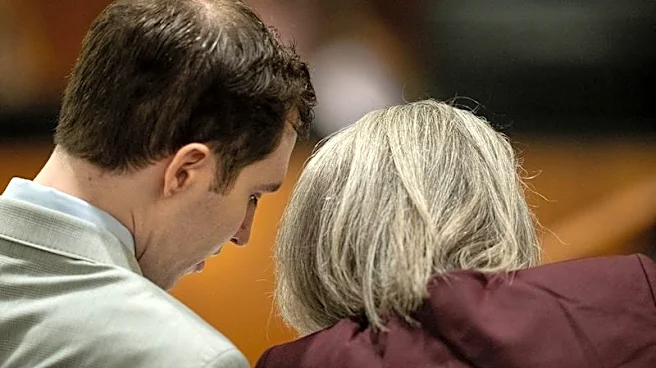
He told jurors that over six weeks, they had the opportunity to sit in a room with Brownlee and observe him during the proceedings. Philipsborn then pointed to his client, whose head was tucked into his shirt, leaving only the top of his head and hair visible.
When talking about Brownlee’s disengagement, Philipsborn said, “When you're facing what Mr. Brownlee is facing, by way of criminal charges … you don't get a reward for being disengaged.”
He described his client as a man in a burning house with two firemen — his attorneys — trying to get him out. To escape, however, Brownlee must work with them and provide information, which he has not done.
Philipsborn said the prosecution's focus appeared to be on Brownlee’s silence. He said that although he believes silence is an issue, it is not the only significant behavior. He told jurors that the time that has passed, Brownlee’s lack of interest in the world around him and other factors showed that Brownlee had "checked out."
"A better explanation of why it is clear that Mr. Brownlee has essentially check out when it comes to his participation is the reality that a case has been filed against him and he needs to respond to it," Philipsborn said.
Record reporter Victoria Franco covers public safety in Stockton and San Joaquin County. She can be reached at vfranco@gannett.com. Support local journalism by subscribing to The Stockton Record at Subscribe to The Stockton Record.
This article originally appeared on The Record: Jury enters deliberations in alleged Stockton serial killer competency trial | Exclusive