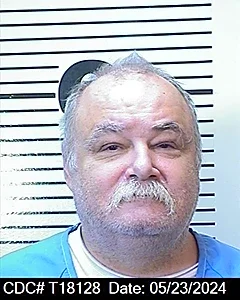



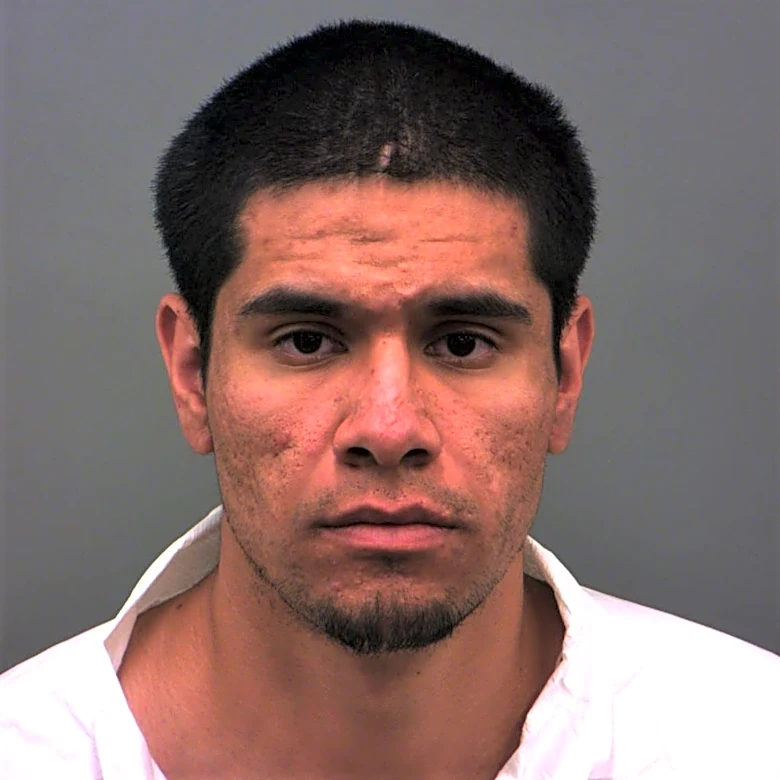


FOLSOM — Serial killer Wesley H. Shermantine, whose drug-fueled killing spree across San Joaquin and Calaveras counties earned him and his partner the notorious nickname the “Speed Freak Killers,” died Thursday, Sept. 17 while incarcerated at California State Prison, Sacramento, the California Department of Corrections and Rehabilitation said. He was 60.

Shermantine was pronounced dead at about 6 p.m. Thursday by a doctor at SAC. The Sacramento County Coroner’s Office will determine his official cause of death, the CDC said in a statement released Friday. Shermantine was received from Santa Clara County on May 18, 2001, and placed on condemned status for first-degree murder.
San Joaquin County District Attorney Ron Freitas issued a statement Friday
following Shermantine's death:
“Today, our hearts are with the families of Cyndi Vanderheiden, Chevelle ‘Chevy’ Wheeler, Howard King III, Paul Cavanaugh, and everyone whose lives were shattered by the ‘Speed Freak Killers.’ For decades, these families have carried a heavy, unbearable grief. While Wesley Shermantine’s death marks the final chapter of his legal sentence, it doesn’t erase the pain left behind. We stand with the victims’ loved ones today, and we will never forget the strength they’ve shown throughout this long nightmare.”

Horrific crimes draw nationwide attention
As the scope of their crimes unfolded, the discoveries rocked the San Joaquin and Calaveras county communities, made headlines across the nation, and the killings were featured in a number of true-crime TV shows.

Four months after the November 1998 disappearance of Clements resident Cyndi Vanderheiden, Stockton police and San Joaquin County sheriff's deputies arrested two childhood friends for her slaying. Stockton resident Wesley Shermantine Jr., then 33, and Linden resident Loren Herzog, then 34, were booked into the County Jail in March 1999 on charges they murdered Vanderheiden and a combined five others over a 14-year period. The pair grew up in Linden across the street from each other, turning to drugs in their teens and launching a methamphetamine-fueled killing spree in the 1980s that continued until their arrest.
In a spellbinding series of interviews, Herzog told sheriff's detectives he watched as the sexual assault and killing of Vanderheiden unfolded after using methamphetamine with Vanderheiden on a dark Linden-area road. The duo, who fell out after the arrests, was later said to have killed as many as 19 or more together or as a team.
At trial in 2001, Shermantine was convicted and sentenced to death for four murders: that of Vanderheiden; of drifters Howard King, 35, and Paul Raymond Cavanaugh, 31; and the murder of 16‑year‑old Chevelle “Chevy” Wheeler, who vanished in 1985 after telling friends at Franklin High School in Stockton that she was leaving campus with Shermantine to go to his family’s cabin in San Andreas.
Herzog's conviction on three of the murders was overturned. Herzog was paroled in 2010 after his conviction was reduced on appeal to voluntary manslaughter. He hanged himself hours after learning Shermantine was giving up new details of their past crime spree. A subsequent letter from Shermantine called him a “coward for taking the easy way out.”

'Loren’s Boneyard'
In late 2011, Shermantine started giving up the burial places of murder victims, blaming former partner in crime, Loren Herzog, according to Record archives. In 2012, Shermantine was taken in a blacked-out SUV in a convoy of vehicles to Linden to point out to FBI agents the old wells − which he called “Loren’s Boneyard” − that he and Herzog used to bury murder victims during their years-long drug-fueled killing spree. He had been enticed by bounty hunter Leonard Padilla, who offered up to $33,000 in reward money. Shermantine provided hand-drawn maps to The Record and to Padilla, which led investigators to recover remains.
Shermantine later refused to cooperate further, saying in a set of sharply worded letters to The Record and other entities that was not budging from death row to help unearth any more murder victims.
He railed against Padilla for failing to uphold his end of their bargain. Padilla, the killer said, lagged on sending him the promised rewards like a new television, candy bars and other comforts.

Assemblywoman Cathleen Galgiani, D-Stockton, said she trekked to San Quentin State Prison personally to meet the killer after Shermantine wrote the letters. Shermantine told her he would cooperate with certain agencies but not others.
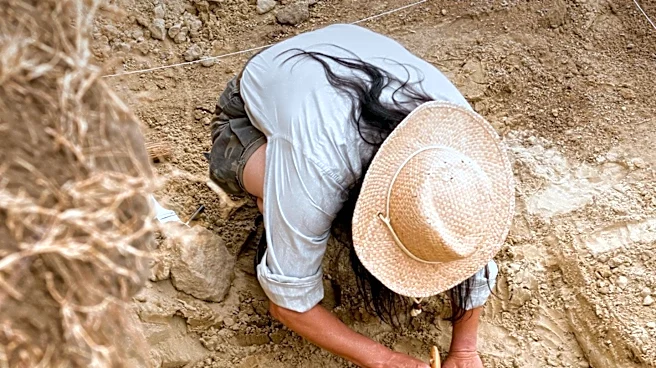
A well excavated in 2013 contained the remains of JoAnn Hobson, a teen who disappeared in 1985, and 19-year-old Kimberly Billy, a 1984 missing-persons case. A third unidentified woman and a fetus were also recovered. Within the same week, investigators found two victims Shermantine buried in Calaveras County: Wheeler and Vanderheiden.
Sheriff Moore and his deputies drew criticism for using heavy earth-moving equipment to excavate the well, which critics said shattered the bones into small pieces while bringing them to the surface. In 2015, after more remains were found in Linden, then-Sen. Cathleen Galgiani, D-Stockton said she received a letter from Shermantine in 2010 revealing several locations of remains in Linden for which he and Herzog were responsible and revealing that the duo’s victims were from the Bay Area, Northern California and the Tahoe-Nevada areas.
Galgiani said when she received the letters, she gave copies to the Sheriff’s Office, but later learned no action had been taken to investigate its contents.
Further inquiries led Galgiani to find that many unsolved missing persons records allegedly had been removed from a federal database at the request of the Sheriff’s Office.
Galgiani that year called for an independent review of San Joaquin County Sheriff Steve Moore's department’s handling of evidence in several missing persons cases, some of which have been linked to the notorious serial killers.
Mishandling of remains
Moore was cleared of negligence in 2013 for using heavy earth moving equipment to exhume murder victims from a Linden well. A report from the Human Identification Laboratory at California State University, Chico found that the use of large earth-moving equipment contributed to comingling the remains. That report opened up the possibility that other victims may have been unidentified, including missing 9-year-old Hayward girl, Michaela Garecht, who vanished in 1988.

In 2018, San Joaquin County agreed to a $500,000 settlement of a lawsuit filed by the mother and sisters of 15-year-old victim Jo Ann Hobson, who was murdered in 1985. The suit alleged that in 2012, the San Joaquin County Sheriff’s Office exhumed the remains of Hobson in a “careless and wrongful” fashion, commingling her bones with those of other victims.
Record archives contributed to this report.
This article originally appeared on The Record: San Joaquin County 'Speed Freak Killer' Wesley Shermantine dies at 60