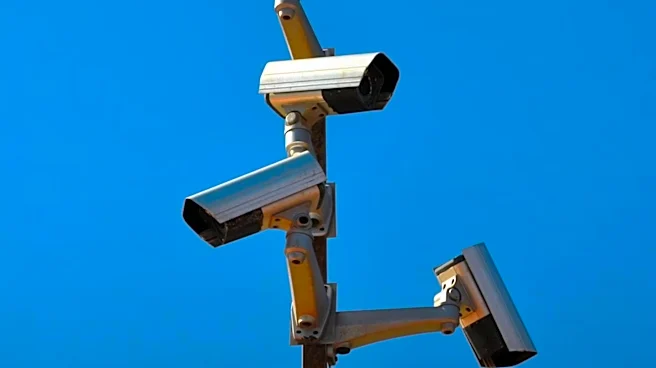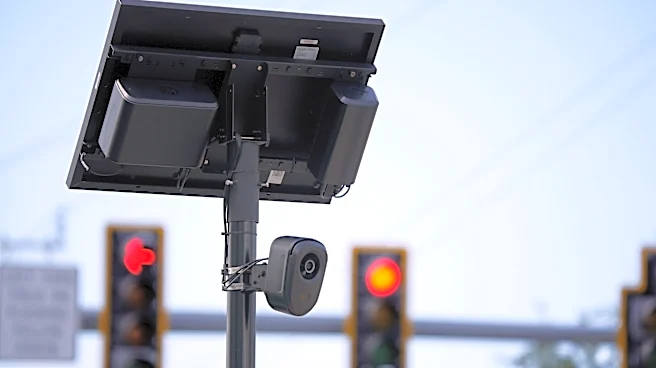








I have spent the summer filing public records requests on automated license plate readers (also known as Flock cameras) in Florida and publishing the results. My request to the St. Johns Sheriff's Office is still pending.
On Aug. 31, the Florida Department of Transportation revoked permits for license plate readers on state highways. Sheriff Rob Hardwick says St. Johns County will comply.
However, this county has roughly 180 of these cameras, and the order reaches only those on state roads. The rest sit on county roads, and they are staying.
Not every camera should be removed. This technology recovers stolen vehicles and helps find missing people; Lake County sent me case files proving it. A right-of-way boundary is a jurisdictional line, though,
not a privacy policy. Cameras on SR 207 and those on county roads photograph the same residents.
At a Sept. 3 budget hearing, Sheriff Hardwick asked commissioners for $3.9 million to raise deputy pay. He also disclosed $500,000 budgeted for license plate reader software and said that money could be redirected if the system is shut down. That is the argument in one budget line. Half a million dollars is a choice between this technology and other priorities.

The sheriff also said the real concern is "what happens when Rob Hardwick leaves." He’s correct; that is why decisions affecting an entire community should rest on transparent policy, public discussion and clear boundaries — not simply the judgment of whoever occupies an elected office at a given moment.
A system governed only by trust in its current leadership is not truly governed at all.
Before the Sept. 15 hearing, the commission should say how many readers remain on county roads, how long the data is kept, who outside this county can search it and what the program has produced here in our own numbers. Those answers should be discussed openly, with residents able to hear the justification and respond. Then decide the county-road question in an open meeting.
Somebody has to ask.
Sam Cornell, St. Augustine Beach
‘Medical’ marijuana not right for everyone
Our experience with medical marijuana proved to be one of the most dangerous encounters in our 20 years of dealing with our son's schizophrenia. The term ‘medical’ did not apply in his case.
In 2020, he talked a supposedly cannabis-trained doctor into issuing a medical marijuana card to help calm his symptoms.
When I found out, I contacted the doctor and realized immediately that he did not even know what anti-psychotic medications our son was taking. I was too late in taking control and it all came apart with our son so manic he barricaded himself in his house.
When police forced entry, he charged them like a raging bull asking them to shoot him. It took four deputies and a Taser to get him strapped onto a stretcher.
For those not versed in the use of a Taser (stun gun), it means law enforcement is being pushed very close to the use of deadly force. Thanks to their professionalism, he is lucky to be alive.
Recently our son started to become agitated and we realized it was again his determination that he needed medical marijuana. This argument got very tough, with tempers flying.
Many of you might say, “No problem, just say ‘no.’” The path isn't always that clear, however.
In a 2020 Times-Union column, I explained the warning signs of suicide. The most common indicator is a feeling of being a burden to family and friends. My wife's 26-year-old nephew expressed those words not long before jumping off a six-story car park to the pavement below. He left nothing to chance.
When you are dealing with these situations and they use that terminology, it can only be described as terrifying.
A quick Google search illustrates the realities of cannabis use for medical treatment of mental disorders, and I close with these: Exacerbates psychosis, triggers relapses, alters dopamine pathways and promotes illusion of self-medication.
Richard Marquis, St. Augustine
Clearer budget direction needed from DCPS
I sympathize with Duval County Public Schools Superintendent Christopher Bernier as he tries to balance the operating budget and wisely spend the sales surtax money.
I speculate that his planning would be easier if the school board would give him clearer direction. My suggestion is the School Board enact a policy that no schools with over 400 student enrollment will be closed. Also, no money can be spent to build an elementary school with over 800 student capacity without board approval.
I assume Bernier was surprised that the School Board voted down the contract to rebuild Venetia Elementary School at its September meeting. The decision seemed to be precipitated by the appearance of a lot of community members saying they don’t want a large school built in the tiny Venetia neighborhood, nor do they want Stockton Elementary School closed.
I have heard from parents who love their elementary school with over 1,000 students enrolled. They outline how the school is designed to allow for the benefits of a small school, but also offers lots of options. So I’m not saying that the board should never approve a large capacity elementary school.
I continue to think we need impact fees for schools in new developments so our sales surtax money can be spent renovating our old school buildings.
If the board had passed my ideas for policy (suggested back in May), Bernier never would have spent staff time and money on the plan that the community clearly opposes. Please call or write your school board member if you agree with this suggested policy:
- Schools with over 400 students enrolled will not be closed; and
- No money can be spent to build an elementary school with capacity for over 800 students without board approval.
Susan Aertker, retired certified public accountant and public school advocate, Jacksonville
Bipartisan effort needed for debt crisis
The letter from James Garner, published on Aug. 30, clearly delineated the problem of the United States national debt. The letter followed an Aug. 21 article by David Lawder and Jacob Bogage on the sobering trajectory of the U.S. debt, which has grown from $1 trillion in 1981 to nearly $20 trillion in 2017 and over $40 trillion in 2026.
The government relies on the bond market (selling U.S. treasuries) for funding. Higher bond yields — interest rate — equate to higher borrowing costs. Another August article reviewed the rising bond yields with treasury auctions for 10-year notes are the highest in 19 years, while 30-year bonds hit a 25-year peak. The higher bond yields increase costs and are a barometer of the economy.
Our government has a huge imbalance between spending and tax revenue.
Raising taxes on the wealthy is an unlikely solution, as this group — the top 1% — pays about 40% of the total income tax revenue. Therefore, increased taxation is an unlikely primary solution.
The U.S. has a spending problem and spending must be reduced. There must be reductions in mandatory spending, which accounts for about 2/3 of the federal budget. The types of mandatory budget items and the percentage of the federal budget are: Social Security, 22%; Medicare, 15%; debt service, 15%; and health care, 13%. These reductions would require congressional approval.
As voters we must bring this issue to the forefront in the election process. The debt was created by both parties and can only be solved by innovative bipartisanship.
Will Rogers said: “When you find yourself in a hole, quit digging.” The digging must stop and a solution must be found.
Doug Bogart, Jacksonville
Nixon a ‘flamethrower,’ too

On Sept. 2, the front page of the Times-Union ran a story by John Pacenti, reporting on Laura Loomer’s social media comments about Angie Nixon.
Obviously, Loomer is a bigoted flamethrower, but Nixon is a flamethrower herself. She has been a name-caller, an oftentimes performative and feckless lawmaker. Nixon isn’t a victim, but a participant. Which is fine. She can participate and turn the posts of a moron into a fundraising opportunity. That’s a smart move, and calling out Sen. Ashley Moody to repudiate Loomer by name is fair play.
However, Nixon’s crocodile tears and Pacenti’s obvious outrage in his story really don’t help promote honest dialogue in our politics or regain trust in the media. Pacenti’s job isn’t to decide what’s hurtful, but to simply report. To me, he failed at that.
Mike Disch, Neptune Beach
Donalds should use Google
The political ad by the Friends of Byron Donalds political action committee is misleading. It states that David Jolly is going to raise taxes on overtime and tips if elected governor.
However, the governor of Florida has no authority to tax or alter taxes on overtime or tips. Neither does the legislature, since we have no state income tax.
The law applicable to tax on overtime and tips is under federal jurisdiction. Perhaps Donalds should Google it; I did.
Dee Paez, Jacksonville
This article originally appeared on Florida Times-Union: Let's remove 'Flock' cameras from county roads, too | Letters