






Nuclear is perhaps the best word to summarize our July heat and humidity. As I look over my garden, I swear I can hear many of my plants gasping for air right alongside me. But with a little foresight and planning, I can minimize some of the stress for both of us when I commit to companion planting.
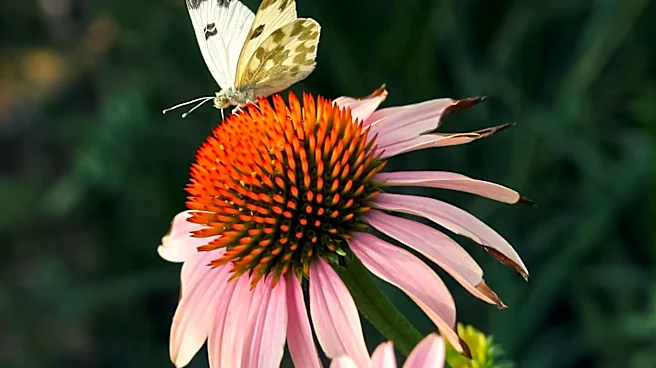
The art and science of pairing up different species of plants that can mutually benefit each other. Planning the layout with edible and ornamental plants with similar growing needs (soil content, fertilizer formulas and watering cycles) can result in an attractive food space that is short on waste and long on water conservation. Success is measured when the plants can provide three things, flowers that evolve into a food source and attract both pollinators
and beneficial insects. Even better if the plants have properties that can also repel the bad bugs, through scent or taste.
You may already be familiar with the three sisters method of growing vegetables. Long ago, Native Americans developed a system of growing corn, beans and squash together. Experience taught them that these three crops were mutually beneficial to each other when grown in close proximity. The corn supported the beans, the beans added nitrogen to the soil, and the squash grew like a groundcover which mulched the soil and suppressed weeds.
Whether in ground or in containers of any sort, there are a number of fall to winter selections to consider. Ornamental and flowering plants favorites include: Chrysanthemum, Aster, Black eyed Susan/Rudbeckia hirta, Cornflower/ Centaurea cyanus, Dahlias, Snapdragons/Antirrhinum majus and Sweet alyssum/Lobularia maritima.

Violas bring a punch of color and taste. Sweet violet/Viola odorata for tea flavoring, Johnny jump-ups /Viola tricolor and garden pansies/Viola x wittrockiana can be added to fresh salads. Want to learn more about using garden flowers in the culinary world? Visit https://gardeningsolutions.ifas.ufl.edu/plants/ornamentals/edible-flowers/.
Cool season vegetables showcase cruciferous varieties, those nutrient rich plants in the Brassicaceae family. From that list, I grow what I like, broccoli, cabbage, kale, radishes and brussel sprouts.
Some of my favorite winter vegetables are also attractive to the bad news bugs. Including myself, aphids seem to also enjoy my lettuce, cabbage, collard greens, swiss chard, broccoli, beets and brussel sprouts. Not to mention the worms and mites that devour peas and other greens.
In full sun however, I can plant dill (sow seed) and fennel near these crops because they attract parasitic wasps and lacewings who eat these nuisance species. I have also learned that my raised bed soil that tests higher in acidity, helps me grow parsley and chives alongside my spinach, carrots and radishes. And I have identified that some pests are deterred when I plant cilantro and sage nearby.
The spring season brings the prospect of my favorite flavor crop, tomatoes, but these plants require attention and care when the temperatures begins to creep up. Fortunately the hornworm finds the large sunflower/Helianthus blooms are a more substantial food source, so I plant them nearby along with the herb, basil which repels aphids.
A second vegetable that prefers acidic soil is peppers. Unfortunately like clockwork, the annoying aphids appear to gobble up their leaves, the troubling thrips transmit virus and the maddening spider mites set up shop. Companion planting with marigolds/Tagetes and Cosmos can charm tiny pirate bugs that will feast on these bad boys later.
The more flowering plants I can intertwine with between my crops, the more beneficial insects will appear to feast. Again, the blooms from ornamental plants can be more than just a pretty face, some are also edible like nasturtiums, bee balm/Monarda, and ginger/Zingiber officinale. And that same slightly acidic bed I mentioned in the cool season, is where I can now plant thyme, Mexican tarragon and sage in full sun plus oregano, parsley, rosemary, chives and mint where it receives part sun.
Carrot flies and bean beetles find rosemary plants intolerable so there is another great pairing. Chives reduce the spider mite populations which are commonly found on strawberries and zucchini. Eggplant pests versus oregano is another worthwhile and formidable duo.
I would be remiss to leave out edible plants that grow as trees and bushes. My landscape includes fig/Ficus carica and Olive/ Olea europaea trees and recently a pair of pineapple guava/Acca sellowiana trees were added. For a brief period in the spring, this plant bolsters exotic looking flowers that are also edible. The fruit that follows after the summer months tastes like a combination of pineapple, guava and kiwi fruits.
These are just a few examples of plants that grow well on the First Coast, for additional information, please visit this link: https://ask.ifas.ufl.edu/publication/EP618.
And if growing edibles isn’t your thing, there are other worthy themes that may be a better companion planting fit. Drought tolerant combinations like Gerber daises/Gerbera jamesonii, daylilies/Hemerocallis and lily of the Nile/Agapanthus can lighten the irrigation load in your garden. And focusing on natives and adaptable plants is beneficial to the environment and to the homeowner’s budget.
To learn more of how Florida Friendly plants can be grouped in harmony, please check out this link: https://ask.ifas.ufl.edu/publication/EP594. Finding community and connection in nature is relatively simple. Understanding the science behind the plant’s profile can make any garden or landscape double as a harvesting enterprise.
Candace Barone is a Master Gardener Volunteer with the Duval County Extension Service and the University of Florida/IFAS. For gardening questions, call the Duval County Extension Office at (904) 255-7450 from 9 a.m. to noon and 12:30 to 3:30 p.m. Monday-Friday and ask for a Master Gardener Volunteer.
This article originally appeared on Florida Times-Union: Grow a healthier garden using companion planting