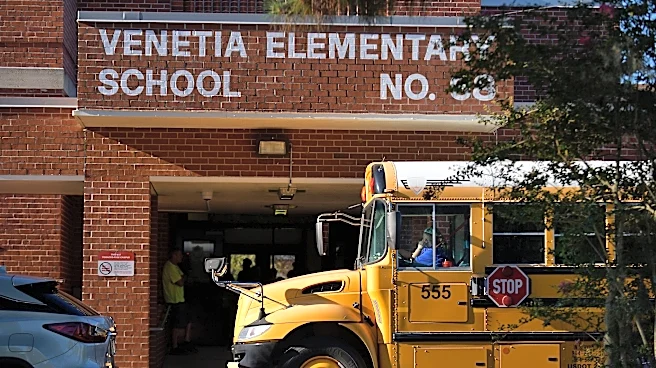






The Duval County School Board is set to vote Tuesday, September 1, on a contract for preparatory work on a larger replacement for Venetia Elementary School despite persistent neighbor objections.
The board will also be taking up changes to policies on attendance boundaries, school closings and consolidations that could impact a number of schools in coming years.
Although designs for the new Venetia haven’t been finalized, the board is scheduled to vote on an agreement for “preconstruction services” with STG Contracting Group and for early procurement costs for construction totaling a combined $2.2 million.

The final price for the new Venetia, which is scheduled to open in August 2028, will be part of a full construction contract the board will vote
on later.
The new building would represent a major investment in a Westside site where classes have been held since 1942. Enrollment was just under 350 at the start of the 2025-26 school year.
But plans to grow the school, possibly to 1,200 students, have alarmed some critics who argued the increased use would burden the surrounding neighborhood and would pay for a much larger school than the area needs.
“Venetia-Ortega population growth is not and will never grow as much as the district is projecting,” read a flyer that opponents copied about 1,500 times and distributed around their community east of Roosevelt Boulevard and north of Naval Air Station Jacksonville.
In 2023, the school district sought bids for a package of construction contracts that included building a new Venetia Elementary to serve about 800 students.
At the beginning of August, the board approved a plan to close Ortega Elementary by the end of May, 2028 and move its students into the new Venetia. That new school will have to be part of the school district's efforts to balance needs for suitable buildings and limits on funds to pay for them.
“We have old buildings and we have too many buildings,” board member Cindy Pearson observed when members talked August 19 about costs the district faces for services like air-conditioning its properties, many of which have a lot of unused space. “…When we could decrease that inventory, in some cases build new schools that should not have deferred maintenance … I think, going forward, we will be in a better condition.”
At that same meeting, Pearson asked whether voting for the contract would mean she was approving a 1,200-student school. It did not, Superintendent Christopher Bernier answered.
During the September 1 meeting, the board will also invite public comment before a vote on changes to district policy written to set criteria for new attendance boundaries, school closings and consolidations. The first of those criteria will be "facility utilization and functional capacity," the recognition that some buildings are half-empty and setting a target of 85% to 100% utilization. That sensible-sounding goal may carry its own challenges because it's based on utilization levels calculated through a state inventory of schoolhouses, which critics have argued in the past fails to recognize some uses that people may take for granted.
Another proposed standard says the district will "promote schools of sufficient size to support comprehensive programming" with "general planning thresholds" of about 500 student desks for elementary schools, 1,200 for middle schools, and 2,000 for high schools.
That's larger than many schools in use now but less than levels suggested in 2024 by a consultant whose illustrations of potential closings alarmed many school communities. In that illustration, properly sized elementary schools might have 800 to 1,200 students; middle schools could have 1,200; and high schools could have 2,400 students.
The policy proposal would require separate board votes for any school closures, consolidations or boundary changes.
This article originally appeared on Florida Times-Union: Duval School Board to vote on Venetia school, new closings policies