





In somewhat of an unprecedented case where the prosecution requests a judge be disqualified, as opposed to the defense, both the State Attorney's Office and Jared Bridegan's widow filed motions to oust Judge London Kite from overseeing Shanna Gardner's murder trial.
However, the judge swiftly denied both motions.
Much of it had to do with a series of late motions filed by Gardner's attorneys before her jury selection was scheduled to begin Aug. 31 for her trial in the murder-for-hire of her ex-husband, the 33-year-old Bridegan after dropping off their shared-custody children at her and new husband Mario Fernandez Saldana's home in Jacksonville Beach.
Particular emphasis focused on the handling of a court order that Kirsten Bridegan refused to comply
in giving up her cell phone to be analyzed by the defense. Meanwhile, this was all taking place where Fernandez Saladana was amid his lengthy trial in the same case. Kite abruptly halted the trial when she learned of Bridegan's refusal and was prepared to have her arrested for contempt of court. Fernandez Saldana was later found guilty but then was charged with new lewd and lascivious offensesthat further delayed Gardner's trial.
What does Kirsten Bridegan’s motion say about disqualifying Judge London Kite?
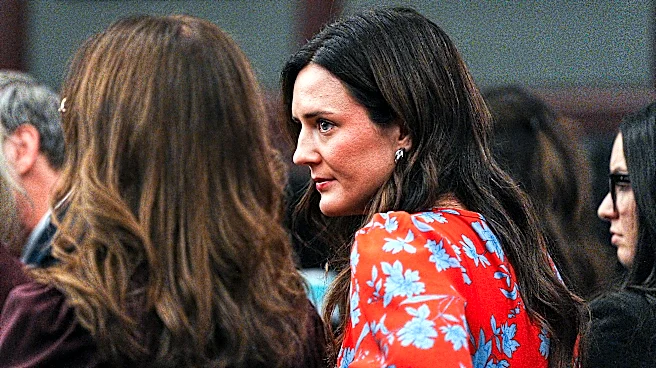
![State Attorney Melissa Nelson, left, talks with Kirsten Bridegan, right, widow of Jared Bridegan, during the Mario Fernandez Saldana trial. Fernandez Saldana is charged with first-degree murder and solicitation to commit a capital felony in the 2022 hit on his wife's ex-husband, Jared Bridegan, in Jacksonville Beach. The trial continued Tuesday, August 25, 2026 at the Duval Count Courthouse in Jacksonville, Fla. [Doug Engle/Florida Times-Union]](https://www.gannett-cdn.com/authoring/authoring-images/2026/08/25/NFTU/91459563007-mario-trial-day-7-027.JPG)
Following is some of what the 33-page motion filed Sept. 9 states.
“In sum, Judge Kite has demonstrated that she has prejudged that Mrs. Bridegan is in indirect criminal contempt of Court by (1) giving Mrs. Bridegan exceedingly short notice that would prompt a reasonable person to fear she would not receive a fair hearing, (2) based on having taken the extraordinary step — less than 24 hours before — of ordering Mrs. Bridegan to surrender her private, personal cellular phone to a forensic firm retained by the defendant in circumstances that would prompt a reasonable person to fear she would not receive a fair hearing, and (3) while fully aware that Mrs. Bridegan had filed an emergency petition seeking a stay of the order compelling the surrender of her phone and that the Fifth District was expected to rule in short order, which would further prompt a reasonable person to believe she would not receive a fair hearing.
“The circumstances in which Judge Kite ordered Mrs. Bridegan to show cause why she should not be held in criminal contempt further establish Judge Kite’s prejudgment, bias, and prejudice: (1) the show cause proceedings convened in the middle of the trial of a different defendant and only one-half hour after Mrs. Bridegan allegedly contemptuously failed to surrender her phone, and (2) while deputies were present inside and outside the courtroom to take Mrs. Bridegan into custody immediately, before she had even been ordered to show cause regarding the putative criminal contempt, let alone found to have committed it.
“All this followed events that further establish Judge Kite’s prejudgment, bias, and prejudice. Among other things, Judge Kite ordered the surrender of Mrs. Bridegan’s personal cell phone after (1) considering an ex parte submission by the defense as to why its interests in the private data on the phone should override Mrs. Bridegan’s constitutional victim’s and privacy rights, (2) denying Mrs. Bridegan an opportunity to be heard on Mrs. Bridegan’s objections to the surrender of the cell phone, including objections to the ex parte process Judge Kite employed, and accusing her of “thwarting” discovery; and (3) ordering Mrs. Bridegan to surrender her cell phone on a timeline so abbreviated — and refusing to grant relief from that timeline — that it appears to a reasonable person to have been calculated to evade the Fifth District’s review of the order. For these and other reasons, Mrs. Bridegan holds an objectively reasonable fear that Judge Kite no longer has an open mind where she is concerned.”
What does the state’s motion say about disqualifying the judge in Shanna Gardner’s case?
![Judge London Kite explains things to potential jurors during the jury selection in the murder trial of Mario Fernandez Saldana, Monday, August 10, 2026 at the Duval County Court House in Jacksonville, Fla. [Doug Engle/Florida Times-Union]](https://www.gannett-cdn.com/authoring/authoring-images/2026/08/10/NFTU/91242616007-mario-fernandez-saldana-trial-day-1-018.JPG)
Following is some of what the 15-page motion filed Sept. 10 states.
The state leaned heavy on the events of Aug. 21.
“At 7:19 a.m. on August 21, the Court received notice that Mrs. Bridegan, through separate appellate counsel, had sought an emergency stay from the Fifth District Court of Appeal. Between approximately 8:15 and 8:20 a.m., the Court received notice of Mrs. Bridegan's Stay Motion. At 8:23 a.m., Defendant's counsel emailed the Court's judicial assistant a courtesy copy of Defendant's opposition. Just nine minutes later, at 8:32 a.m., the Court denied Mrs. Bridegan's requests without a hearing.
“At 9:00 a.m., the Court resumed the Fernandez first-degree murder trial. Bridegan was in Judge Kite's courtroom attending the trial, seated with her family in the gallery. At 9:23 a.m., the State received a courtesy copy of an email from Defendant's counsel to the Court's judicial assistant stating that Mrs. Bridegan was "refusing to turn over her phone" and requesting emergency relief and "all available remedies." At approximately 9:30 a.m., during the cross-examination of a State's critical expert witness, the Court interrupted the testimony, abruptly recessed the Fernandez trial, excused the jury, and convened an emergency proceeding in Defendant's case. The Court opened the proceeding by stating, "I need Ms. Bridegan to step up, Mr. [Doug] Clifton [Bridegan’s attorney] to step up and get Kirsten Nelson [Gardner’s attorney] on the phone.

“After Mrs. Bridegan passed through the gate separating the well of the courtroom from the gallery, two courtroom bailiffs positioned themselves a few feet behind her at the gate, occupying the only passage between the well and the gallery. This was not a routine security position. It was conspicuous to those present and is plainly visible on the courtroom recording. Viewed objectively, the security posture reasonably conveyed that Mrs. Bridegan would not be permitted to return to the gallery or leave without the Court's authorization. That impression was created before Mrs. Bridegan had been heard and before Defendant requested that she be prosecuted for indirect criminal contempt. At that point, the Court had not asked Mrs. Bridegan or Clifton why the phone had not been surrendered. No written motion seeking contempt had been filed. Nor had the Court issued or served an order stating the essential facts of any contempt charge.”
Moving ahead a bit, the motion continued: “At 10:18 a.m., the Court filed a written order to show cause setting the contempt hearing for 12:30 p.m., leaving only two hours and twelve minutes between the written charge and the hearing. At approximately noon, the Fifth District temporarily stayed the contempt proceeding. The written order to show cause remains pending.”
The motion went on to state: “Within minutes of receiving Mrs. Bridegan's Stay Motion — and nine minutes after receiving Defendant's opposition — the Court denied relief. Over the next hour and forty-six minutes, the Court granted Defendant's oral request for an order to show cause and filed an order setting the criminal-contempt hearing for that same afternoon. Before the order to show cause issued, and before counsel could assess what witnesses or evidence a defense would require, the Court fixed the course and timing of the proceeding. More significantly, its insistence upon immediate adjudication objectively conveyed that the central question — whether Mrs. Bridegan would be held in contempt — was no longer genuinely open. The contemplated hearing appeared less directed toward an unhurried determination of guilt than toward implementing a conclusion the Court's words and conduct suggested it had already reached.”
What did the judge’s order say about denying her removal from Shanna Gardner’s trial?
Kite responded two-page rulings within hours that “the Court finds that the instant motion is legally insufficient.”
In the Bridegan’s request, the judge did advise that “the Court shall follow and abide by the stay previously imposed by the Fifth District Court of Appeal, and it will not conduct any proceedings until further order” of that court.
Attorneys now must decide whether to appeal.
Scott Butler has been an editor/reporter specializing in public safety coverage for 26 years with The Florida Times-Union. He can be reached at sbutler@jacksonville.com.
This article originally appeared on Florida Times-Union: Judge quashes motions by state, Bridegan widow to oust her from trial