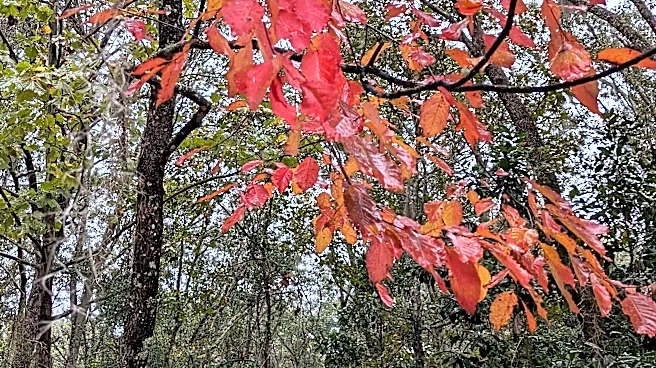








The weather is changing ever so slightly. The days are getting shorter, and we can feel the temperatures getting cooler. Some of us are even planning trips up north to view the brilliant reds, vibrant oranges, and bright yellows in the North Carolina mountains.
Mid to late October is the time to head north to see fall color, in north Georgia, Tennessee or North Carolina. If you would rather stay home, our fall color in Northeast Florida usually occurs in November and December. So, if you do not get a chance to make it north this fall, there is still the opportunity to take in some fall color here. More on that below.

There are three primary factors that influence fall leaf color in plants: leaf pigments, weather and the length of the night. While
most of us think it is the cooler weather that stimulates fall coloration, the most important factor is actually the lengthening of the night. While length of night stimulates production of fall color, the weather does play a part in the amount of color that is shown. Cool crisp nights followed by sunny warmer days produce the most brilliant fall color.
Unfortunately fall color in Florida is not predictable. Our fall weather can be sunny and warm or cool and rainy. If you want to find information on fall color throughout the country, the US Forest Service has a Fall Color Hotline at: 1-800-354-4595. The website https://smokymountains.com/fall-foliage-map/ provides timely information as well as a fall color prediction map for 2026 that can help plan your fall excursion.
While we may not have the brilliant display of color that may be observed in other parts of the country, when the conditions are right, we have many plants that display plenty of fall color. Some of the trees and shrubs that grow in our area that can produce some fall color include:

- Sourwood: Adapted for sun or shade displays a striking red and orange.
- Winged sumac: Not to be confused with poison sumac exhibits fantastic red foliage.
- Red Maple: This is a large native tree. Its leaves turn yellow, red, orange or purple. It provides lasting color in winter with red flowers, then seeds. The ‘Florida Flame’ variety is supposed to have some consistent fall color.
- Sugarberry: This large tree is a interestingly is in the same family as cannabis and is native to Florida. Its leaves turn a pale yellow.
- Hickory: The hickory is a large tree (with lots of hickory nuts) that has yellow fall foliage.
- Carolina Silverbell: This is a small understory tree that is native to the Southeast. It provides early yellow fall color.
- Persimmon: Both the native and oriental varieties turn color. The native may reach 50 feet in height. The fall colors are yellow/green to reddish/purple.
- Sweetgum: This proven native is a large tree with star-shaped leaves. The leaves can turn red, yellow, or purple.
- Wild Cherry: This is a large native tree that may have yellow and red foliage. Its messy fruit may be a problem for some.
- Florida Maple: This tree is somewhat smaller than the Red Maple. It is a Florida version of the Sugar Maple. Its leaves turn yellow.
- Sassafras: This small tree forms clumps of yellow, red, orange and purple foliage.
- Sweetshrub: This north Florida native is a shrub up to 8 feet tall. Its leaves turn yellow.
- Oakleaf Hydrangea: This multi-stemmed native shrub has orange to purple foliage in the fall.
- Shumard Oak: This large native tree has red fall color.
- Crape Myrtle: This non-native tree is not only a summer flowering tree, but has red, orange, or yellow foliage in the fall.
- Blackgum: This slow-growing large tree produces red fall color early in the season.
Not all trees that produce fall color are good. One in particular is the Chinese Tallow, Triadica sebifera. In its native range in central China, Chinese tallow is cultivated for seed oil. During the 1700s, Chinese tallow was introduced to the United States primarily for use as an ornamental tree. It was also introduced for making soap from the seed oil. Not only has Chinese tallow become naturalized in the southern coastal plain from South Carolina south to Texas, but it has also become naturalized in over half of the counties in Florida. Even though it has beautiful fall coloration, the displacement of native species through vigorous growth and spread are characteristics that helped place Chinese tallow as prohibited from use in Florida according to the Federal Noxious Weed List, and the Florida Department of Agriculture and Consumer Services Noxious Weed list.
So, whether you decide to travel to see fall color, stay home and try and create some in your home landscape, or even do both, it will be a good way to get outside and take in the cooler temperatures of fall.
Larry Figart is an urban forestry extension agent with the University of Florida/IFAS.
This article originally appeared on Florida Times-Union: Florida fall color: 16 trees and shrubs to brighten your yard