

DENVER — Say this for the Jacksonville Jaguars’ pass rush through two games: There is no in-between.
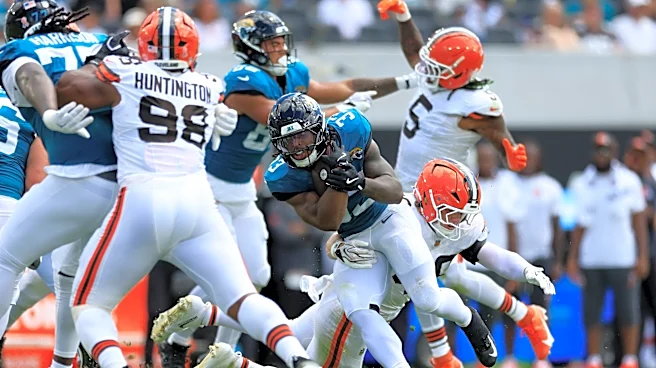
The Jaguars debuted with five sacks, three knockdowns and six pressures for 14 total “disruptions” (according to the Times-Union’s game charting) in their rout of the Cleveland Browns. Expectations were fueled. What if defensive coordinator Anthony Campanile could lean on a four-man rush to create pressure? Get ready for Jaguars defensive line meetings in the backfield while standing over mauled, disheveled and overwhelmed quarterbacks!
Um, nope.
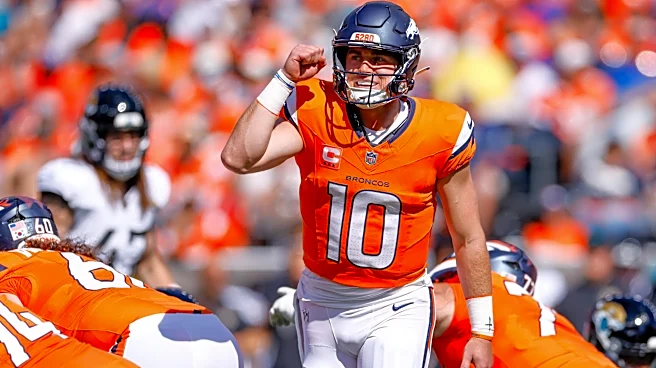
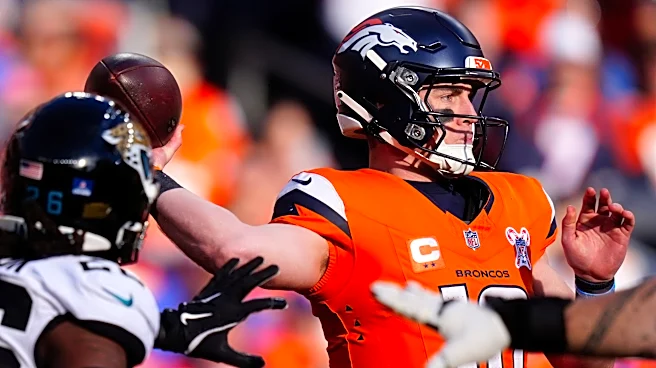
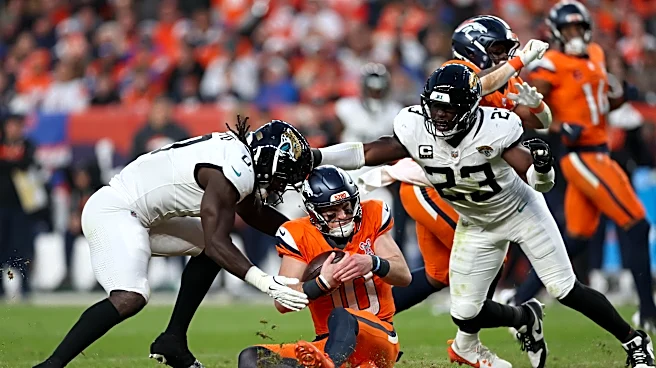
In their come-from-ahead 20-13 loss to the Denver Broncos on Sept. 20, part of the reason the Jaguars couldn’t hold onto a 10-point lead was their pass rush disappeared — no sacks, two knockdowns and six
pressures. Broncos quarterback Bo Nix was 22-of-31 passing for 288 yards.
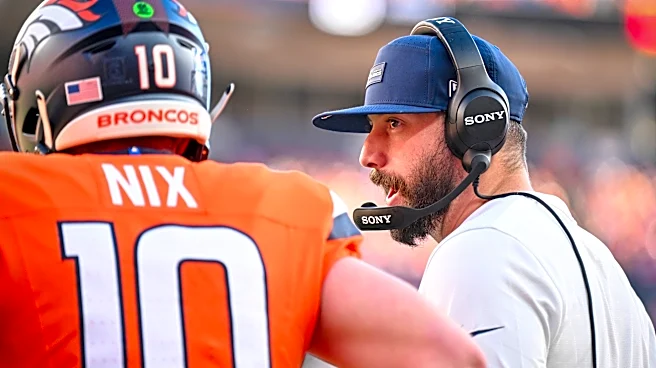
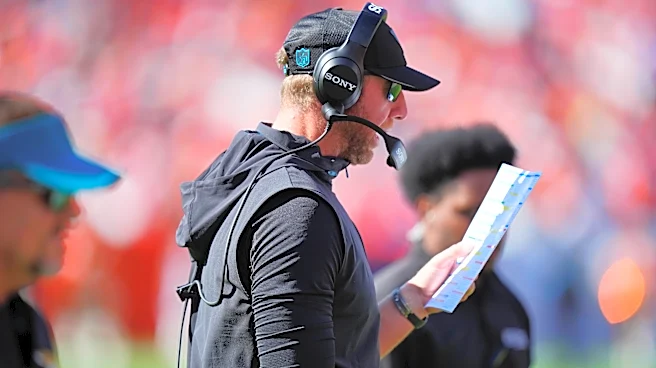
“We didn’t do enough in the rush, specifically in the second half,” Jaguars coach Liam Coen said.
Not nearly enough.
Cleveland didn’t have a receiver who scared the Jaguars and didn’t have the offensive line that could serve as a brick-wall presence for quarterback Deshaun Watson.
The Broncos did have the receivers (chiefly Jaylen Waddle) to test the Jaguars’ secondary … and they did.
And the Broncos had the kind of offensive line to thwart the Jaguars … and they did.
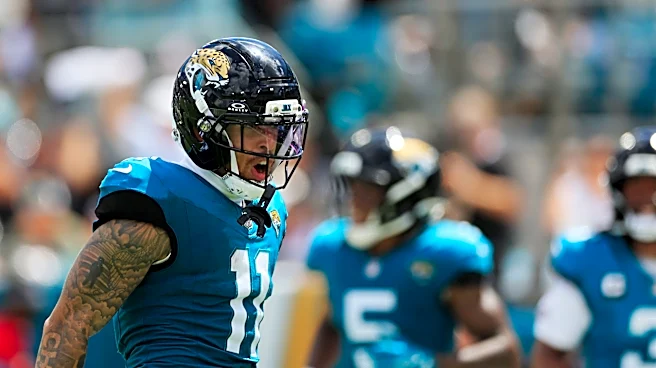
A week after defensive ends Josh Hines-Allen and Travon Walker combined 2 1/2 sacks, one knockdown and four pressures, they were kept off the sheet completely. Nothing cooking.
“I have to do a better job,” Hines-Allen told me. “I have to take more control.”
Jaguars switched up pressure plan
Campanile really wanted to stick with a four-man pass rush against the Broncos. He called four-man pressures on Nix’s first 12 drop-backs. Linebacker Dennis Gardeck had a knockdown on Nix’s first drop-back.
But in all, the Jaguars rushed five or more players on 12 of Nix’s 34 drop-backs (35.3%), including 12 of his final 26 drop-backs (46.2%).
Gardeck had both knockdowns and I credited the pressures to safety Antonio Johnson (two), cornerback Jourdan Lewis, linebacker Ventrell Miller and defensive tackles Matt Dickerson and DaVon Hamilton.
“I thought (Denver) did a nice job of mixing (things up); not just straight drop-back,” Coen said. “They had play action, moved (Nix’s) launch point, boots, getting him on the move a little bit.”
Mostly, though, the Broncos had Nix throwing quickly, either by design or because his targets got open in a hurry.
Nix attempted six passes in under 2.00 seconds, eight passes in 2.01.2.50 seconds, eight in 2.51-3.00 seconds and nine in 3.01 or more seconds.
A quick pass game completely limits a pass rush no matter how quickly you can win your match-up.
The Broncos also used an extra pass protector (tight end or running back) on 20 of Nix’s drop-backs.
Leading 13-3 in the third quarter, Campanile knew he had to pivot and send extra people.
On the Broncos’ first drive of the second half, he blitzed Miller, Johnson/linebacker Foye Oluokun and Johnson/Gardeck in a span of five Nix drop-backs. The results were 16-yard completion 14-yard completion and two throwaways. Denver kicked a field goal.
After Trevor Lawrence’s interception, Campanile went back to work. On Nix’s second drop-back of the possession, Miller blitzed and Hines-Allen dropped into coverage, followed by combo blitzes by Johnson/Gardeck, Oluokun/ Lewis and Gardeck. Nix was 3 of 4 for 24 yards. The Broncos tied it at 13.
On Denver’s game-winning drive, the Jaguars had two pressure plays. Lewis/Oluokun and Oluokun/Miller on consecutive plays. Nix threw 17 yards to tight end Evan Engram and incomplete to receiver Lil’Jordan Humphrey.
Hines-Allen puts focus on himself
The Jaguars were held without a sack for the third time in Campanile’s 20 games as coordinator; they beat Kansas City and lost to the Los Angeles Rams last year with no sacks.
The eight disruptions against Denver were tied for the second-fewest of Campanile’s tenure; they had seven in the loss to Seattle and eight in the win over Kansas City last year. In 2025, the Jaguars averaged 13.3 disruptions per game. They didn’t get a ton of sacks (33, including the playoffs for a 1.8 average), but they created a serviceable amount of pressure.
Is sending more rushers the answer to this pass-rush question? It’s a hard way to live in the NFL because using a fifth, sixth or seventh rusher leaves two other parts of the field vacant.
“We’ll have to look at it,” Coen said. “(Denver has) a (darn) good offensive line. I don’t want to take too much away from them, but if we’re going to beat a team like that, we’re going to have create some pressure.
“When we do blitz, we have to get home.”
Specifically, when the Jaguars blitz, Hines-Allen and Walker need to get home. And when the Jaguars rush four, getting them into the backfield — with any kind of disruption — will help a secondary that was doing a ton of chasing against Denver.
“That’s a good offensive line,” Hines-Allen said. “They won (Sunday). It happens. We have to do a better job next week, especially up front. I take that on my shoulders.”
Contact O’Halloran at rohalloran@gannett.com or on X at @ryanohalloran. Listen to Ryan on 1010AM on Tuesdays (6:35 p.m. on “Into The Night"), Thursdays (1:15 on "XL Primetime") and Fridays ("First Coast Football Friday" 4-7 p.m.).
This article originally appeared on Florida Times-Union: After productive debut, Jaguars' pass rush skunked in loss to Denver