




The autumn equinox, the first day of astronomical fall, arrived earlier this week. As if to celebrate, cooler, drier weather began moving into Florida on Sept. 24, bringing a "taste of fall," according to the National Weather Service Tallahassee.
But will it actually last? In short, no.
Above-normal temperatures are forecast to return by late in the weekend and into early next week in North Florida. Cooler temps could last into early next week for Central Florida and the East Coast, according to the National Weather Service in Melbourne.
➤ Weather alerts via text: Sign up to get updates about current storms and weather events by location
How will the rest of the season feel? Here's what predictions look like.
See the fall 2026 weather forecast

The Old Farmer's Almanac predicts a fall
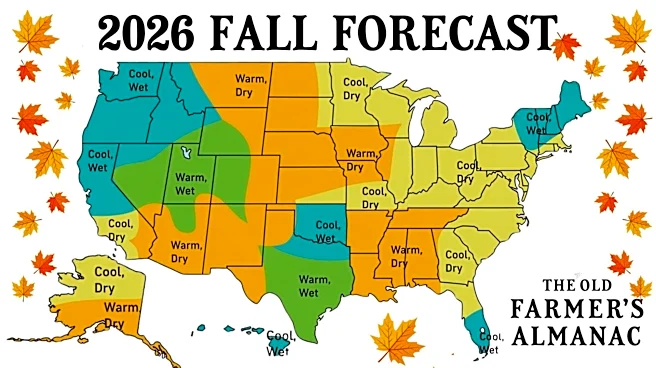
with less precipitation and more varied temperatures. States in the middle of the country may see warmer-than-usual temps this September and October, while coastal areas are expected to feel cooler than average.
The Southeast is expected to average about a degree below normal in September and October, the Almanac said, with southern portions experiencing up to 4 inches less rainfall than normal.
"Northern Florida will experience cooler and drier conditions this fall, and southern Florida is also expected to be cooler," Almanac forecasters said, "with slightly above average rainfall."
What is The Old Farmer's Almanac?
The Old Farmer’s Almanac is the oldest weather-forecasting publication in the United States.
Its long-running rival, the Farmer's Almanac, ended its run this year after 208 years of publication, but will return under new ownership.
The Old Farmer's Almanac was first printed in 1792 by Robert B. Thomas, who also devised a formula using solar forecasts, historical and long-range weather data, and a proprietary formula to predict the weather. It also includes gardening tips, stories from family farms, recipes, and sage advice.
When do we change clocks back?
Unless the Senate approves the Sunshine Protection Act, and President Trump signs it into law, daylight saving time will end at 2 a.m. local time on Nov. 1 and we'll move our clocks back an hour to return to standard time.
When does winter 2026 begin?
The winter solstice, which marks the first day of winter 2026, occurs on Monday, Dec. 21, at 10:50 a.m. ET.
Farmers' Almanac winter predictions for Florida, the South

According to the Farmers' Almanac's 2026-27 winter forecast, Florida could be in for a wetter-than-normal winter this year, with an active storm track expected to bring frequent chances of rain across the Southeast.
The Farmers' Almanac expects one of the most active weather patterns to take shape across the southern United States this winter. Some storms in the southern tier could produce sleet, freezing rain or heavy, wet snow when colder air moves into the region.
An additional storm track along the East Coast could bring more precipitation from the mid-Atlantic into New England. While those systems are expected to have their greatest winter impacts farther north, Florida could still see periods of unsettled weather as storms move up the Eastern Seaboard.
What are the meteorological seasons?
Meteorologists define seasons by the months with temperatures and weather often associated with each.
- Spring: March, April, May.
- Summer: June, July, August.
- Fall: September, October, November.
- Winter: December, January, February.
Stay informed. Get weather alerts via text
Samantha Neely is a trending reporter for the USA TODAY NETWORK-Florida, covering pop culture, theme parks, breaking news and more. You can get all of Florida’s best content directly in your inbox each weekday by signing up for the free newsletter, Florida TODAY, at https://floridatoday.com/newsletters.
This article originally appeared on Florida Times-Union: What Florida's fall weather may feel like this year