





Summertime and the living is toasty and sometimes very wet!
The result for some of our plants is fungal problems. It’s showing up on some plants as leaf spots. Sometimes it’s a big deal. Sometimes it’s really not.
I know some people are still growing tomatoes. I thought I would try to hold on to my “Everglades’ for a while just to see what would happen. Like all tomatoes, it is stressing out, has developed early blight, has attracted spider mites and is ready to bow out. It bore well, but it is well spotted with the signs of early blight, and it is time for it to go. If you are new to tomato growing in this area, July is not for tomatoes. July is for Seminole pumpkins. Too much pest and disease pressure.
One of the toughest plants in my garden,
the cast iron plant, is in too much sun, and it is telling me how stressed it is. It has developed red spots, a sign of a fungal disease. It needs to be moved to a shadier spot where the sun isn’t beating on it from 10 a.m. to 2 p.m. Stress makes plants more susceptible to fungus or bacterial growth.
If you have crinum lily, you may find red spots on its leaves. That used to make me panic. I thought I would have to throw them away. Then I talked to Jenks Farmer, who breeds and grows Crinum lilies in South Carolina, and he reminded me that I can remove the pathogens without removing the bulbs. Simply tear off the leaves with red spots and you remove the fungal spores. The plant will grow new leaves, and it will be fine. There are often simple ways to solve problems, and we should choose those before we bring in the heavy weapons in the garden.
Spraying Neem oil or a systemic fungicide may also reduce the amount of reinfection, but always start by cleaning up the infected leaves. Also, beware: spraying oil or soap products while the temperatures are above 85 will lead to damage to leaves, and that defeats the purpose of saving your plants.
My zinnias have not yet developed leaf spots, but with the weather, they eventually will. It can be caused by Alternaria or Cercospora fungi or a bacterium. To help avoid it, it is important to use drip-type irrigation. As with all fungi, a single splash of water can spread disease nine feet.
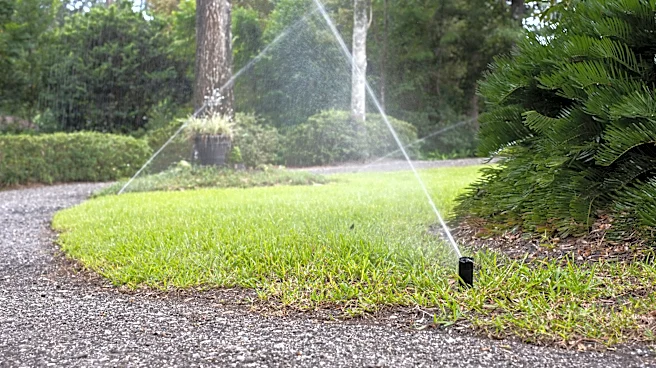
We can’t do anything about the rainfall, but we can control our watering practices. And with our hot temperatures, watering our plants has been necessary to keep them alive. Drip-type irrigation and mulching can be efficient and conserve water.
It’s also important to try to space your plants to allow some air movement so leaves and flowers can dry. Water on leaves or flower petals in the darkness promotes fungal growth.
Watering in the morning is best; earlier the better. Four a.m. is fine if you have devices that will start and stop the watering for you. Watering then allows the plant to dry as the sun comes up. It takes time for pathogens to penetrate the plant surface. You want plant surfaces to be wet for as little time as possible while it is dark.
Some palm growers have been distressed to find that their palms were marginal for the winter cold in this area. Now their recovering palms may be showing some signs of disease. Some palms do get diseases that form leaf spots. They show up as water-soaked spots and then develop lesions of yellow, gray, reddish, brown, or black, usually with a halo. As before, sanitation is important. So is injury protection. We often forget how dangerous an injury caused by trimming or pruning a plant can be. It’s an open doorway to a fungus, bacteria, or a virus.
Palms also need good nutrition. That means specific palm fertilizer because it contains micronutrients that palms need.
Hydrangeas are susceptible to leaf spots. Mine look pretty awful. I’m going to be pulling leaves off and throwing them away. The one that looks the worst, ‘Tuff Stuff Red,’ usually blooms again in the fall, so I don’t like removing the food source (leaves), but I don’t want to leave the fungus spores on the plant. They may not rebloom, but the plant will be healthier without the fungus plant spores.
You can also spray affected plants with liquid copper following label directions.
One of the more insidious fungal problems that happens in our wet summers is dieback disease. It can happen on a variety of plants, but it is aggressive on roses and citrus. It starts at the tip of the branches. The leaves just fall off, and the branch browns and dies. The branch dies from the tip back and can spread back through the plant all the way to the roots if you don’t stop it.
Trim the stem back at least four inches below where you see damage. Look at the cut stem. If you see discoloration, you have not gone far enough. Dip your cutters in your disinfecting solution. (10% rubbing alcohol or bleach) and cut further back.
Check on your fertilization and the pests on the plant, as these can make the problem worse. Check for root rot, as this is sometimes also a complication.
Trim out all the rotted tissue and make sure to get it away with your yard waste.
It’s just a cleanup project, and your garden will thank you for it, gardeners. Stay cool and hydrated.
Becky Wern is a Master Gardener Volunteer with the Duval County Extension Service and the University of Florida/IFAS. For gardening questions, call the Duval County Extension Office at (904) 255-7450 from 9 a.m. to noon and 12:30 to 3:30 p.m. Monday-Friday and ask for a Master Gardener Volunteer.
This article originally appeared on Florida Times-Union: Stop fungal leaf spots from ruining your garden. Here's how.