





A Jacksonville restaurateur who gained recognition for launching the Avondale eatery Josephine may be facing prison for embezzling restaurant money and cheating investors.
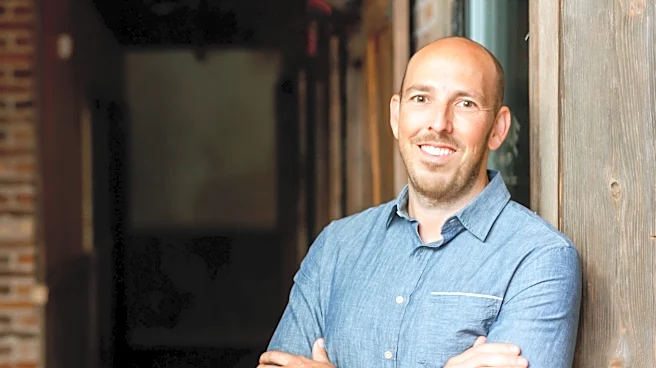
George Joshua Floyd, 45, has pleaded guilty to wire fraud, a charge whose maximum sentence is 20 years behind bars.
Floyd took close to $1 million through cash withdrawals, credit card transactions and transfers to his personal bank account from the account of an unnamed business, a plea agreement said, although he also repaid $374,134 before the scam was discovered.
When loan interest costs and fees were factored in, the agreement said Floyd cost the business $827,533.

“Did you act with the intent to defraud?” U.S. Magistrate Judge Patricia Barksdale asked Floyd, who answered
“yes, your honor,” during an August 25 hearing.
Floyd declined to talk to a reporter after the hearing.
Although consciously not identified, the business labeled as “Restaurant-1” in court papers has clear similarities to Josephine, an Italian-American nightspot named for Floyd’s grandmother.
The plea agreement said Restaurant-1 opened around November 2022, for example, the month Josephine opened in the Shoppes of Avondale.
Floyd was listed on Josephine’s website as the restaurant’s owner at least until March 2025 but was later replaced by James Cobb as the restaurant’s operator. A longtime worker in the hospitality industry, the business was Floyd's first restaurant of his own.
Josephine, at 3563 St. Johns Avenue, has been a local favorite almost since its debut, boasting “an innovative take on the dishes and cocktails offered” while also drawing praise for its service and atmosphere.
Resaurant-1 “generated significant business and cash flow,” the plea agreement said, but investors who helped create that business didn’t get payments on the terms Floyd had promised.
As rumors of money trouble circulated in early 2025, the agreement said, Floyd reached out to investors and told them he had put the unnamed business heavily in debt by taking merchant cash-advance loans without consulting them. Merchant cash advances give business owners lump sums fast in return for a percentage of future sales but commonly have higher borrowing costs.
Floyd told the investors he had put the money into cryptocurrency and other investments that ended up failing, the agreement said, and he made a series of payments to return the money in 2025, but the investors ultimately fired Floyd and called the FBI after studying Restaurant-1’s financial records.
Floyd has repaid at least $160,000 since the fraud was discovered, the agreement said, but said the FBI found Floyd had deceived more people as financial problems compounded.
FBI agents learned that Floyd began talking about opening a second restaurant in Clay County sometime in 2024, the agreement said, and by August 2024 an employee at the existing restaurant had convinced two of his relatives to invest $20,000 in the new concept.
“Floyd immediately stole their money by using it to pay credit card bills and school tuition,” the agreement said.
The agreement said Floyd later admitted to the unnamed employee that he’d been struggling financially and that he repaid the relatives in May 2025, after he was fired.
It said the second restaurant “remains in development and has never opened.” The agreement didn’t mention a business name, but state records show that, in July 2024, Floyd incorporated a company called GJF Concepts Waterfront LLC, which was administratively dissolved in 2025. State records show that a year earlier, he had incorporated a different company, Josephine Palm Valley, LLC, which was also dissolved after a yearly report wasn't filed with the state.
The agreement said a third investor gave Floyd $150,000 in October 2024 as an initial investment in return for a contract to repay the money with interest in three years. Floyd put about $120,000 of the investor’s money back into Restaurant-1’s accounts to make payroll and cover expenses and spent the rest on his own expenses, the agreement said.
The agreement said Floyd also convinced two of Restaurant-1’s investors to put $250,000 into the never-built second restaurant site in March 2025 (almost half went instead into covering Restaurant-1’s payroll and bills). In September 2025, the agreement said, Floyd went back to the investor who had fronted $150,000 the year before and asked for another $150,000, saying he was “getting to the finish line” of the new restaurant. That investor pooled money from his friends to come up with that last lump of money, but the agreement said Floyd “immediately stole” the cash, sending most to his personal online brokerage account.
After payments that erased some debts from the earlier fraud were accounted for, the agreement said the final amount lost totaled $1,397,533. The agreement said $1,159,596 counted as proceeds from wire fraud that Floyd “dissipated and disposed of” in ways the government can’t reverse.
As part of the 23-page plea deal, for which he initialed each page, Floyd agreed to make full restitution to the restaurant and investors from both restaurant projects.
Times-Union staff writer Teresa Stepzinski contributed to this report.
This article originally appeared on Florida Times-Union: Restaurateur who opened Avondale's Josephine pleads to wire fraud