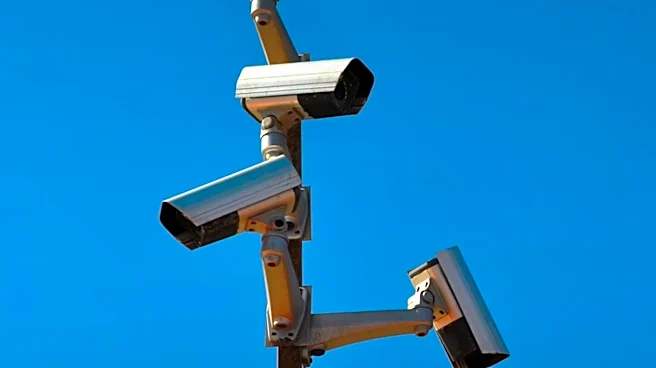





Flock cameras in Jacksonville are getting an intense look right back at them as City Council Jimmy Peluso explores whether the city should put a four-month moratorium on allowing installation and use of such license plate reader cameras on public rights of way.
The Jacksonville Sheriff's Office says the cameras are a valuable crime-fighting tool that helps solve crimes and find missing people, but the spread of the camerasis stoking concerns in Jacksonville and elsewhere about potential misuse of information collected by them.
At a public meeting convened Aug. 28 by Peluso, a stream of residents said they don't trust the technology and view it as a "slippery slope" toward greater surveillance of people as they move about the city.
"I'm very concerned
about these devices but I do want to make sure that JSO has a role to play in making sure that they're going to be able to continue to solve crimes," Peluso said at the end of the meeting. "But there is a line to be walked when it comes to personal security, personal privacy and law enforcement."

The local lodge of the Fraternal Order of Police issued a position paper after Peluso's session that said the way to draw that line is to put tough restrictions on the data collected by the cameras and continue using them to improve public safety.
Fraternal Order of Police Lodge 5-30 says in the paper it "stands ready to work with state legislators, local elected officials and community stakeholders to craft sound, balanced policy that preserves the investigative value of this technology while safeguarding constitutional rights and privacy interests of all Floridians."
"Our people use this technology on a daily basis so we know all the positives that come with it," lodge President Randy Reaves said. "It's such a valuable tool and it's really a disservice for us not to take the time to sit down and be able to put the safeguards in place to where we can still have the positives of this."
1/2 The Jacksonville FOP understands the issue of ALPR’s is one that causes concerns of our community on all sides of the aisle. President Reaves attended the public meeting regarding ALPR’s today at City Hall and released this position paper to the local media. We fully plan on pic.twitter.com/lCBe78eylt
— FOP5-30 (@TheRealFOP530) August 28, 2026
Flock cameras help solve crimes and find missing people in Jacksonville
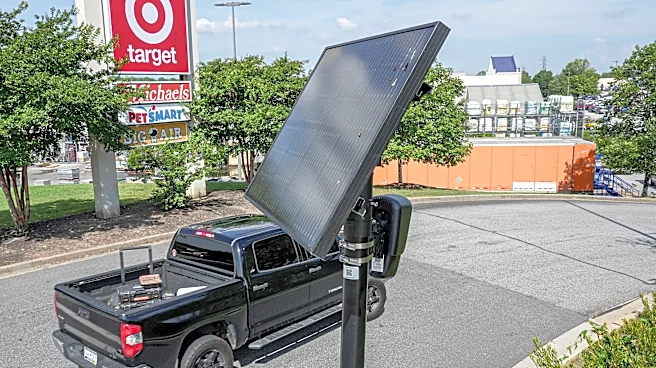
Flock is among the companies making cameras with license plate reading technology. The cameras also capture information from passing vehicles such as their make, model and color plus other visible features such as bike racks, toolboxes and trailers, according to Flock.
The cameras focus on vehicles and do not have facial recognition technology for identifying vehicle occupants.
The Jacksonville Sheriff's Office says it has 141 fixed license plate readers and nine mobile license plate readers for use across Duval County. The technology has helped solve 15 murders, 17 kidnappings, six forcible sex offences, nearly 100 shootings and 172-missing person cases since 2024, according to the Sheriff's Office.
The crime-solving value of the technology has fueled growing use of the cameras by law enforcement agencies nationwide, but that has come with the potential for abuse by police officers gaining access to data for unauthorized purposes.
A USA Today investigation resulted in at least 19 police and sheriff's officers being arrested, fired, put on administrative leave or placed under investigation after reporters brought cases of irregular search activity to the attention of their supervisors.
In Jacksonville, the Sheriff's Office says any search of license plate reader data is recorded and those logs are subject to review and audit. Anyone who violates the Sheriff's Office policy can be fired.
City Council member-elect Mone' Holder joined Peluso at the meeting at City Hall and said she heard concerns from "all over Jacksonville" about the cameras during her campaign.
She said she recognizes the public safety benefits "but also understand the concern around surveillance and privacy."
City Council President Nick Howland told Peluso another City Council member is working on separate legislation that would make it a misdemeanor crime to improperly use Flock-collected data. Howland said that might be an approach the city could take to "shore up privacy rights" until the state Legislatures meets in early 2027 and lawmakers consider statewide regulations.
"We need to think about the issue very carefully and make sure we find the right balance — listen to community concerns and ensure that we protect people's privacy rights," Howland said.

State Rep. Black: cameras must not lead to "police surveillance state"
State Rep. Dean Black, R-Jacksonville, said he is among the state legislators seeking to strike the right balance "between security and liberty."
"We want to be safe. We want to make sure law enforcement has the tools to keep us so," Black said when Peluso invited him to speak. "But we also want to make sure we don't create the tools inadvertently in the service of security for one day a police surveillance state to emerge."
About 20 residents spoke during public comments and they overwhelmingly fell on the side of fear about surveillance and what happens to the data.
Addison "Liberty" Patrick, who ran as a Libertarian in the special City Council election won by Holder, said the city should cancel the Flock contacts "and anything else in that sphere, and if not, I support a moratorium so we can just get rid of them now."
Latasha Hobbs, whose son Maurice was shot and killed in 2017, said shutting down the cameras would be a blow to crime victims and their families. She said they police to provide answers that the cameras can help provide as long as there are "appropriate safeguards and accountability."
"I'll be damned if I let anyone rob me of justice and justice for other families," she said. "Please keep up the Flock cameras."

Peluso said his next step will be to get an inventory of where the cameras are on public rights of way and who put them up. He said the use of them on other property is a matter of "private property rights and I'm perfectly fine with that, especially if they have a relationship with JSO."
He said the city's Citizen Planning Advisory Committees should be involved before installation of such cameras on public property so neighborhood residents can hear from the Sheriff's Office about why a camera is needed.
He also wants to put in place a moratorium for at least 120 days for cameras on public rights of way and create a process for removing the ones already there.
Interest in the issue was so high that the crowd filled the first-floor meeting room at City Hall and required a second room for the spillover where people watched on television screens.
Peluso said the meeting showed concerns across the political spectrum from residents saying "we don't know what these cameras are doing, we don't know how they got installed and we're really concerned that our rights are being trampled on."
This article originally appeared on Florida Times-Union: Jacksonville enters national debate about Flock cameras