





When Alan Alwakeel was in kindergarten, he saw his physician father watching a video about deep brain stimulation, a type of brain surgery for Parkinson's disease patients.
He watched too.
"I was just fascinated by all of the surgery, the brain itself," he said. "From there that was when I decided to go into medicine and into neurosurgery."
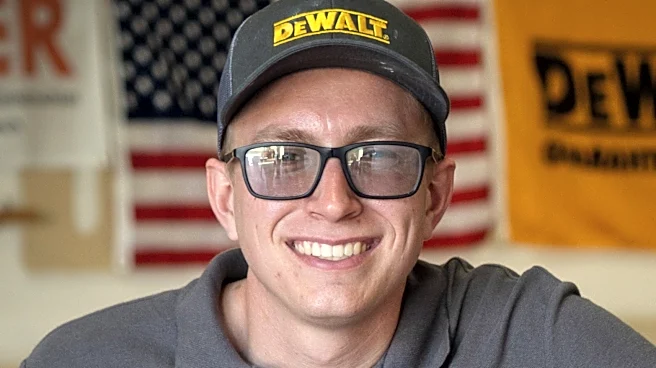
Now 18, Jacksonville's Alwakeel has graduated from Stanton College Preparatory School and is headed to his "dream school," Harvard University, with an already beefy resume in hand.
Two years ago, he was accepted into the Mayo Clinic's Science Program for the Advancement of Research Knowledge, or SPARK, a research mentorship program for high school junors and seniors in Duval and St. Johns counties. He has since
developed an artificial intelligence-powered "virtual cell" — a computer program simulates how a living cell behaves — to predict how cancer cells will respond to different drug combinations.
In 2025 and2026, Alwakeel's work earned second-place awards at the International Science and Engineering Fair and is now being evaluated at Mayo for commercialization. He presented his work at an American Association for Cancer Research annual meeting. And he and Mayo have obtained a provisional patent.
Becoming a neurosurgeon may be just the beginning of Alwakeel's professional career, according to John Copland III, professor of cancer biology and associate professor of biochemistry and molecular biology at Mayo's College of Medicine and Science and founder of the SPARK program.
"You can envision him being a physician-scientist who has invented technologies that get commercialized," Copland said. "That would be the best scenario because that empowers Alan to do more. A great idea is a great idea; if you have money behind it then it can potentially be transformative.
"That's what we're trying to do with the SPARK program is to empower young people to levels that they didn't imagine," he said.
From medicine to computer science

After his kindergarten experience watching a brain surgery video, Alwakeel had little opportunity to pursue his medical dreams in elementary and junior high school. So instead he delved into computer science and discovered the world of school science fairs.
In seventh and eighth grades, he merged his interests — medicine and computer science — and "stumbled across the field" of applying artificial intellience, or AI, to medicine, he said. At the time, AI was "basic" and could be trained to do "one specific function," he said.
"Thats where I got my foothold in the AI sphere," he said.
Through various science fair projects, Alwakeel learned more about AI, computer science and medicine. The summer before his junior year of high school, he was accepted into the SPARK program and was pondering his next direction.
"I was really wondering, what is a project I could do that could have something with meaningful impact using the skills I've learned over the years," he said.
At school science fairs, he had seen many SPARK-student projects on cancer, including the impacts of new proteins in cancer cells.
"But I hadn't heard a lot about someone trying to take all that we've learned and apply it all together in some sort of model," Alwakeel said. "My idea was that if I could create this model that could simulate everything, with the help of AI, that maybe you can get results that would allow for predicting how these cancer cells will respond to different types of drugs and find new effective types of treatment."

The proteins produce a "cascade of different reactions" in cancer cells, most of which have been characterized in biological databases, he said. His virtual cell computer program will take the reactions from all the databases — how cancer cells respond to different drugs in different concentrations — and create one "unified model" to run simulations, he said.
"I can do a lot of these experiments testing individual drugs on individual types of cancers, collect data, calibrate the model and then test to see if the model can predict drug combinations," he said.
The potential ramifications for cancer treatment and research, Alwakeel said, are both "exciting and scary."
"There is a lot of weight on my shoulders to make sure that I am doing my science properly in order to not make a model that gets results and then makes mistakes. These mistakes could have weight in terms of treating a patient or doing research," he said.
Virtual cell work will continue at Harvard
While at Harvard, pursuing a major in neuroscience and a minor in computer science, Alwakeel plans to continue developing his virtual cell project. Copland hired him to work remotely with Mayo and he will use Harvard labs for running tests and experiments. After, he plans to attend medical school: next step, neurosurgeon.
His parents — rheumatologist Laith Alwakeel and architect Nihal Alwakeel, both of Jacksonville — are "extremely supportive" of their only child, he said.
"They're very proud of the work that I'm doing and what I've been able to accomplish and also my passion for continuing this work," Alwakeel said.
His SPARK mentor — Cui Tao, Mayo's chairwoman of AI and Informatics Research — is just as proud.
"He stands out," she said. "He had a lot of creative ideas."
She said she initially thought his virtual cell project was "too ambitious for a student project, but he surprised me." He was able to maintain his high school studies — and attain a perfect grade point average — while simultaneously working on the virtual cell, she said.
Alwakeel "deserved" the international science fair recognition.
"What he did was unprecedented," Tao said.
Beth Reese Cravey has been a reporter for The Florida Times-Union for 45 years, currently specializing in nonprofits and health. She can be reached at bcravey@jacksonville.com.
This article originally appeared on Florida Times-Union: Jacksonville student builds 'unprecedented' AI tool for cancer care