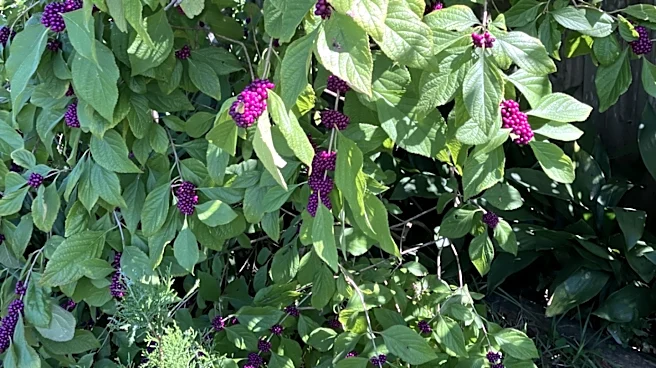

If you have been gardening for a while, you have probably thought, "I wish I hadn't planted that." My gardens in order were: tropical apartment plants (they get large), an existing well-designed garden (oh,
the older house was nice, too), a newer northern house with a bare yard (why evergreens are important up north), a southern house that needed yard drainage added, a townhouse garden, a southern garden with moist, good soil, and now a Florida sandhill garden.
I did get a professional landscape design for the northern house, but then picked out inappropriate plants: Japanese barberry and burning bush turned out to be invasive and the dwarf Carolina cherry laurel shrub self-seeded in the groundcover into full-size trees.
With another yard, I saw tall, narrow river birch planted by a business, between their wall and sidewalk, so I planted some in a narrow side yard. Big mistake; they are only narrow when they come from a crowded nursery, plus business plantings are depreciated assets that are only supposed to last a few years. Oh, clumping bamboo also leans out onto houses. (Running bamboo is the worst).

A different yard's maintenance problem was a native wildflower garden that needs tree seedlings and other aggressive seedlings hand-weeded. My very brief history of learning from gardening mistakes.
With our computers and cell phones, we have resources to choose appropriate plants, thus avoiding the inappropriate ones. There are great websites and apps that can help. Visit https://plant-directory.ifas.ufl.edu/plant-directory/ to check for invasive status. And the Florida Native Plant Society has a plant search for native plant gardening at fnps.org. The University of Florida has a downloadable app (look for "FFL Plants & Pollinators"). If you prefer books, ifasbooks.com has "Florida Friendly Landscaping Guide to Plant Selection and Landscape Design." It's also downloadable.
As to what makes a plant inappropriate, there are several things to consider.
Ecological suitability: Adaptation to the local climate, soil, water availability and sun or shade. Is it invasive? Does it provide food for wildlife?
Safety hazards: Is it toxic to humans or pets, or a fire hazard? Will thorns be a problem?
Unmanageable growth or maintenance issues: Always check mature size and add a few extra feet for eventual size. Plants will have several growth spurts in Florida. A good hedge plant should only need to be pruned a few times a year. Vines on a fence or arbor will need to be pruned also. Plants should not lean on the house or block views when backing out of the driveway. Fertilizing should not be necessary with native plants or only be two of three times a year for other plants. An appropriate plant should not need regular fungicide and insecticide treatments. Does the plant root sucker, spread by rhizomes or self-seed profusely? Will its berries be messy on the patio or driveway? How much time or money do you have for maintaining the landscape?
Poor fit for the intended purpose: If it fails to provide the desired aesthetic, functional, or ecological benefits, it is also unsuitable.
Right Plant, Right Place is the first Florida Friendly principle, which would include all the above points. This website will cover the other principles: https://ffl.ifas.ufl.edu/about-ffl/9-principles/. Beautiful, easy-to-care-for gardens just need a little planning.
Brenda Daly is a Master Gardener volunteer with the Duval County Extension Service and the University of Florida/IFAS. For gardening questions, call the Duval County Extension Office at (904) 255-7450 from 9 a.m. to noon and 12:30 to 3:30 p.m. Monday-Friday and ask for a Master Gardener volunteer.
This article originally appeared on Florida Times-Union: Stop making these common garden planting mistakes today