

Drug traffickers smuggled an estimated three tons of cocaine through Jacksonville’s port from Puerto Rico hidden inside concrete slabs and pavers, according to federal court records and prosecutors’ statements to a judge.
Charges against two defendants in that case, as well as another case involving cocaine hidden in a shipment of kitchen cabinets, highlight the criminal potential inherent in Jacksonville’s active shipping industry.
“This is a major drug-trafficking case,” Assistant U.S. Attorney Michael Coolican told U.S. Magistrate Judge Patricia Barksdale during an Oct. 9 detention hearing for a woman who could face four life sentences plus 15 years behind bars if she’s convicted on a series of drug and gun charges.
Federal agents seized 883
kilogram-sized bricks of cocaine ― about 1,950 pounds ― worth about $14 million, he said.

Barksdale ruled that Yolanda Ramos, 57, would remain locked up ahead of her trial on charges in a 2025 indictment.
Ramos and co-defendant Samuel Pena Mendez were both charged with drug-trafficking conspiracy; possession and attempted possession of cocaine with intent to distribute; gun possession in furthering a drug-trafficking crime; and gun possession by a felon.
Pena Mendez took a plea deal admitting the conspiracy and gun charges and is scheduled to be sentenced in March. Under his plea agreement, he could receive a sentence of up to two life terms in prison and a fine of $20,250,000.
Charges in the indictment said only that the cocaine involved was more than five kilograms, or more than 11 pounds.
But a “factual basis” summary attached to the agreement that Pena Mendez signed in July said conspirators “were responsible for trafficking at least 2,800 kilograms,” or 6,160 pounds.
That total represented drugs that the summary said were hidden inside pavers or concrete slabs sent from San Juan, Puerto Rico to Jacksonville between December 2024 and September 2025.
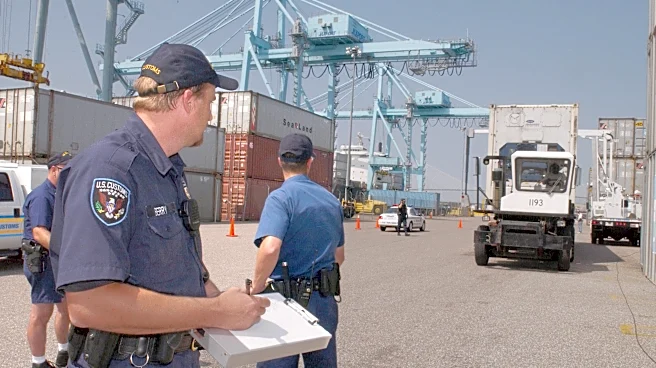
The summary said metal boxes filled with coke were found in the final, 20,322-pound shipment of concrete slabs inspected by U.S. Customs and Border Protection agents, but that four other shipments of slabs, pavers or stone products ― weighing a total of 47,978 pounds ― had already been sent through from the same company in the prior months.
The pavers or slabs could simply be broken up to recover the drugs, Assistant U.S. Attorney Laura Cofer Taylor told Barksdale during another Oct. 9 hearing where attorneys argued coincidentally over a motion by the man accused of the cabinet shipments, Alfred Jose Colon Rivera, to suppress evidence that his lawyers argued was gained improperly. That cocaine was also found by Customs inspectors and Colon Rivera's attorneys argued the inspector's had no legal grounds to search and drill into his shipment because Florida and Puerto Rico are both American soil and Customs regulates shipments from foreign sources.
In Ramos's case, someone identified as Maria Crespo from a business called Quality Home Improvements had arranged all five shipments, the summary said, as well as arranging for a truck to deliver each load to somewhere in Orlando. Prosecutors told Barksdale that Crespo was just an alias Ramos had been using.
The summary said a federal agent got a warrant to search the email account used for arranging Crespo’s shipments and deliveries.
The agent found Crespo correspondence in the account, “but also a drug ledger, the draft of a letter from Ramos” and an internet search history that included a search for the Orlando apartment complex where Ramos leased a three-bedroom unit and where agents arrested Pena Mendez, said the summary. More than $300,000 in cash, 22 bricks of cocaine, five pistols and two rifles were in the apartment’s master bedroom, said the summary, showing the basis for the gun charges.
But Ramos’s attorney, Edwin Javier Prado-Galarza, argued his client had little real connection to the apartment and no connection to a drug conspiracy.
Ramos and Pena Mendez are an estranged couple, and Prado-Galarza said his client lived elsewhere and only let agents into the apartment in 2025 by meeting them outside and getting a key from the complex’s leasing office.
Prado-Galarza called the conspiracy charge a “paper conspiracy,” saying there’s nothing tangible tying his client to the crimes Pena Mendez has already pleaded guilty to.
“Every story has two sides,” he said.
Ramos is scheduled to stand trial in November but another hearing is planned Oct. 16 to work through facts on some pretrial issues first.
This article originally appeared on Florida Times-Union: Three tons of hidden cocaine sent through Florida port, feds say