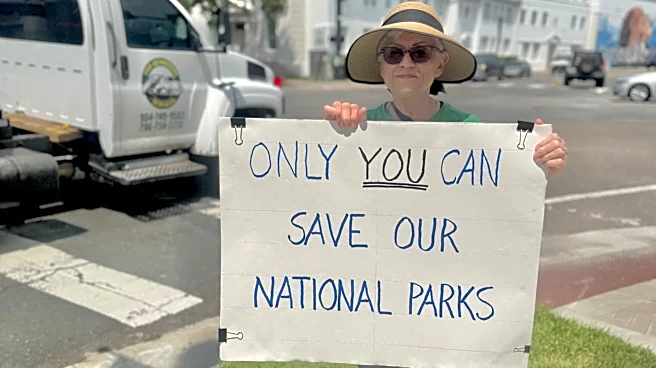


Karen Mattison stood in the midday heat on the corner of Atlantic Boulevard and Hendricks Avenue in San Marco, holding a sign with hand-written messages on each side.
Stop the Destruction of Our Nat’l Parks
Only You Can Save Our National Parks
“I thought about putting Smokey Bear on it, but thought, no, only my age group would know that,” Mattison, 70, said with a laugh.

Moments later, as she was talking about her love of parks, there was a honk. I don’t know whether or not the younger people in the car recognized her spin on the old “only you” Smokey Bear campaign, but they gave an encouraging wave of support.
Florida.
Mattison, who retired after a career as a banker and an advocate for the elderly with a fiduciary company, said she stands on this corner with signs for a variety of causes.
“It depends on: Do I need to feel better? Am I really mad? Do I need to prompt one person on earth to do something?” she said.
In this case, it was her one-person contribution to the much larger “Day of Action” efforts being led nationwide by the National Parks Conservation Association.
NPCA, a group formed in 1919 to advocate for the parks, chose this particular day, August 25, because it’s during National Park Week and marked another birthday for the National Park Service — 110 years since the Organic Act of 1916.
In the past, the annual birthday was primarily a celebration. A day for getting out in the parks and appreciating what we have.
This year it became something else — a day to advocate for what we are losing.
Looking into the quartz ball
I didn’t see this coming back in the summer of 2016, when the National Park Service celebrated its centennial and – shameless plug — a book came out titled, “Lassoing the Sun: A Year in America’s National Parks.”
Before the centennial, I spent a year traveling the country, basically trying to answer one question: What did the future hold for our national parks?
Many people, from Ansel Adams to Ken Burns, had beautifully documented the first 100 years. I was trying to look into the future and see what the next 100 years held for our parks.
When I looked in my natural quartz ball, I did see some of what has happened in the last 10 years. But some other things I never imagined.
For instance, I did see visitation to parks continuing to soar after all the centennial hype. But I didn’t see a pandemic that only would add to people craving being outside in these places, leading to visitation records continuing to fall. And I definitely didn’t see that at the same time as people were flocking to our national parks, the National Park Service would lose about a quarter of its workforce.
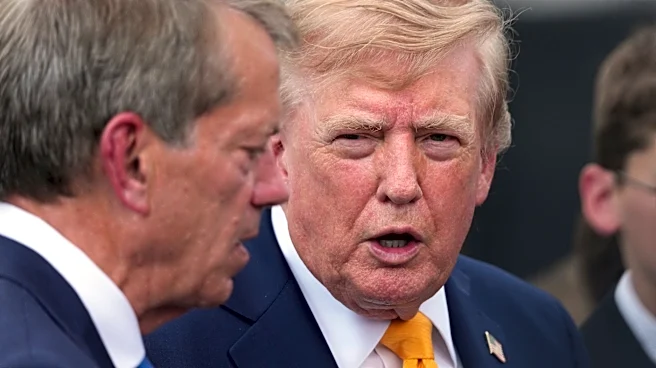
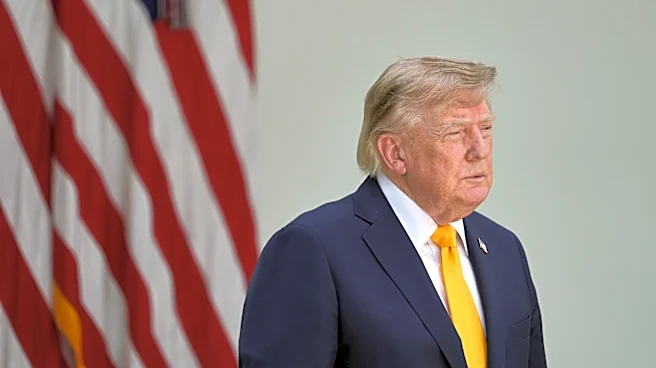
I didn’t see the National Park Service, of all agencies, ending up in the crosshairs of a president on his first day in office — because he was upset about aerial photos of the inauguration crowd on the National Mall, which the White House said was the biggest in history (and the photos said otherwise).
I didn’t see White House budget proposals calling for cutting about a third of the park service’s total budget (to about $2.2 billion, slightly more than the city of Jacksonville’s annual budget). Or while some of our parks were being shrunk or opened to development, a push for a new national park, a garden full of 250 statues. Or money from entrance fees at places like Yellowstone and Yosemite being used for pet projects in Washington, like covering sculptures in 23.75-karat gold leaf and redoing a White House colonnade with Italian-carved granite. Or a congresswoman from South Florida filing a bill to add a sitting president to an existing national memorial, Mt. Rushmore.
There’s more. Suffice to say, I didn’t write much about politics in the book. Partly because when I go into the woods, I’m trying to get away from politics. Partly because while there certainly always has been politics mixed with the parks, it never was like this.
Not that I didn’t have concerns about the future.
Protecting the protected places
One of my epiphanies during that year in the parks was that just because we created a national park doesn’t mean it’s preserved forever.
In hindsight, that should’ve been obvious. But I remember sitting in the office of the superintendent of Grand Canyon National Park, a place initially preserved as a national monument by President Teddy Roosevelt using the Antiquities Act. More than a century later, the park superintendent said he’d basically been handed the keys to one of the most protected places on earth.
“And what do you think I do every day?” he said.
I said I didn’t know.
“Protect it,” he said.
His point: Just because it was protected didn’t mean it was safe. As John Muir once said, “Nothing dollarable is safe, however guarded.”
Ten years ago, when people asked what they could do to support their parks, I’d say they didn’t need to chain themselves to a redwood. Just visit parks. Even better, take someone with you.
Now? I wouldn’t say you need to chain yourself to a redwood, but just visiting the parks clearly isn’t enough. People have been doing that in record numbers. And the national parks are being gutted in unprecedented ways.
Hopeful signs
Still, there are reasons to be hopeful this National Park Week.
Congress has largely rejected the Trump administration’s deepest cuts to the National Park Service budget, basically holding it at a flat line. And there is broad bipartisan support for the America the Beautiful Act, which would continue the work of the 2020 Great American Outdoors Act and invest $6.65 billion over five years to tackle critical repairs in the parks.
That’s still a long way from the estimated $24 billion backlog of deferred maintenance. And it doesn’t bring back the staff who no longer are in parks. But it’s something.
And there is reason to believe that public support for parks still matters.
Take what happened last week in Big Bend National Park.
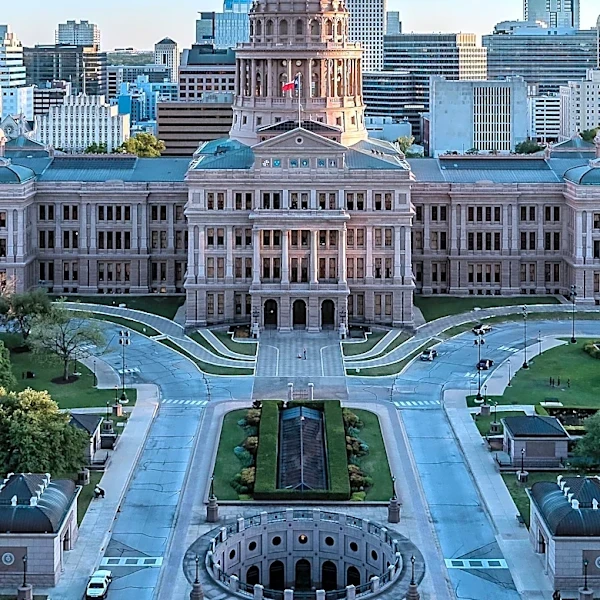
Big Bend is one of the parks I made it to during my year in the parks. Located in far west Texas, on the Mexico border, it’s a beautiful park, with an unforgiving landscape — the kind that never, despite what the Department of Homeland Security said, has made it “an area of high illegal entry.”
In June, to accelerate border construction, the Trump administration waived nearly two dozen environmental and preservation laws protecting Big Bend’s landscape and moved ahead with plans that caught Texans off guard. This led to intense bipartisan blowback. Even some of Texas’ most conservative politicians carefully criticized the construction, saying it is “not smart border security.”
And then last week, the construction stopped. At least for now.
That was a reminder — like what happened with our state parks and the Guana preserve — that public voices matter.
That’s what Karen Mattison said while standing on a San Marco corner, holding up her “Only You Can Save Our National Parks” sign, recalling how when she went to Acadia National Park in Maine, she was shocked by how understaffed it was.
“I would tell people to call their representative, call their senator, tell their friends to call,” she said. “It does matter.”
That was the hope for a “Day of Action” during National Park Week. But it doesn’t need to be — it can’t be — just one day or one week.
That was one of my epiphanies from a year in the parks. They weren’t saved the day they were created, no action required.
That’s something that has to happen day after day, year after year, generation after generation.
Florida Times-Union columnist Mark Woods is the author of "Lassoing the Sun: A Year in America's National Parks": mwoods@jacksonville.com and (904) 359-4212.
This article originally appeared on Florida Times-Union: What the future of America's national parks depends on now | Opinion