







In responding to the recent Florida executions, Bishop Erik Pohlmeier of the St. Augustine diocese wrote in a July 30 guest column professing his support of the “new development” of papal proclamations calling for the repeal of the death penalty. Respectfully, Gov. Ron DeSantis should be commended for fulfilling his duty under the law and signing death warrants.
In my former work with Gov. Jeb Bush and the Florida Legislature, I reviewed hundreds of capital cases and met many parents and siblings of some of these victims. All these families endured unimaginable suffering, magnified by the lengthy legal delays in Florida’s capital cases. Every one of the murderers on death row in these cases deserved the ultimate legal punishment.
Historically,
the Catholic Church always approved of the lawful use of the death penalty as a just punishment. This religious doctrine is grounded on human dignity and the Word of God, who told Noah in Genesis 9:6: “Whosoever shall shed man’s blood, by man shall his blood be shed: for man was made in the image of God.”
Secular moral philosophy and natural law also defend the use of capital punishment to preserve the common good. Logic requires that the most serious crimes require the most serious punishment.
Edward Feser and Joseph Bessette, authors of “By Man Shall His Blood Be Shed, A Catholic Defense of Capital Punishment,” wrote that between 1796 and 1865, just one of the pope’s executioners carried out more than 500 death sentences imposed in the Papal States. That executioner was a devout Catholic who served six popes.
During the reign of the last two popes, however, novel teaching has emerged. This new idea proclaims that serial murderers like Ted Bundy and Danny Rolling, and child rapist-murderers like James Duckett (the recently executed killer who raped, strangled and drowned his 11-year old victim) should never receive the ultimate punishment.
Life imprisonment is not an adequate substitute punishment for the death penalty in all cases.
To cite just one example: When an inmate is sentenced to life in prison, he can murder other inmates, without the possibility of the death penalty, and there is no additional punishment to deter such murders. In addition, if the death penalty is never authorized, a violent criminal can kill his victims to eliminate them as a witness, with no fear of additional punishment.
Finally, where life imprisonment is the maximum penalty for the most heinous crimes, the justification for life imprisonment for crimes like robbery and adult rape will likely also be reduced, further endangering public safety.
Florida law only authorizes the death penalty for the worst of the worst crimes; very few perpetrators are sentenced to death.
In those rare cases, lawyers are provided at no cost for extensive trial proceedings and decades of appeals. With DNA evidence available, and extensive legal protection, there has not been a single innocent person executed since the modern Florida law passed in 1972.
Those who take innocent life by murder or raping a child have forfeited their right to life. To impose the ultimate penalty in a timely manner for such crimes preserves the common good with mercy and justice: The public can be protected, the perpetrators’ debt to society can be resolved and the victims’ dignity can be affirmed.

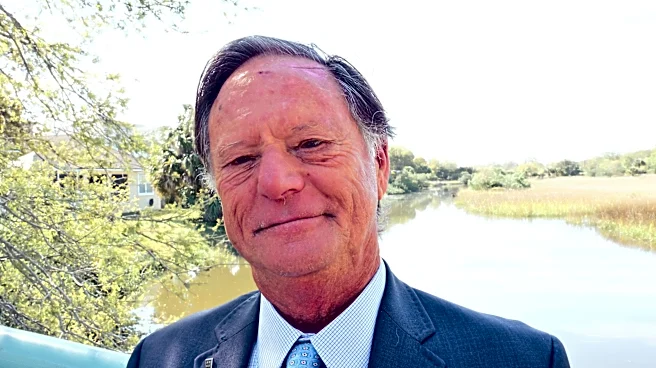
Bradford Thomas is a former senior criminal-justice adviser to Gov. Jeb Bush and the Florida Legislature, a former felony prosecutor and a former Assistant Attorney General for Criminal Appeals.
This guest column is the opinion of the author and does not necessarily represent the views of the Times-Union. We welcome a diversity of opinions.
This article originally appeared on Florida Times-Union: Capital punishment preserves mercy, justice for Florida | Opinion