


Florida isn’t famous for its fall foliage (or lack thereof) and doesn’t cool down as quickly as more northern states do at the turn of the season, but there are still pretty leaves to see in the northernmost part of the Sunshine State.
Fall is closing in, with the Tuesday, Sept. 22, autumnal equinox marking the first official day of the astronomical season. And the "fall back" time change isn’t much further behind.
Here’s where and when you have the best chance at seeing fall foliage in Florida, when fall officially begins and when we fall back in 2026.
When is the first day of fall? When fall 2026 starts
The meteorological start of fall 2026 already passed on Tuesday, Sept. 1. Every year, meteorological fall starts on Sept. 1 and ends
on Nov. 30.
There are two equinoxes and two solstices each year. Equinoxes occur during the fall and spring and are called the autumnal and vernal equinoxes. They mark the first astronomical day of spring and the first astronomical day of fall each year.
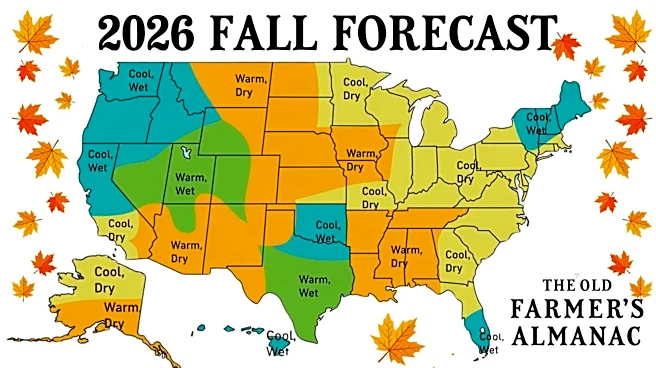
The astronomical start of the 2026 fall season is Tuesday, Sept. 22, with the autumnal equinox. But Florida likely won't see its first major drop in temperatures until the end of October or early November.
Fall foliage map 2026: When, where Florida will see fall leaves change

It might be hard to believe that Florida has any signs of fall outside of slightly less sweltering temperatures, but there are some trees in the northernmost regions of the state that do change color before turning brown and falling off.
The leaves of Florida maple trees, sycamore, sweetgum, crape myrtle, blackgum, correl and cypress trees all change colors, with most general peak times falling in early November.
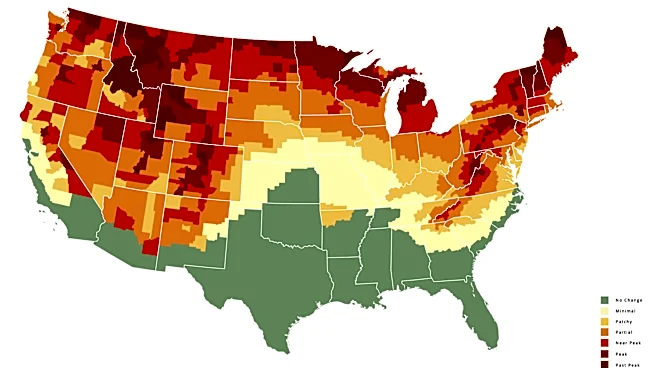
Most of the fall colors Florida has to offer are in the Panhandle and North Florida area, although there are a few scattered spots of fall color further south.
"Despite Florida’s warm climate, there are some trees here that turn beautiful shades of yellow, orange, and red in the fall," the University of Florida's website says.
The 2026 fall foliage maps predict that North Florida could start seeing leaves change as early as the last week of October.

Here are some places where you can see fall foliage in Florida this fall, mainly in early November:
- Bristol, especially in Torreya State Park. GoldenAgeTrips calls this location, about an hour from Tallahassee, "the most famous place in Florida for seeing fall foliage."
- Lake City, travel along Interstate 10, especially in rural areas, as you head toward Ocala
- Snead, especially in Three Rivers State Park
- Chipley, especially Falling Waters State Park
- Wakulla Springs, especially in Edward Ball Wakulla Springs State Park
- Milton, especially inBlackwater River State Forest
- Ormond Scenic Loop and Trail
- Inverness, especially in the Flying Eagle Preserve
- Micanopy, especially inPaynes Prairie Preserve State Park
When do the clocks fall back in 2026? When daylight saving time ends
The next time change is coming up in November, which sounds far away, but is creeping up in less than two months.
Daylight saving time for 2026 ends on Sunday, Nov. 1, at 2 a.m., when clocks will "fall back" an hour to 1 a.m. Sunrise and sunset will be about an hour earlier on Nov. 1 than the day before, meaning there will be more light in the morning and less light in the evening.
What month does it start cooling off in Florida?
According to the National Weather Service, Florida usually has a day or two of cooler temperatures during the fall, but it starts to feel noticeably and consistently cooler in November.
“The first shot of cooler, drier air is usually rather short-lived – lasting only a day or two. The real cool down doesn't usually occur until November,” The NWS says.
But this winter, things could cool down faster. The rapidly strengthening Super El Niño weather pattern could bring an early, long winter, much like the 2025-2026 winter season. Some forecasters are also predicting that it will be a very wet winter due to this pattern.
"The latest ocean analysis confirms that warm anomalies are building at a remarkable pace, setting the stage for a highly active weather pattern as we head into the upcoming cold season," Severe Weather Europe says.
"This is important because Fall is usually a transition season, with weaker and less organized seasonal patterns. But the newest forecast trends suggest a more connected evolution, where the Super El Niño influence just keeps amplifying."
Contributing:Cheryl McCloud, C. A. Bridges, USA TODAY Network - Florida
Lianna Norman is a journalist for the USA TODAY Network-Florida's service journalism Connect team. You can get all of Florida’s best content directly in your inbox each weekday day by signing up for the free newsletter, Florida TODAY.
This article originally appeared on Florida Times-Union: Do leaves change color in the fall in Florida? Depends on where you are