





Over the coming weeks, the democratic process will reveal two important truths at the local and state level: what we value, and how we are willing to pay for it.
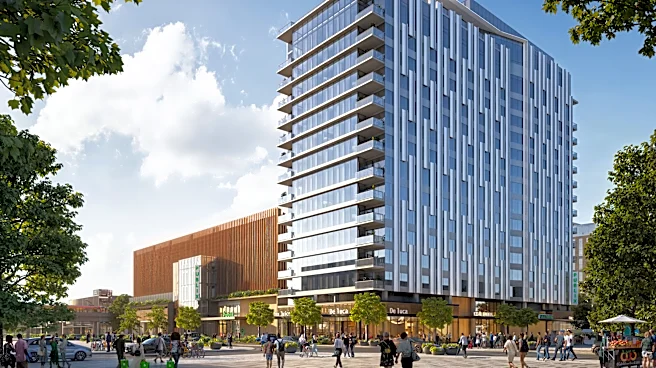
Gateway Jax is asking the Jacksonville City Council to consider the incentive package approved by the Downtown Investment Authority for N7, a 15-story, mixed-use tower, anchored by a full-service Publix supermarket and pharmacy. It would mark the first new full-service grocery store built in downtown in more than a decade. It’s also the piece of Pearl Square I get asked about most.
I still think about what Pearl Square looked like on paper when we announced the vision in 2023 — surface parking lots, vacant buildings and empty storefronts — versus what it looks like now, rising across
nine blocks in the Urban Core. It's a $1 billion bet on this city’s future: over 1,250 new homes, about 200,000 square feet of retail and a 109-key boutique hotel, plus new parks and public spaces.
Publix is the anchor that makes the rest of Pearl Square work. It will serve the future residents of Pearl Square, the surrounding neighborhoods (Springfield, LaVilla, OutEast) and the tens of thousands of people who work or visit downtown every day. For many, it will be the first full-service grocery store within walking distance.

The first residential building, Vandeveer, is now welcoming residents. Soon after, a mix of local and national dining, wellness and lifestyle tenants will begin opening and continue through early 2027. Our second residential building is on track to deliver next year. Alongside these, progress continues on the revitalization of Hotel Merrydelle and two parking garages with ground-floor retail.
On its own, N7 is projected to support roughly 549 construction jobs and 125 permanent positions, while Pearl Square is projected to generate nearly 2,700 full-time jobs.
Transformative projects like these only happen through partnership, which must make sense for both sides. Our agreements with the city are completion grants and tax rebates. We don’t get paid anything until the apartments are ready for move-in and the grocery store and pharmacy are open. The rebates come out of taxes our own buildings generate.
Here’s what the city gets: N7 is on the tax roll today at a fraction of what it’s worth built out. Once redeveloped, public revenues are projected to increase by $11.2 million each year, including about $7.3 million annually for Duval County Public Schools. Over 30 years, accounting for inflation and ordinary appreciation, that’s more than $500 million.
The Publix impact on downtown drives part of that lift. Peer-reviewed research on urban grocery development finds that surrounding property values rise 4% to 7% and is separate from the ordinary appreciation the city already projects for downtown. These figures were independently validated by an economist at the University of North Florida.
That new tax revenue comes primarily from commercial properties. If Amendment 3 passes, that kind of tax base becomes even more important to Jacksonville. Investing in it now is how the city protects its own revenue.
A vibrant, walkable downtown serves as an economic engine for the entire city, and a fair return on taxpayer dollars generates lasting revenue. If we agree that these goals matter, then the cost of inaction will be measured not in dollars saved today, but in the progress and opportunity we let pass us by.

Bryan Moll is the CEO of Gateway Jax. He lives in Atlantic Beach.
This guest column is the opinion of the author and does not necessarily represent the views of the Times-Union. We welcome a diversity of opinions.
This article originally appeared on Florida Times-Union: How new Publix will lead to something bigger in downtown Jax | Opinion