






The Blue Angels are returning to Naval Air Station Jacksonville (NAS Jax)
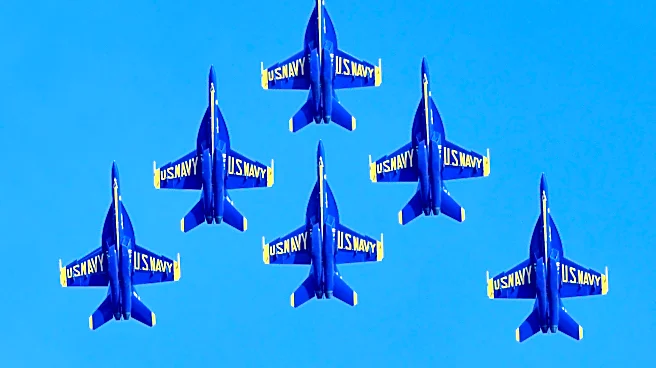
this weekend, celebrating their 80thanniversary in 2026. Get ready as the Navy’s elite flight demonstration team roars across Northeast Florida’s skies, leaving spectators in awe. Whether you’re seeing the Blue Angels for the first time or returning for your 10th show, one thing is certain: their precision, speed, and breathtaking aerial maneuvers are an unforgettable sight.From fighter jets flying just 18 inches apart to dramatic upside-down formations, the Blue Angels showcase what’s possible when skill, discipline and teamwork come together. But there’s much more to the squadron than the spectacular stunts.
The team’s mission is to showcase the professionalism of the U.S.
Navy and Marine Corps through flight demonstrations and community outreach. Each year, millions of spectators watch the Blue Angels perform, while team members also visit schools, hospitals and communities throughout the air-show season.
So before you head to NAS Jacksonville to watch the show, here are seven fascinating things to know about the Blue Angels.
1. The Blue Angels performed their very first air show in Jacksonville
Jacksonville holds a special place in Blue Angels history. The team performed its first public air show at Craig Field in Jacksonville, Florida, on June 15, 1946.
What began as a way to showcase naval aviation has grown into one of the country's most recognizable flight demonstration teams, thrilling audiences across the United States and around the world.
2. How did the Blue Angels get their name?
The name wasn't chosen through a complicated military process. Instead, in 1946, while the original team was planning a show in New York, one of its members came across the name of the city's famous Blue Angel nightclub in The New Yorker magazine.
The name stuck, and the Blue Angels have been thrilling audiences under that banner ever since.
3. How many team members does the Blue Angels have? How many are pilots?
The pilots may be the faces spectators recognize in the sky, but it takes a much larger team to make each performance possible.
For the 2026 season, the Blue Angels team includes 158 active-duty sailors and Marines, according to the U.S. Navy. The team has seven pilots:
- Six F/A-18 Super Hornet demonstration pilots perform the fighter-jet routines.
- One C-130J pilot flies the support aircraft known as Fat Albert.
One of the seven pilots is a woman: Marine Corps Capt. Olivia Bair is one of three pilots who flies Fat Albert.
Behind the scenes, officers and enlisted personnel handle aircraft maintenance, logistics, safety and other essential duties. Their work helps ensure the aircraft and crew are ready to perform.
4. The Blue Angels are ambassadors for the Navy and Marine Corps
The Blue Angels were established in 1946 to showcase naval aviation and build public interest in the U.S. Navy and Marine Corps.
But their mission extends well beyond the flight line. Throughout the air-show season, team members visit schools, hospitals and communities, meeting with children, service members and families.
The squadron reaches millions of spectators through air shows each year and connects with thousands more through community outreach. Their message centers on teamwork, excellence, leadership and service to the country.
5. The Blue Angels' signature white smoke has a practical purpose
Ever wonder how spectators can follow the jets as they twist, turn, and cross the sky at incredible speeds? Those dramatic white smoke trails make it possible.
The Blue Angels create their signature smoke by injecting biodegradable paraffin-based oil into the aircraft's exhaust, where it vaporizes and condenses into a visible white trail.
Despite being miles away, the smoke helps spectators track the aircraft's flight paths, making the intricate maneuvers easier to follow. It's a visual aid, not colored smoke or a weapon-related effect.
6. Without Fat Albert, the Blue Angels' performance wouldn't be possible
The fighter jets may steal the spotlight, but the Blue Angels have another crowd-pleaser: Fat Albert, the team's C-130J Super Hercules support aircraft.
The nickname reflects the aircraft's large size and is associated with the popular Fat Albert cartoon character.
So what's Fat Albert's role? Well, without Fat Albert, there is no show. The aircraft is responsible for transporting personnel, equipment, spare parts and supplies between air-show locations, and the Blue Angels have used a C-130 support aircraft since 1970.
However, aside from serving as a key transportation facilitator to the team. When scheduled to perform, Fat Albert can show off its own impressive flying capabilities, including steep climbs, tight turns and short-field maneuvers. Its all-Marine flight crew also highlights the close partnership between the Navy and Marine Corps.
7. The weather can change the entire Blue Angels show
Even the Blue Angels have to work around Mother Nature. Cloud ceilings and visibility determine which maneuvers the pilots can safely perform, meaning the show can look different depending on the weather.
The team generally performs three types of demonstrations:
- Flat show: Used in lower cloud ceilings, with a limited selection of maneuvers. The standard minimum is a 1,500-foot ceiling and three nautical miles of visibility, with certain exceptions and waivers possible.
- Low show: Allows additional maneuvers, including some rolling maneuvers, when the cloud ceiling is at least 4,500 feet and visibility is at least three nautical miles.
- High show: The full demonstration, including all scheduled maneuvers, can be performed when the cloud ceiling reaches at least 8,000 feet and visibility is at least three nautical miles.
Essentially, the higher and clearer the sky, the more of the team's repertoire spectators may get to see. The final decision depends on official weather conditions and the team's safety requirements.
At what time are the Blue Angels flying in Jacksonville? Where?
The Blue Angels will fly at the 2026 NAS Jax Air Show on October 17-18, 2026. Both admission and parking for the event are free.
Gates open at 9 a.m.; the show begins at 11 a.m.; and the Blue Angels perform at 3 p.m. at NAS Jacksonville, located at 6801 Roosevelt Blvd.
See list of performers at Jacksonville Air Show 2026
- U.S. Navy Blue Angels
- The Para-Commandos with Redline Airshows
- GO EZ Aerobatics
- C-17 East Coast Demo Team
- Jeff Shetterly
- U.S. Air Force Thunderbirds
- Adam Baker Airshows
- Matt Younkin Airshows
- VP-30 P-8 Demo
- Redline Airshows
- Skip Stewart Airshows
When will the Blue Angels be back in Jacksonville? See 2027 dates
The Blue Angels are confirmed to return to Jacksonville Beach on Oct. 23 and 24 in 2027 for the Sea & Sky Airshow, according to their 2027 show schedule.
Doris Alvarez is a Breaking and Trending Reporter for The Florida Times-Union. You can get all of Jacksonville’s best content directly in your inbox each weekday by signing up for the free Daily Briefing and News Alerts newsletters at jacksonville.com/newsletters
This article originally appeared on Florida Times-Union: 7 things to know before watching Blue Angels at NAS Jax Air Show