






Those who commit serious crimes must be punished. Society has both the right and the responsibility to protect innocent people from those who would harm them.
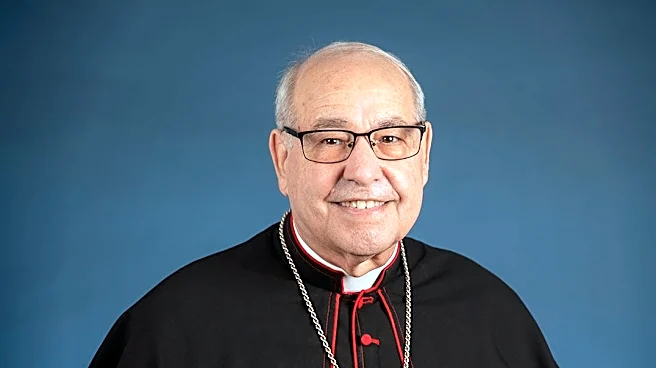
Since retiring as bishop of the Diocese of St. Augustine in 2022, prison ministry has become an important part of my life. I have spent time with incarcerated men and accompanied a condemned man in the hours before his execution. These experiences have caused me to reflect deeply on what our Catholic faith teaches about punishment, justice and the dignity of every human person.
Scripture speaks forcefully about the gravity of taking innocent life. Genesis tells us, “Whoever sheds the blood of man, by man shall his blood be shed; for God made man in his own image.”
Those final words are essential
— the victim bears the image of God. That is why taking innocent life is such a grave offense and why justice is required. However, the person who commits a terrible crime also remains created in God's image.
Human dignity is not a reward for good behavior; it comes from God. A person may forfeit his freedom and rightly face severe punishment, but he does not cease being human or lose his God-given dignity. As St. John Paul II taught, “Not even a murderer loses his personal dignity.”
The church does not deny that capital punishment was historically considered permissible when necessary to protect society. Rather, the church's understanding of what justice requires has developed as circumstances have changed and our understanding of human dignity has deepened.
St. John Paul II recognized that modern systems of detention can protect society without execution and taught that cases in which the death penalty was necessary had become “very rare, if not practically nonexistent.” Today, the catechism teaches that the death penalty is inadmissible and the Church works for its abolition worldwide.
Life imprisonment is a severe punishment, not an absence of punishment. Those who commit additional crimes while incarcerated must be held accountable. The possibility of further wrongdoing, however, does not answer the fundamental question: Must the state take a human life to protect society and administer justice?
Advances such as DNA testing have strengthened our justice system, but they have not made it infallible. Evidence must still be collected, preserved, tested and interpreted by human beings. Wrongful convictions remind us of the terrible consequences of error when punishment is irreversible.
Yet even wrongful conviction is not the foundation of the church's teaching. Even when guilt is certain, human dignity remains.
Justice must honor the dignity of victims, protect society and hold offenders accountable. It must also recognize that no human being is beyond the possibility of repentance and redemption.
I pray for the day when Florida chooses justice without execution.

Most Rev. Felipe J. Estévez, S.T.D., bishop emeritus, Diocese of St. Augustine
This guest column is the opinion of the author and does not necessarily represent the views of the Times-Union. We welcome a diversity of opinions.
This article originally appeared on Florida Times-Union: Even Florida's guilty criminals retain their human dignity | Opinion