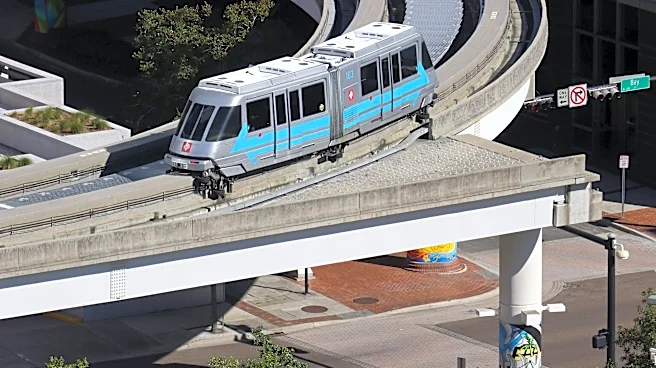




The Jacksonville Transportation Authority revealed the estimated cost of various alternatives for the future of the Skyway that show a $294 million price tag for converting the elevated structure so rubber-tired Neighborhood Autonomous Vehicle Innovation shuttles can run on it.
The agency also crunched estimates on what it would cost to instead build a modern streetcar system in downtown whose price would be about $565 million.
Other alternatives that JTA will present to the community in September in a second round of public meetings will have price tags attached to them for rehabilitating aging Skyway vehicles for continued use, replacing those vehicles with longer trains, or turning the elevated structure into a path for walking and bicycling.
An agreement between JTA and the city in 2021 enables JTA to use up to $247 million in local gas tax money for conversion of the Skyway. Some City Council members have said they want to reopen that agreementfor discussions with JTA about changes to it.
JTA would seek federal support for costs above the amount from gas tax revenue.
The decision on which approach to take on the Skyway will be up to the JTA board when it gets a recommendation from staff at its Oct. 29 meeting.
Here are the alternatives under consideration and estimate costs shown to JTA board members during a retreat on Aug. 26. The figures do not include the cost of purchasing right of way that might be needed for each of them.
Rehabilitate the existing system
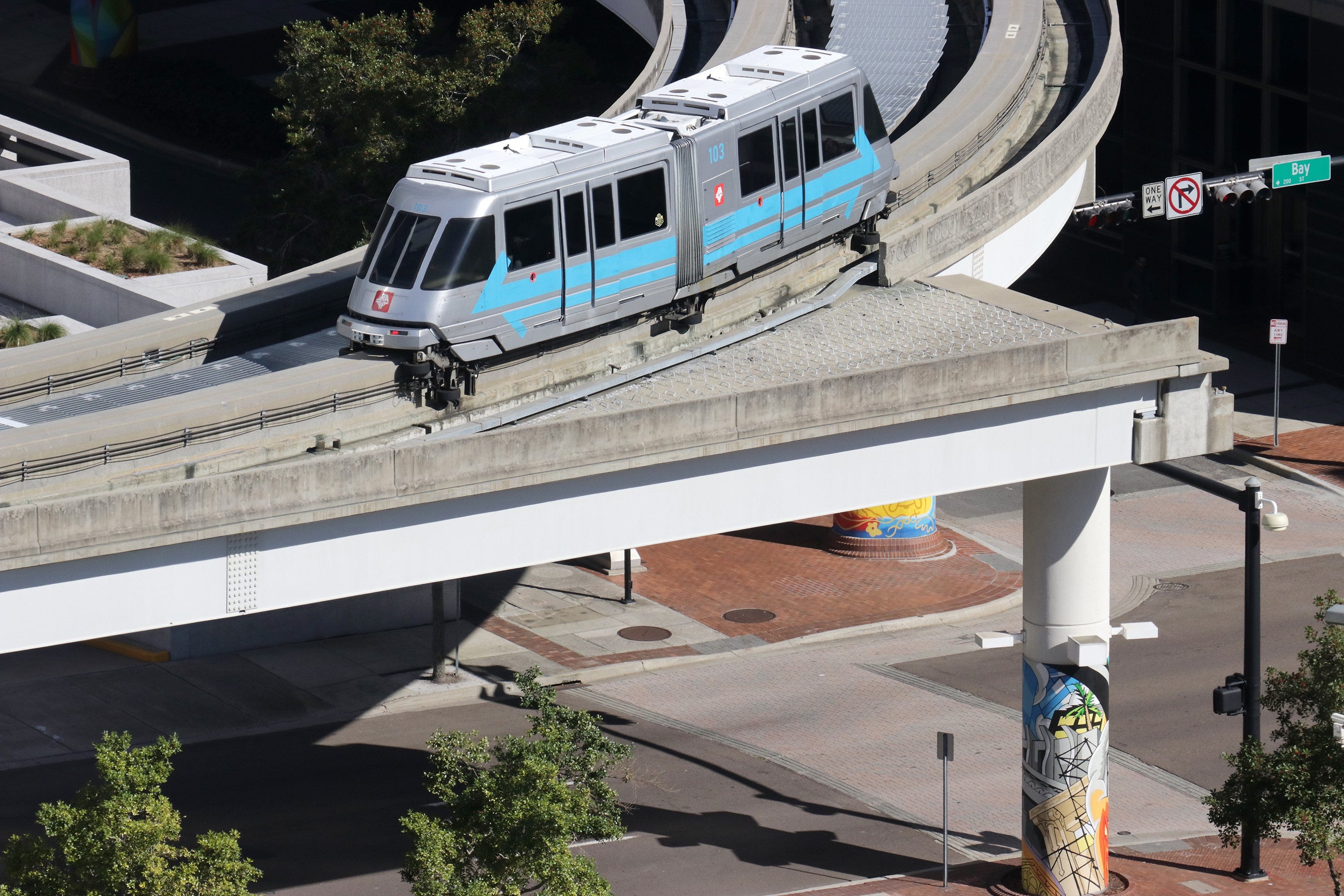
At an estimated cost of $276 million, JTA would rehabilitate the aging fleet so it has 10 vehicles available for carrying passengers on the Skyway. The vehicles date back 30 years. The spending also would make improvements to the guideway on the elevated structure and the commend center for the system, plus some enhancements to the Skway station.
That would add 10 to 12 years of useful life for the system.

Put new automated people-mover trains on structure
Replacing the existing Skyway vehicles with a new fleet of automated people-mover trains would cost nearly $428 million.
The 10 new trains would be longer and more modern but they would require large-scale reconstruction of the elevated structure to accommodate them. This alternative also would extend the service into the Brooklyn neighborhood with a new stations there.

Convert the elevated platform for autonomous transit shuttles
The estimated $294 million cost for converting the Skway so it can handle Neighborhood Autonomous Vehicle Innovation shuttles — NAVI for short — would deploy up to 45 of those shuttles circulating on the elevated structure. A NAVI vehicle would not carry as many passengers but would arrive every 5 minutes at a station compared to 10 minutes for the existing vehicles or larger people-mover trains.
In addition to reconstructing the current structure, this alternative would build ramps at the Skyway's Rosa Parks Station, Kings Avenue Station and Leila Street in the Brooklyn neighborhood so the NAVI vehicles can run continuously between the elevated structure and at street level.

Demolish Skyway and operate autonomous shuttles on street
Demolishing the Skyway structure and replacing it with an expansion of NAVI shuttles in downtown would cost about $152 million.
In this alternative, JTA would have 17 stops for NAVI shuttles including in the Brooklyn neighborhood. As many as 45 of the autonomous vehicles would operate at street level and pick up passengers every 5 minutes at the stations.

Turn Skyway into elevated trail and run shuttles at street level
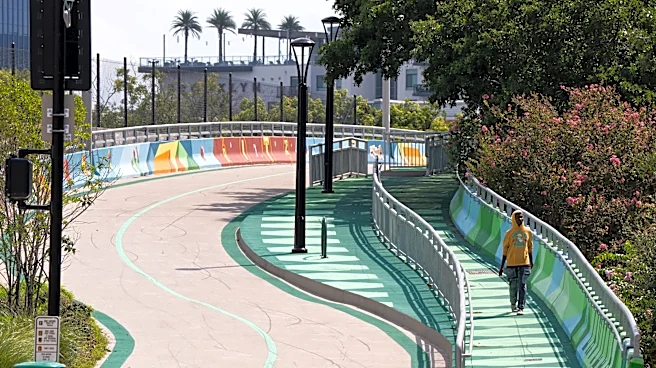
An estimated cost of $260 million would keep the Skyway but turn it into an above-ground path for walking and bicycling that's connected to the Emerald Trail network of paths in downtown and surrounding neighborhoods.
In that scenario, JTA would use up to 45 NAVI shuttles with 17 stops including in Brooklyn for transit around downtown.

Build a modern street car route in downtown
JTA added another alternative for building a modern streetcar system after hearing from residents they wanted to see other alternatives during the first round of public meetings earlier this year.
An estimated cost of about $565 million would pay for 12 "articulated bi-directional trains" running at street level with 12 stops including in Brooklyn. Future expansion opportunities would be to the Riverside neighborhood and the sports and entertainment district where EverBank Stadium is located.
No-build option
JTA could keep operating the system as it currently is with 10-minutes waits between Skyway vehicle arrivals. The capital cost for that approach would be $15 million and it would have a "short-term lifespan" because of the age of the vehicles.
JTA will have meetings in September to hear from public
JTA has scheduled a series of public meetings next month to get feedback on the different alternatives.
The meetings are scheduled for Sept. 10 at The Doubletree Hotel, Sept. 15 at the Florida State College at Jacksonville Advanced Technology Center, Sept. 17 at the Jessie Ball duPont Center and Sept. 22 at Ashley Square. On each of those days, JTA will have a meeting from 11 a.m. to 1 p.m. and again from 5 p.m. to 7 p.m.
The next step after that would be for JTA to collect comments from the public, complete any additional analysis of the alternatives and recommend a top choice to the JTA board at its Oct. 29 meeting.
This article originally appeared on Florida Times-Union: JTA unveils costs for Skyway future ahead of fall decision