






The safety net they counted on vanished.
Millions of people who had received federal food benefits from the Supplemental Nutrition Assistance Program, or SNAP, recently found themselved locked out. Hitting home were federal funding cuts, as well as tightened eligibility rules and expanded work requirements that were approved in 2025 and took effect in April.
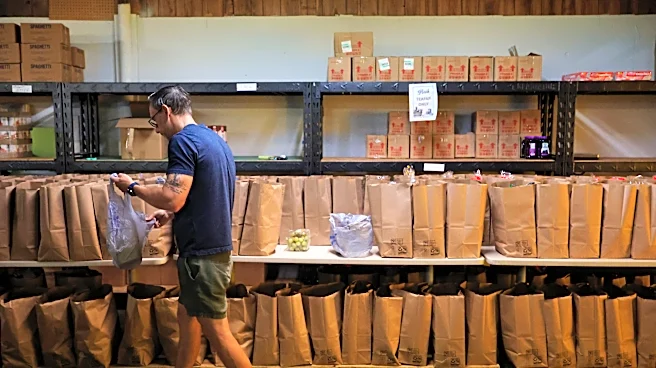
So hordes of people with depleted cupboards descended on food pantries, which were already strained after years of increasing demand. Multiple Northeast Florida food assistance programs have as much as doubled their food distribution and are seeking public donations to keep up.
"There seems to be no end in sight for our neighbors. Everyday worries about rent, groceries and gas add pressure
to budgets already stretched thin," said Eileen Seuter, regional director of Catholic Charities Jacksonville, which runs a twice-a-week food pantry. "Then, when support programs change, it’s another layer of stress for these families."
At the LJD Jewish Family & Community Services' Max Block Food Pantry, staff and volunteers see the distress up close, CEO Colleen Rodriguez said.
Working parents are trying to care for their children, she said, but "it's just gotten harder and harder to make ends meet." And elders who "never even thought they would need help from a food pantry … wait until their situation is dire until asking for help," she said.
"Over and over, we see a repeated pattern of people who find themselves in a position they never thought they'd be in, often beyond their immediate control," Rodriguez said.
Food pantries are their last hope.
"What we hear from seniors about SNAP is … they are upset that the benefits have been cut so severely," said Malea Guiriba, founder and executive director of Pie in the Sky, which feeds St. Johns County seniors. "We are now the safety net underneath the safety net."
Food pantries are last hope for the hungry

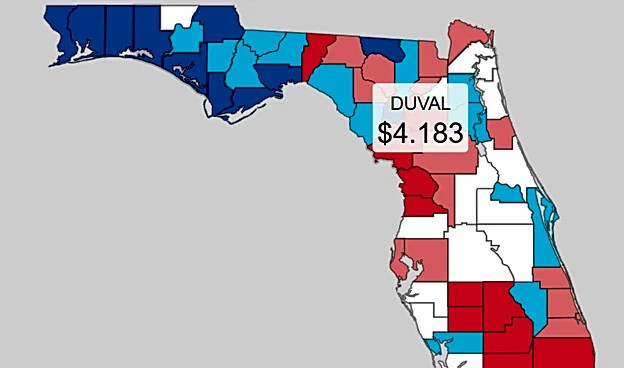
In fiscal year 2025, 42.4 million people received SNAP benefits, formerly known as food stamps. For fiscal year 2026, the number dropped to 38.5 million, according to the U.S. Department of Agriculture. Florida's rolls shrunk 20%, from 2.8 million to 2.3 million, according to the Food Action and Research Center.
As those numbers went down, food pantry visits went up.
"The demand at our food pantry has been gradually increasing for years, even before recent federal food assistance cuts. Our distribution numbers have doubled in just the last year from 500,000 pounds of food to more than 1 million pounds," Catholic Charities' Seuter said.
In just the last three months, as SNAP cuts took effect, the nonprofit's number of clients rose 10% to 15%.
"Everyone has the same concern: rising prices. Whether it’s an old or new client, inflation is affecting us all," she said. "We tell our clients we will always be there for them."
Whether their neighbors are paying attention remains to be seen.
"I don’t think the general public is aware of the true extent of food insecurity in the country — let alone their own backyard. That’s because food insecurity is usually not visible," Seuter said. "Many people who appear to be doing fine are the ones struggling to put food on the table. People who you wouldn’t expect to be struggling, like working families, are now the ones asking for help."
The need, she said, "has increased every year."
Rodriguez, the Family and Children Services CEO, agreed.
"Food insecurity is a very well-hidden problem people experience. Many neighbors and colleagues don't realize their friends are struggling," she said. "Typically, if they've not been directly impacted, or know someone who has, they may not know the extent of the food insecurity crisis. When they do see the figures, they’re shocked."

In fiscal year 2025-26, which ended June 20, the Family and Children Services' food pantry gave out 415,206 meals and served 46,134 individuals, compared to 284,000 meals to 31,652 individuals the previous year.
"A significant amount of that growth in demand has been just in the last six months," Rodriguez said. "The cuts in SNAP benefits have negatively impacted a wide range of our clients, starting with seniors and disabled individuals who are on fixed incomes. When these benefits are reduced, or cut completely, they must rely more heavily on food pantries.
"Low-income families have also been hurt in similar ways," she continued. "Most of the adults we support work but have not seen their pay increase. So they’re also having to scramble to find ways to continue to feed their kids."
One nonprofit that is specifically helping feed children is mentoring nonprofit Communities in Schools Jacksonville, which also provides hot meals and snacks in its free afterschool and summer camp programs, manages food pantries in many schools, distributes 1,200 snack packs weekly and refers hungry families in need to food assistance programs. About 97% of the students it served in the 2025-26 school year were free or reduced-lunch eligible, CEO Leon Baxton said.
"We saw a 14% increase in our students enrolled in CIS programs last school year. This tells us there is a growing demand for student support, whether it be academic or non-academic factors," he said. "We do expect that to continue to grow as students and families continue to seek stability in tough economic times, with access to food and hunger being a part of that.
"Our case managers get to know students, aligning personalized services to their needs. Having a relationship for the student and family with a caring adult at the school, helps them know that CIS is there and can help with connecting them with vital resources," he said.

Meanwhile, many seniors are also on a fiancial tightrope. St. Johns' Pie in the Sky is serving 963 seniors, including 284 who receive SNAP benefits and 268 who are newly enrolled with the nonprofit this year. It averages 28 new seniors each month, 42 in July and 38 in August, founder and CEO Guiriba said.
In addition to SNAP cuts, some seniors complain about the process required to get an electronic benefit card, or EPT, a payment card that states use to issue food assistance benefits, she said.
"Seniors who don't have EBT said they don't have them because the process is so arduous and getting help is next to impossible," Guiriba said. "The process is daunting, frustrating and if they do manage to make it through, they might get $11."
Christine Demeo-Lang, 70, of St. Augustine receives vegetables and sometimes eggs from Pie in the Sky. She also visits other local pantries.
"We're lucky in St. Johns to have several good ones," she said. Typically, "every week you see a lot of the same people … but for the last three weeks, there have been a lot of new people."
Any benefit cut "hits people hard. A family with kids can't make ends meet, even with mom and dad working," she said.
Demeo-Lang said her SNAP benefits seem to decrease every time her Social Security benefits increase. So food pantry support "is a savior" for her and the special-needs son who lives with her, she said.
Daphnee Joy Plummer, 53, of Jacksonville, is a Catholic Charities food pantry client. She has been homeless for five years and said her attempts to get public assistance either produced bureaucratic nightmares — or led nowhere.

Some organizations don't even answer their phones or return calls, she said.
"It's hard. It feels like you're targeted," Plummer said. "It's horrific the way you're treated, as a person trying to rise back up."
She said she got no help — until she found Catholic Services.
"I would have starved to death," she said. "But I am going to make it through this."
Food bank working overtime to support pantry network
After seven years, Susan King is preparing to retire as CEO of Feeding Northeast Florida, which distribites food through a network of pantry partners.
During her tenure, she has watched demand grow, particularly since the COVID-19 pandemic. The food bank distributed 22.2 million pounds of food in 2020 to nearly 38 million in 2025. The numbers for 2024 and 2025 "held fairly steady at a historically high level," she said.
"Now that plateau is breaking and need is climbing sharply again as the cuts take hold," she said.
In 2026, the number of individuals served each month increased by an average 22%, she said, as Florida'a SNAP enrollment "has fallen sharply."
The enrollment drop makes the growing crisis "invisible, when hundreds of thousands leave the rolls, it can look like need went down, when really it just moved to the food bank and food pantry lines," she said.
In the food bank's 12-county service area, SNAP enrollment fell by about 67,000, from 280,715 to 213,654, "pulling roughly $12.7 million per month in food-assistance dollars out of our community," King said. "At a moment when groceries, health care, housing and the overall cost of living are all climbing, the safety net is contracting."
The pantry partners submit monthly reports to the the food bank. Currently, about 57% of them report a growing need, compared to 26% in 2024.
They have a "mix of strain and resolve," King said. "Many express gratitude at being able to make a difference in their communities, but also frustration at not being able to meet the need with the food currently available."
At conferences, pantries tell all sorts of troubling client stories.
"We heard about seniors whose Social Security is too high to qualify for SNAP but too low to cover groceries; neighbors newly disqualified by benefit changes who still can't afford food; the stigma and embarrassment that keep eligible people from signing up; and working households with stable income that simply can't keep pace with the cost of living," she said. "Before we tell them anything, we listen. There's no easy answer to the stories we hear."
So Feeding Northeast Florida is continually building itself up — investing in refrigeration, shelving and trucks, among other things — to better serve its pantry network.
"Our role is to source as much food as possible, support our partners through these periods of increased need and help stabilize their operations so they can meet it consistently," King said.
Also, the nonprofit is expanding its food sources beyond donations, using targeted purchasing through Farmers Feeding Florida, a program that connects food banks to growers and producers; local buying initiatives; philanthropy; and retail food rescue partnerships.
"And as much as we see reports of rising need, we also see a network of pantries working overtime creatively and tirelessly to meet the moment. Which inspires us to make sure they have the food, tools and help to keep going," she said. "Food insecurity isn't one story: It's a working parent, a fixed-income senior, a veteran, a family one emergency from crisis. So, the solution can't be one-size-fits-all."

Republican proponents of SNAP changes insist they target waste, fraud and abuse in the system, but Democratic critics argue they increase hunger and poverty and stress local food banks and pantries. If King were a federal government leader, she said she'd "protect SNAP as the front-line, most efficient tool we have, because every meal it covers is one charity doesn't have to. I'd build policy around that lived reality rather than assumptions about it.
"Food insecurity is more than just feeding people. If we are going to make a dent in food insecurity, we need to address the reasons food is inaccessible in the first place," she said.
To donate money or food, volunteer or get help
Here are some agencies providing assistance:
Feeding Northeast Florida: 5245 Old Kings Road, Jacksonville, FL 32254; info@feedingnefl.org; (904) 513-1333; feedingnefl.org
Catholic Charities Jacksonville: 6 E. Bay St., Suite 500, Jacksonville, FL 32202; info@ccbjax.org;(904) 354-4846; ccbjax.org. For emergency financial assistance, call United Way for a referral. Dial 2-1-1 or (904) 632-0600.
LJD Jewish Family & Community Services: Main Office at Alan J. Taffet Building, 8540 Baycenter Road, Jacksonville, FL 32256; info@jfcsjax.org; (904) 448-1933; jfcsjax.org. For emergency financial assistance, call United Way for a referral: Dial 2-1-1 or (904) 632-0600.
Communities in Schools Jacksonville: 532 Riverside Ave., Suite 3-OH, Jacksonville, FL 32202; info@cisjax.org; (904) 344-3900; cisjax.org/
Pie in the Sky St. Johns: 134 Riberia St., Suite 4, St. Augustine, FL 32084; (904) 217-4863 (Mailing address P.O. Box 600887, St. Johns, FL.) 32260); pieintheskystjohns.org.
Beth Reese Cravey has been a reporter for The Florida Times-Union for 45 years, currently specializing in nonprofits and health. She can be reached at bcravey@jacksonville.com.
This article originally appeared on Florida Times-Union: Ripple effect of SNAP cuts overwhelms nonprofits, food pantries