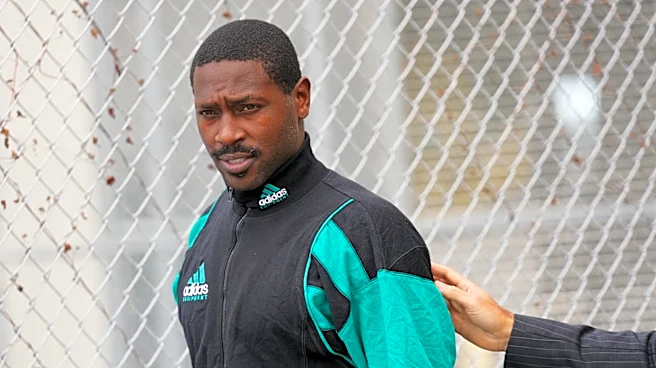

A Baker County nanny convicted of third-degree murder after a baby girl died from heat exposure inside her SUV didn’t get a fair trial, an appeals court has decided.
A panel from the 1st District Court
of Appeal threw out a 17-year prison sentence that Circuit Judge William Slaughter II ordered for Macclenny resident Rhonda Jewell, saying she should be tried again.
“This is the most tragic of cases. A beloved child has died, her family is left with an immeasurable loss, and it was Rhonda Jewell’s fault. But it was an accident,” Judge L. Clayton Roberts wrote in a September 30 opinion for the three-judge panel.
The 10-month-old girl died in July 2023 after being left for several hours in a baby seat in Jewell’s Chevrolet Tahoe outside a home where Jewell was taking care of another family’s children.
An arrest report said Jewell told investigators she had forgotten the girl was still in the vehicle, where the report said the temperature rose to 133 degrees.
A jury found Jewell innocent of aggravated manslaughter but guilty of leaving the baby unattended with resulting great bodily harm, which is a third-degree felony.
Because that felony led to a death, Jewell was found guilty of third-degree felony murder and sentenced to 15 years behind bars on top of two years for the unattended child charge.
But the appeals panel said it overturned both convictions because jurors who heard Jewell’s case were given the wrong directions about what prosecutors had to prove.
“[Jewell’s] defense was that she did not act knowingly or consciously because she forgot” the baby was in her SUV, the judges wrote.
“… And the state told the jury it did not have to prove intent. Because the instruction reduced the state’s burden of proof on an essential element of the crime and eliminated … [Jewell’s] only defense, … [she] was deprived of a fair trial.”
The ruling also quoted a Florida Supreme Court decision that said some level of intent had to be proven to convict someone of third-degree murder.
“By stacking the charges the way it did, the state was able to obtain a murder conviction based on …[Jewell’s] admissions alone without any proof of intent,” the appeals panel said.
Jewell’s conviction and sentence had drawn attention from observers well outside of Baker County and some filed friend-of-the-court briefs supporting her appeal.
A nonprofit that said it focused on “extreme sentences” and a group of law professors jointly filed one brief that said allowing Jewell’s conviction without proving intent could cause “heightened potential for biases against women and paid caregivers.”
Separately, lawyers for a nonprofit forced on hot-car deaths, Kids and Car Safety, also faulted Jewell's conviction, saying child deaths are preventable but “are failures of memory, not of love.”
That group's brief argued “criminalizing such tragic incidents is contrary to both the scientific understanding of human cognition and the mission of organizations dedicated to preventing child fatalities. Punishing Appellant Jewell will not prevent the next child’s death.”
This article originally appeared on Florida Times-Union: Court tosses Baker County woman's murder sentence over hot-car death